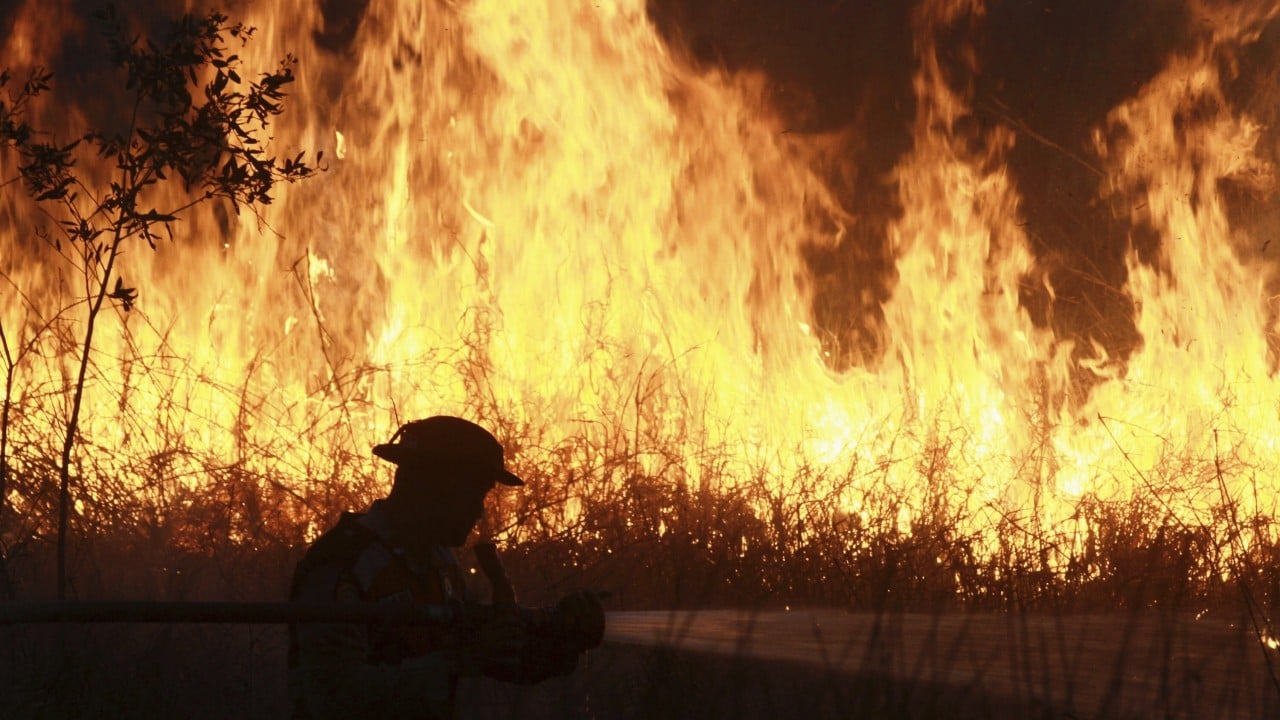
The Singapore Institute of International Affairs has issued a rare, highest-level "red alert" warning that severe, toxic transboundary haze will blanket Brunei, Indonesia, Malaysia, and Singapore. While meteorologists point directly to a punishing, dual-punch climate anomaly of El Niño and a positive Indian Ocean Dipole, the true catalyst for the coming smoke is not natural. It is fundamentally economic, driven by an unforgiving global supply chain crisis and systemic structural shifts that have made setting fire to land the most profitable option for desperate agricultural producers.
The Financial Chokehold on Sustainable Agriculture
Climate patterns create the dry kindling, but human hands light the match. The primary reason the region faces an unprecedented fire risk is the economic fallout from severe geopolitical disruptions thousands of miles away. Ongoing blockades and military actions in the Strait of Hormuz have choked global shipping lanes. This pressure has caused a severe spike in diesel and synthetic fertilizer prices across Southeast Asia, with baseline farming operation costs surging by 20 to 30 percent.
While multi-billion-dollar palm oil conglomerates possess the cash reserves to absorb these cost shocks, small and medium-sized enterprises (SMEs) do not. For an independent fruit or vegetable farmer operating on razor-thin margins, mechanical land clearing using heavy excavators is no longer financially viable. The cost of fuel to run machinery has simply outpaced their earnings.
Slash-and-burn clearing remains virtually free. A single match can clear a plot of peatland in 48 hours, entirely bypassing the need for expensive diesel-fueled equipment. This massive financial incentive is driving hundreds of smaller operators back to illicit burning to survive an brutal economic squeeze.
The Biofuel Paradox
Compounding this operational pressure is a massive, policy-driven surge in the demand for bioenergy. In an attempt to insulate themselves from volatile global oil prices and achieve greater energy independence, governments across Indonesia, Malaysia, and Thailand have aggressively raised mandates for blending vegetable oils into commercial diesel at the pump. Indonesia's recent rollout of high-percentage biodiesel blends has created an insatiable domestic appetite for crude palm oil and other agricultural feedstocks.
This policy shift has triggered an unintended, dangerous environmental feedback loop. Land-use data reveals that nearly a fifth of all regional deforestation is tied directly to clearing land for food and bioenergy crops. The commercial pressure to expand plantation footprints quickly is colliding with hyper-inflated machinery costs. The result is an explosive landscape where land conversion is accelerating, and fire is the tool of choice to achieve it.
Defunded Lines of Defense
While the commercial incentive to burn has multiplied, the institutional capacity to fight the resulting fires has cratered. Indonesia is currently enforcing strict fiscal austerity measures to maintain its statutory national budget deficit below 3 percent of Gross Domestic Product. These macroeconomic constraints have forced severe spending cuts down to provincial governments and the Ministry of Forestry.
The consequences are already visible on the ground. In fire-prone hotspots like Riau and various provinces in Kalimantan, local emergency budgets for the entire year were already completely exhausted by April following an unseasonal early wave of forest fires.
Furthermore, the funding crunch threatens costly but vital regional climate defenses. Bureaucrats are privately highly skeptical about the long-term cost-effectiveness of cloud-seeding and weather modification operations, making these programs the first to face the chopping block. Local authorities are being forced to rely heavily on under-equipped, voluntary community firefighting units rather than professional, state-backed suppression infrastructure.
The True Cost of Corporate Hiding Places
The governance challenge has shifted under the new administration of President Prabowo Subianto. Unlike previous regimes that treated transboundary smoke primarily as an international diplomatic embarrassment, the current government has launched aggressive inter-agency task forces targeting corporate environmental violations, export under-invoicing, and systemic tax avoidance within the natural resource sector.
This state-led regulatory crackdown has injected deep anxiety into foreign investment circles, altering the risk calculation for major agribusiness conglomerates. Large-scale corporate operators are now heavily incentivized to strictly police their own concessions to avoid state seizure or heavy legal penalties.
The real danger, however, resides in the untraceable periphery of the supply chain. Global consumer brands frequently boast about "100% sustainable and fire-free" sourcing, yet their supply chains remain deeply reliant on third-party middle tier suppliers and independent smallholders. These smaller entities operate entirely beneath the radar of corporate compliance officers and satellite monitoring systems. When an independent farmer clears land illegally to feed into a larger supply hub, the resulting smoke crosses borders just as easily as smoke from an industrial concession.
If past crises are any historical indicator, the economic damage will be staggering. The 1997 haze crisis cost the region an estimated $9.3 billion, while the 2015 El Niño burning caused more than $16.1 billion in direct economic losses in Indonesia alone, crippling tourism, grounded aviation, and overwhelming healthcare systems with acute respiratory illnesses.
The coming months will thoroughly expose the limits of voluntary corporate pledges and underfunded state enforcement. Until regional governments confront the reality that smoke is a direct economic symptom of supply chain inflation and policy-driven land pressure, Southeast Asia will remain locked in a perpetual cycle of burning. The region cannot spend its way out of an environmental crisis when the economic structures it creates make environmental destruction the only logical choice for survival.


