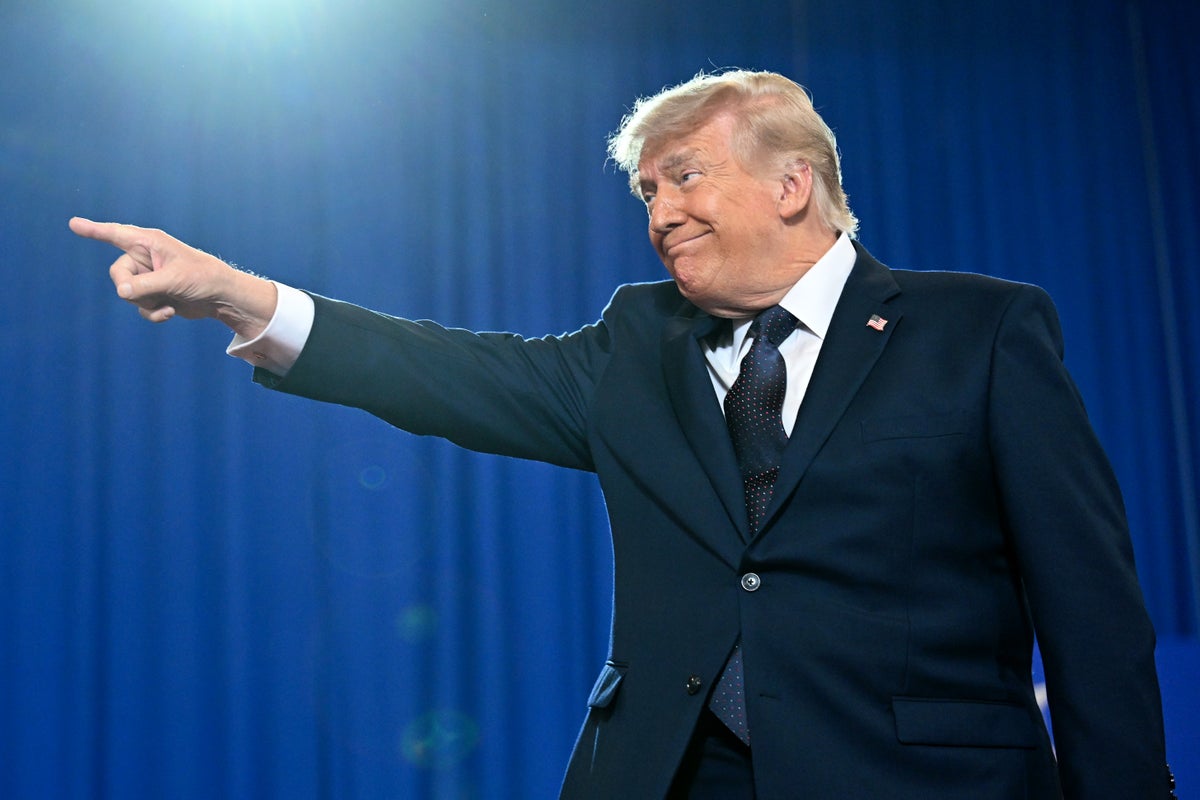
Louisiana lawmakers recently killed a high-profile bill to name a proposed $3 billion Mississippi River bridge after Donald Trump, revealing a deep fracture within the state’s Republican supermajority.
While House Bill 221 sailed through the House with a comfortable 68–26 margin, it died quietly in the Senate on June 1 without ever receiving a floor vote. The legislative collapse exposes a stark strategic divide. Lower-chamber firebrands attempted to use the former president's name as leverage to extract federal cash, while institutionalist Senate leaders refused to upend decades of infrastructure policy for a high-stakes political gamble.
The Three Billion Dollar Bait
The legislative push was never just about symbolic flattery. State Representative Michael Echols, a Monroe Republican who authored the bill, designed the legislation to serve as a direct transactional play directed at Washington. The targeted infrastructure project, which intends to connect Louisiana Highway 1 and Louisiana Highway 30, has languished in the planning and discussion phases for more than thirty years.
Louisiana simply does not have the money to build it alone. The estimated price tag for the new crossing sits at $3 billion, a sum that requires massive federal intervention to move from blueprints to concrete.
Echols intended to use the naming rights as a psychological incentive. The bill included a highly unusual conditional clause: the bridge would only officially become the "President Donald J. Trump Expressway" if the federal government delivered a substantial amount of construction funding before noon on January 20, 2029.
The strategy assumed that a second Trump administration would notice the gesture and reward the state with discretionary infrastructure grants. It was a gamble that relied entirely on transactional politics, transforming a major civil engineering project into a literal billboard for federal patronage.
The Senate Insurgency Against the House Play
The plan collapsed because the Louisiana Senate refused to play along. Senate President Cameron Henry, a Republican from Metairie, shut down the bill by signaling a total lack of appetite for naming state roads and bridges after political figures. Rather than staging a dramatic public debate or a contentious vote, the Senate simply left House Bill 221 on the calendar, letting the clock run out on the legislative session.
This quiet execution highlights a structural friction between the two chambers.
- The House Strategy: Driven by members facing frequent election cycles and intense base pressure, the House increasingly favors aggressive, high-visibility maneuvers designed to signal loyalty and secure immediate local wins.
- The Senate Strategy: The Senate operates with longer terms and a more insulated power structure, preferring predictable bureaucratic processes and preserving traditional relationships with federal agencies over partisan gimmicks.
Senate leadership recognized that tying a vital regional transit corridor to a single political figure carried significant risk. If federal funding failed to materialize under the specified timeline, the state would have publicly snubbed a president whose base dominates Louisiana's electorate. Conversely, if a different administration held the purse strings in Washington, the partisan branding could actively penalize the state's grant applications.
The Limits of Transactional Infrastructure
The failure of House Bill 221 demonstrates the practical limits of using political naming rights as currency for civil infrastructure. Federal competitive grant programs, such as those administered under the Department of Transportation, operate through rigid, criteria-driven scoring systems. These matrixes evaluate regional economic impact, freight movement efficiency, safety metrics, and environmental mitigation.
They do not include points for political flattery.
By attempting to bypass standard bureaucratic channels with a high-profile naming bill, the Louisiana House exposed a deeper desperation. The state faces an immense backlog of deferred maintenance on existing roads, alongside aging spans like the Interstate 10 Calcasieu River Bridge and the existing Horace Wilkinson Bridge in Baton Rouge, which routinely ranks among the worst traffic bottlenecks in the South.
Relying on symbolic legislative maneuvers to bridge multi-billion-dollar funding gaps reflects an inability to secure long-term, sustainable state revenue streams for capital outlays.
A Lasting Legislative Precedent
The quiet death of the Trump Expressway bill sets a definitive boundary for the current legislative era in Baton Rouge. It signals that while the House may be willing to test the boundaries of partisan messaging to advance local projects, the Senate intends to act as a institutional brake, preventing the state’s transportation map from becoming an ideological battleground.
For the capital region, the outcome means the long-delayed Mississippi River crossing remains exactly where it started: an unfunded project waiting for real dollars rather than political headlines. The strategy of using a president's name to unlock the federal treasury failed because state senators decided that the institutional dignity of the state's infrastructure policy was worth more than a $3 billion roll of the dice.