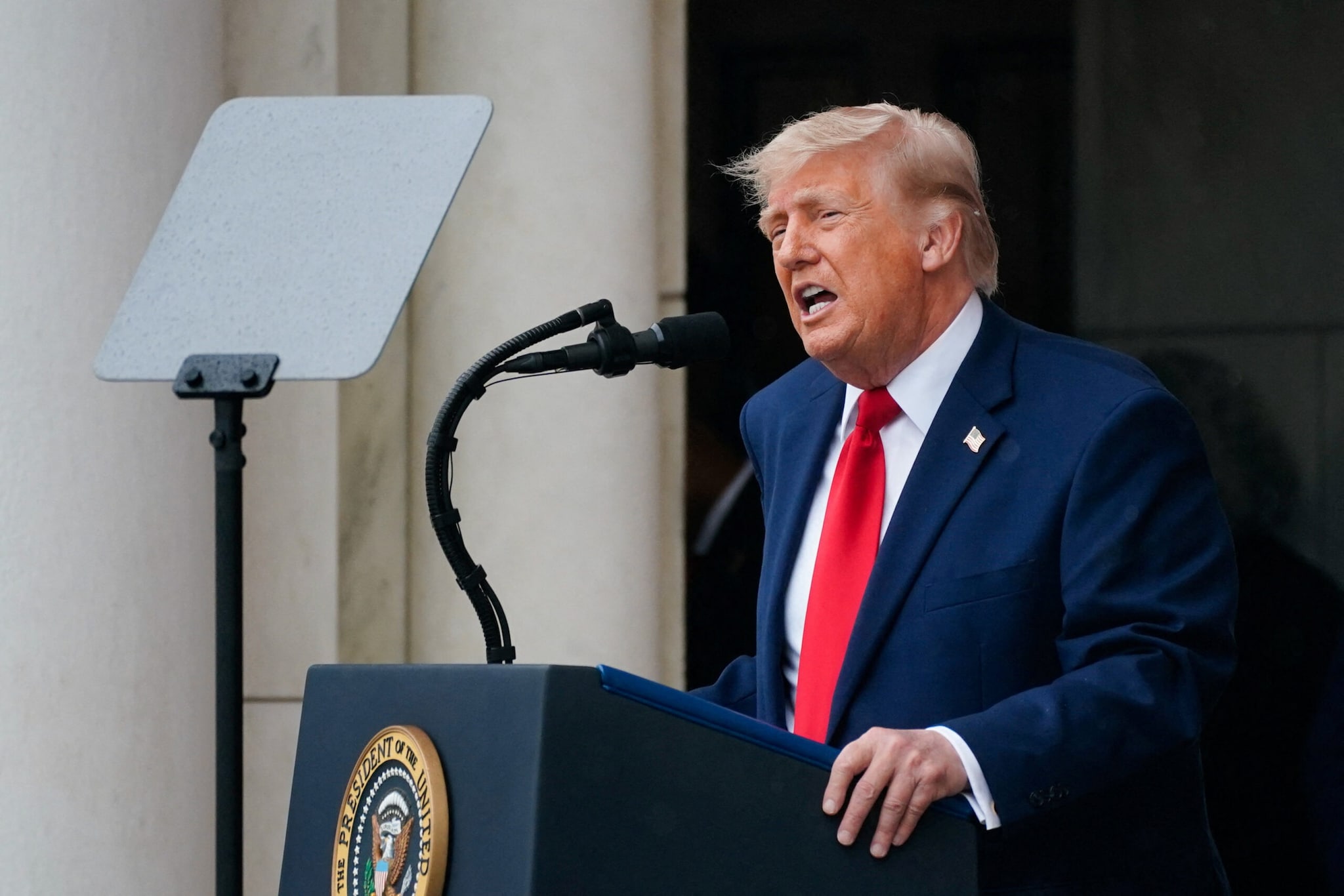
Donald Trump wants the world to believe he is on the precipice of engineering the ultimate diplomatic masterstroke by offering to meet Iran Supreme Leader Ayatollah Mojtaba Khamenei. Speaking to reporters in the Oval Office, Trump stated he would be "honored" to sit down with the reclusive cleric if it seals a deal to end the bloody four-month-old conflict between Washington and Tehran.
The offer sounds audacious, considering American and Israeli airstrikes under Operation Epic Fury killed Mojtaba’s father and predecessor just months ago, leaving the current supreme leader injured and out of public view. Yet, Trump’s latest gambit is not erratic whim. It is a calculated piece of political theater designed to mask a harsh strategic reality: the United States is rapidly running out of easy options in its war with Iran, and the current 60-day ceasefire extension is a fragile holding pattern rather than a position of American strength.
The Art of the Autocrat Whisperer
Trump’s declaration that he would be "honored" to meet Mojtaba Khamenei follows a well-worn playbook used previously with North Korea’s Kim Jong Un and Russia’s Vladimir Putin. By elevating a bitter adversary to an equal partner on the global stage, Trump attempts to bypass traditional diplomatic channels and appeal directly to a dictator's sense of self-preservation. He explicitly called the young Ayatollah a "professional" who commands a "very good reputation" in certain circles.
This rhetoric serves a dual purpose. First, it offers Tehran a face-saving exit ramp from a conflict that has battered its economy and military infrastructure. Second, it shifts the domestic American narrative away from an expensive, open-ended military campaign that has drained critical weapons stockpiles and toward the promise of a historic peace deal.
The strategy assumes the adversary operates under the same transactional mindset as the American president. That assumption is inherently dangerous when dealing with a regime grounded in ideological survival.
The Leverage Illusions
Behind the bravado lies an escalating crisis of American leverage. Trump asserted that the United States would win this conflict "militarily or on paper," boasting that Iran’s highly enriched uranium is "entombed" and under constant camera surveillance. He even claimed he passed on a special operations raid to seize the stockpile simply to avoid a prolonged war zone complication.
The ground reality tells a different story. Iranian Foreign Minister Abbas Araghchi immediately dismissed the idea of a face-to-face summit, advising that the proposal must be viewed in the "real world." Iranian security agencies are keeping Mojtaba Khamenei heavily hidden, communicating only through written instructions and intermediaries.
Iran knows time is on its side. Washington has burned through precision-guided munitions at an alarming rate over the last four months. The ceasefire is shaky, proven by recent Iranian missile strikes hitting Kuwait’s international airport. Tehran is using the pause to rebuild its domestic defensive positions while demanding that any permanent peace deal must include a complete Israeli military withdrawal from Lebanon.
The Friction Over Uranium and Proxies
A permanent deal remains blocked by two immovable obstacles. The first is Washington's demand that Iran physically hand over its enriched uranium stockpile, a condition Tehran views as total capitulation. The second is the regional proxy network. Trump recently admitted to communicating with Hezbollah through intermediaries, a notable departure from standard American foreign policy.
Trump wants a quick paper victory to satisfy an electorate weary of foreign entanglements, but Iran is dug in for a war of attrition.
By tying a Lebanon truce to the broader peace framework, Tehran has effectively boxed Washington into a corner. If Trump rejects the Iranian conditions, the ceasefire will collapse, forcing the U.S. back into active bombardment using depleted munitions arsenals. If he accepts them, he risks alienating core regional allies who view any concession to Iran as an existential threat.
The sudden offer to meet the Supreme Leader is an attempt to break this diplomatic deadlock through sheer force of personality. It is a high-stakes gamble that ignores decades of institutional memory in Iranian foreign policy. Dictatorships rarely compromise their core security interests for the prestige of a White House photograph, and assuming professionalism from an adversary whose family was targeted just months earlier is a profound miscalculation of the regime's internal dynamics.
Trump's overture is not a sign of impending peace. It is the opening salvo of a messy, prolonged diplomatic retreat.