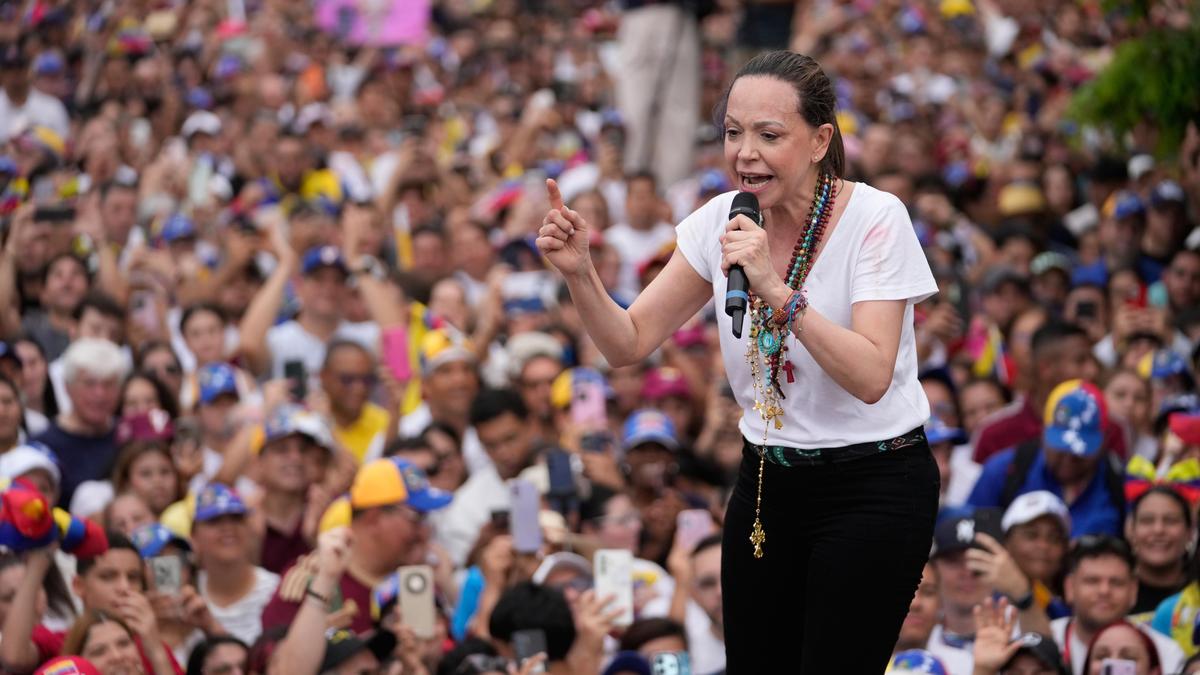
The narrative surrounding Venezuela shifted dramatically following the U.S. military’s stunning capture of Nicolás Maduro under global drug trafficking charges. For a fleeting moment, it appeared that María Corina Machado, the domestic opposition leader who won the Nobel Peace Prize for meticulously proving Maduro’s 2024 electoral fraud, would finally steer her country toward a free-market democracy.
Instead, Washington chose a different path.
The White House effectively sidelined Machado and her coalition, opting to work directly with acting President Delcy Rodríguez, a prominent figure from Maduro's ruling party. From her exile in Panama City, Machado announced her intention to return to Venezuela by late 2026 to run for the presidency in a fully transparent election. Her bold proclamation highlights a deeper, more volatile geopolitical reality that Western policymakers are largely ignoring. Washington has quietly chosen immediate oil stabilization and corporate access over the unpredictable friction of a genuine democratic transition.
The Oil Over Peace Equation
The sudden shift in American foreign policy hinges primarily on global energy markets. With the ongoing war in Iran driving global oil prices to staggering heights, the primary objective for the U.S. administration is securing immediate, high-volume crude production.
Acting President Delcy Rodríguez understood this lever perfectly. Upon taking the interim reins, she immediately opened Venezuela’s state-controlled oil industry to massive U.S. corporate investment. This pragmatic compliance offered Washington something that Machado’s idealistic, institutional overhaul could not guarantee: instant continuity.
A democratic transition managed by Machado requires deep systemic reforms. She insists that a legitimate election requires a minimum of seven to nine months to organize. This timeline demands:
- The complete dismantling and replacement of loyalist electoral authorities.
- A comprehensive overhaul of voter registration rolls, including millions of displaced migrants.
- Absolute legal guarantees for previously barred opposition candidates.
To international oil conglomerates and pragmatic diplomats, that timeline represents nearly a year of legal limbo, potential labor unrest, and operational pauses. By validating Rodríguez, the current U.S. administration chose a familiar autocracy that behaves like a corporate partner over a messy democracy trying to rebuild itself from scratch.
The Illusion of the Stable Status Quo
The current strategy assumes that keeping Maduro’s former lieutenants in power ensures long-term stability. This calculation overlooks the immense pressure building within the Venezuelan populace.
Machado compared the domestic sentiment to a massive dam accumulating immense pressure, frustration, and expectation. The Venezuelan opposition possesses the physical voting tallies from 2024, proving they defeated the ruling party by a definitive two-to-one margin. These physical records are safely secured in Panama as proof of a stolen mandate. By ignoring this majority and cementing Rodríguez's interim status, Washington is not preventing anarchy; it is merely delaying it.
The Venezuelan constitution explicitly dictates that a new presidential election must be held within 30 days if the chief executive becomes permanently unavailable. By quietly supporting the delay of these elections, international observers are actively undermining the very constitutional framework they previously spent years defending.
The Perils of Governing from Afar
Machado’s declaration that she will return by 2026 is a calculated political necessity rather than a mere personal goal. History shows that political exile rapidly erodes domestic relevance.
While Machado’s Nobel Peace Prize gave her an international platform in Europe and Panama, the everyday reality for millions of Venezuelans remaining at home consists of severe public utility failures, systemic inflation, and local security threats. When opposition leaders live comfortably abroad, the local populace often develops deep resentment.
Political Gravity in Exile:
[International Accolades / High-Level Gigs]
       │
       ▼ (Time Deficits)
[Loss of Direct Grassroots Mobilization]
       │
       ▼
[Domestic Irrelevance / Rise of Local Compromise Figures]
To maintain her status as the undisputed leader of the democratic movement, Machado must re-establish her physical presence on the ground. Independent polling indicates that Machado holds a commanding 67% mathematical advantage over Rodríguez in any fair electoral matchup. However, that data point only matters if she can physically register, campaign, and protect her supporters from state reprisal.
A Risk of Total System Failure
The current international approach to Venezuela treats the nation's political crisis as a secondary concern next to global energy security. This short-term strategy contains a fatal flaw.
Relying on a regime that lacks popular legitimacy to maintain domestic order while extracting natural resources is an unstable long-term plan. If the interim government fails to address the underlying collapse of public services, education, and healthcare, the country faces a renewed wave of mass migration and civil unrest.
Machado's planned return is a direct challenge to this fragile corporate peace. She is forcing both Caracas and Washington to decide whether they will allow a genuinely competitive electoral process or openly maintain an autocratic governance structure solely to protect oil export volumes. Real stability cannot be purchased through lucrative energy contracts while ignoring the clear results of the ballot box.
The Venezuelan crisis is far from resolved. The removal of a single leader has simply revealed a more complex institutional struggle, where the desire for democratic self-determination is clashing directly with the immediate demands of global energy markets.