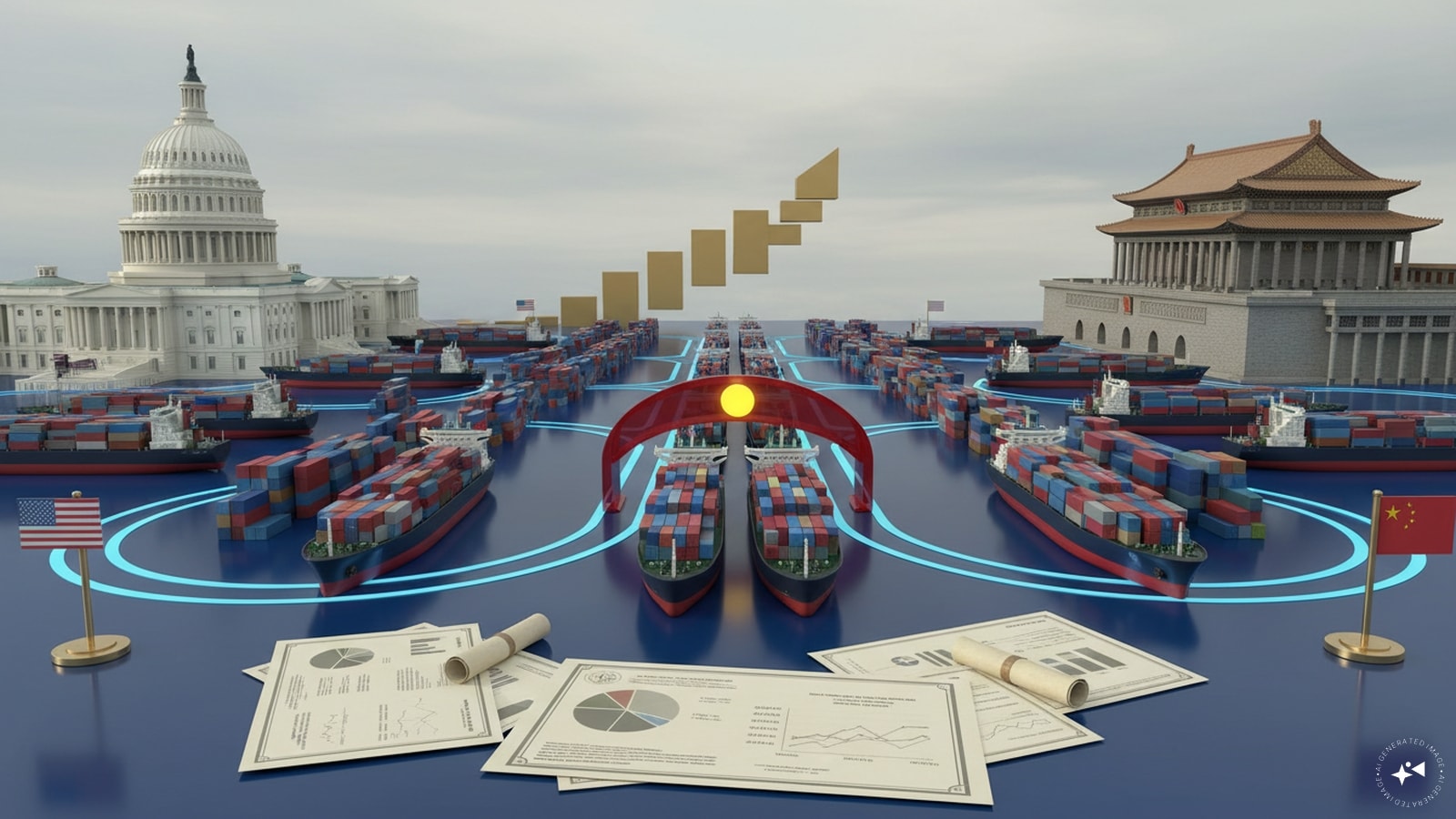
The machinery of trade protectionism rarely pauses, yet Washington recently pressed a calculated mute button on its anticipated penalties targeting industrial overproduction. By opting to hold off on releasing a punitive trade report and shelving an expected 7.5 percent duty on Chinese goods until after a high-stakes presidential summit, the White House revealed a familiar tactical playbook. This delay is not a retreat from confrontation. It is an intentional preservation of leverage.
For months, trade analysts and industrial lobbyists anticipated a swift escalation under Section 301 provisions, designed to combat what Washington frames as a global flood of subsidized manufacturing. Yet, translating policy white papers into actual border enforcement is a messy business, tangled in legal bottlenecks, judicial pushback against prior executive duties, and the gritty reality of bilateral negotiations. When leaders prepare to sit across the table, prospective penalties transform from economic defenses into diplomatic chips.
The Mechanics of Manufactured Leverage
To understand why a major trade announcement was pushed into the shadow of a summit, one must look at how modern economic diplomacy actually operates behind closed doors. Threatening a broad tariff creates an immediate friction point, forcing the opposing capital to calculate potential losses in export volume. If Washington had published its overcapacity findings and instituted the 7.5 percent levy ahead of schedule, the target of those measures would have baked the cost into its baseline calculations, neutralizing the sting.
By keeping the threat suspended in the air, the administration maintains maximum uncertainty. Beijing has repeatedly signaled that it views these specific overcapacity arguments as a pretext for protectionism, reserving its own retaliatory toolkit. In this high-stakes game of economic chicken, the timing of a tariff release matters far more than the initial math. A postponed penalty acts as an open-ended demand note, waiting to be cashed or torn up depending on what concessions can be wrung out of structural agricultural commitments or technology safeguards during face-to-face talks.
The Limits of Border Penalties
The persistent irony of modern trade policy is that broad-based duties often fail to address the microeconomic realities of global supply chains. Industrial overcapacity is a genuine structural distortion, driven by massive state-directed investments in sectors ranging from legacy semiconductors to advanced manufacturing. However, hammering incoming goods with a blanket percentage rarely stops a resilient exporter that has already optimized its margins or shifted logistics through third-party intermediaries.
Economists tracking effective tariff rates note that nominal increases routinely run up against market adaptation. Exporters absorb initial hits, currency adjustments cushion the blow, and global demand shifts elsewhere. When Washington relies solely on tariff threats as a blunt instrument, it risks diminishing returns. The domestic manufacturing base receives a brief political headline, but the underlying structural imbalance—the sheer volume of physical output chasing constrained global consumption—remains entirely intact.
What Comes After the Handshakes
Summits generate headlines, but bureaucratic implementation writes the rules. Once the handshakes conclude and the cameras clear, the postponed trade reports will reemerge from interagency review. Whether the final numbers mirror the initial 7.5 percent proposal or shift to accommodate a broader trade truce, the fundamental friction will persist.
The architecture of global commerce is transitioning away from rules-based predictability toward a permanent state of managed friction. Tariffs are no longer emergency brakes used only during acute crises; they are permanent fixtures of industrial policy, dialed up or down to manage domestic political cycles and foreign negotiations. Until policymakers address the domestic drivers of industrial competitiveness rather than relying entirely on border taxation, these temporary pauses will remain just that—brief intermissions before the next round of levies takes effect.