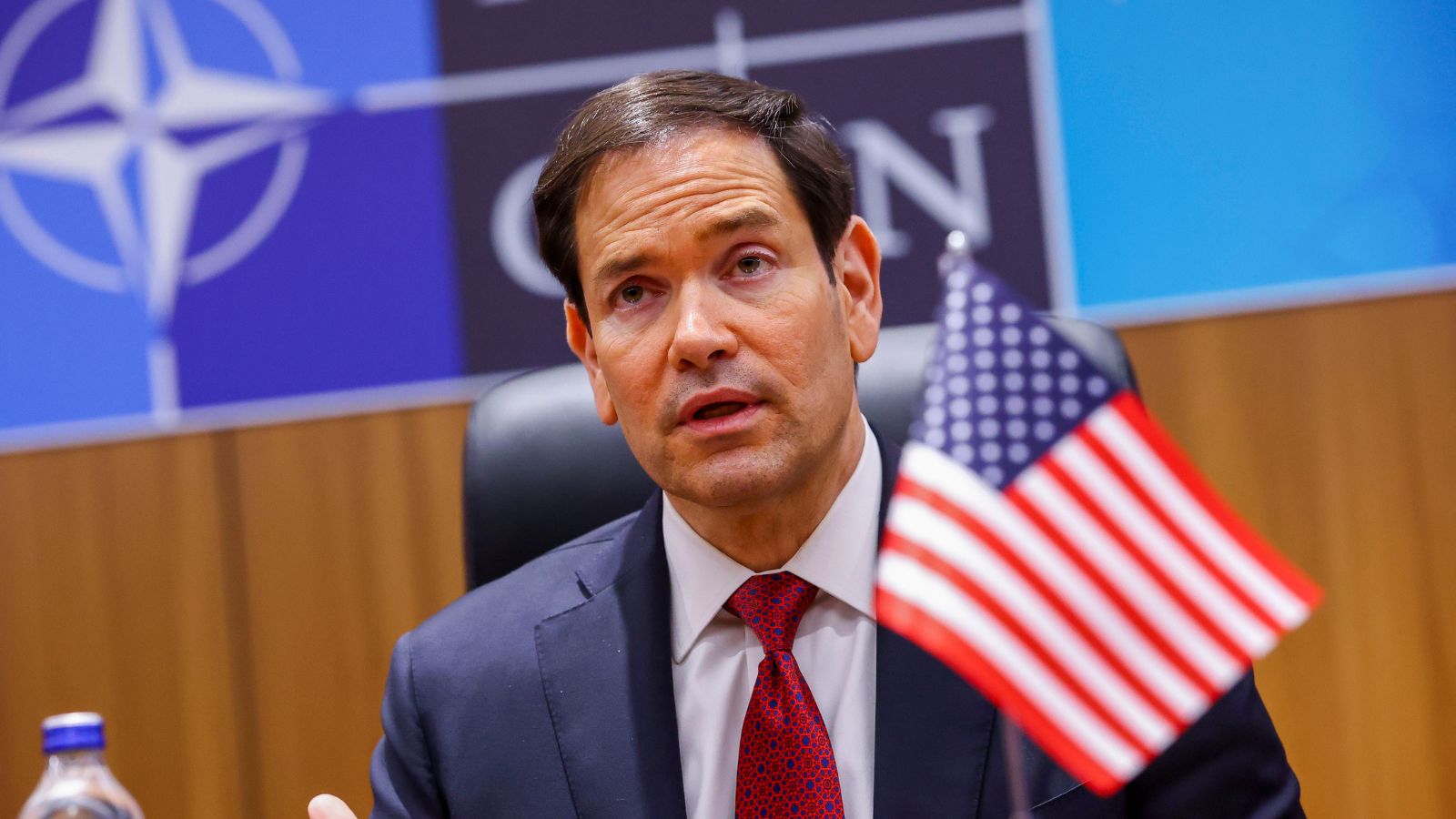
On July 13, 2026, Secretary of State Marco Rubio formally declared war on the International Criminal Court.
Writing in the Wall Street Journal, Rubio announced that the United States is launching an aggressive diplomatic and economic campaign to dismantle the tribunal in The Hague, promising to tear it down "brick by brick, if necessary". The State Department backed this up with a sweeping press release threatening travel bans, visa revocations, and severe financial sanctions against the court’s personnel and any affiliated organizations. If you enjoyed this piece, you should look at: this related article.
On the surface, the administration frames this escalation as a defensive shield to protect American soldiers, border patrol agents, and elected officials from rogue prosecutors. But that explanation is a political smokescreen.
In reality, the administration is executing a calculated preemptive strike. By threatening to choke off the tribunal’s operations, Washington is trying to shield its most critical allies, protect its own upcoming unilateral actions in South America, and force a global choice between American military protection and the post-Cold War rules-based international order. For another look on this event, see the latest update from Reuters.
The Sovereignty Screen and the Border Patrol Scare
To sell this campaign to the American public, Rubio invoked a stark, alarming image. He warned of a world where American police officers, border agents, and local politicians could be dragged before a foreign tribunal and tried by judges from random nations under laws the United States never agreed to.
It is a powerful, nationalistic narrative. It is also legally hollow.
The International Criminal Court does not have a mandate to police domestic American law enforcement. Established in 2002 under the Rome Statute, the court acts as a court of last resort, stepping in only when a state is unwilling or genuinely unable to investigate grave international crimes—namely genocide, war crimes, and crimes against humanity. Under the core principle of complementarity, if the United States has a functioning legal system capable of prosecuting its own citizens, the tribunal has no legal standing to intervene.
Furthermore, the United States never ratified the treaty. Because Washington refused to join, the court has no geographic jurisdiction over activities occurring on American soil. The scare tactic of a border patrol agent being snatched from Texas and put on trial in The Hague is a political fiction designed to manufacture outrage and build domestic consensus for a highly aggressive foreign policy shift.
The real legal friction lies elsewhere. It exists where American personnel operate on foreign soil, or where close American allies carry out military campaigns in territories that have recognized the court’s authority.
The True Targets of the American Campaign
The immediate driver of this sudden diplomatic assault is not a sudden threat to American troops in Afghanistan, an investigation that prosecutors in The Hague actually deprioritized years ago. The true emergency in Washington is the mounting legal pressure on Israel.
When the tribunal issued arrest warrants for Israeli Prime Minister Benjamin Netanyahu and other high-ranking officials, it crossed a red line for Washington. The United States has long maintained that international bodies have no right to scrutinize the military actions of non-member states, even when those actions take place in territories, like Palestine, that have joined the court. By targeting Israeli leadership, the court threatened to disrupt the security architecture that Washington relies upon in the Middle East.
But there is a second, highly classified anxiety driving the State Department.
The administration is preparing for a far more interventionist posture in the Western Hemisphere, particularly regarding Venezuela. With Caracas already under intense scrutiny and Venezuelan opposition figures operating with overt U.S. backing, Washington is anticipating potential legal blowback. Legal experts have raised concerns that prospective U.S. naval blockades, interdictions in the Caribbean, or direct operations targeting Venezuelan figures could be categorized by international activists as crimes of aggression or unlawful abductions under the Rome Statute. Because Venezuela is a state party to the court, any military actions taken on its territory or against its nationals could technically trigger an investigation, regardless of whether the U.S. is a member.
Rather than risk the political embarrassment of future warrants targeting American commanders, the State Department has decided that the safest course of action is to destroy the credibility and operational capacity of the court itself.
Shaking Down Allies under the Security Umbrella
The actual mechanics of Rubio’s campaign reveal how far Washington is willing to go. This is not merely a rhetorical battle. It is an economic and diplomatic shakedown of America’s closest allies.
The State Department’s strategy centers on a brutal ultimatum delivered to countries that host American military bases, share intelligence, or rely on U.S. weapon systems. Rubio’s message to these capitals is explicit. If you want to enjoy the benefits of the American security umbrella, you must publicly reject the tribunal's authority to prosecute American officials and servicemen.
Those who refuse will face consequences.
+-------------------------------------------------------------------------+
|                WASHINGTON'S SYSTEMATIC DISMANTLING TOOLKIT             |
+-------------------------------------------------------------------------+
| * Visa Revocations: Denying entry to prosecutors and their families     |
| * Financial Sanctions: Freezing assets of court officials and banks     |
| * Security Leverage: Conditioning military aid on anti-court agreements |
| * Diplomatic Coercion: Forcing treaty withdrawals under trade threats   |
+-------------------------------------------------------------------------+
This strategy places European allies like Germany, France, the United Kingdom, and Italy in an impossible position. These nations are not just members of the court; they are its primary financial underwriters and ideological champions. They view the court as a crowning achievement of post-World War II diplomacy, an essential tool to prevent impunity for mass atrocities.
Now, they are being told that their commitment to international law is a threat to their alliance with the United States.
A History of Hostility and Hypocrisy
This is not the first time Washington has clashed with the court, but the current escalation represents a dangerous point of departure.
The U.S. relationship with the tribunal has always been transactional. President Bill Clinton signed the Rome Statute in 2000 but refused to submit it to the Senate for ratification, harboring concerns about sovereign control. Under George W. Bush, the relationship turned hostile, resulting in the passage of the American Service-Members' Protection Act, colloquially known as the "Hague Invasion Act," which authorized the use of military force to free any American detained by the court.
Yet, when the tribunal targeted America's adversaries, Washington was more than happy to help.
During the Obama administration, the U.S. provided critical intelligence and logistical support to assist the court in capturing African warlords. When Russian forces invaded Ukraine, the Biden administration actively shared intelligence with the tribunal to facilitate the arrest warrant against Vladimir Putin.
This selective engagement has left the United States vulnerable to charges of extreme hypocrisy.
       [U.S. Foreign Policy: The Double Standard]
                      |
        +-------------+-------------+
        |                           |
  [Adversaries]                  [Allies]
        |                           |
  Support the Court            Attack the Court
  to prosecute enemies         to protect friends
By declaring that the court is "radical and extreme" only when it turns its sights toward U.S. operations or Western allies, Rubio is confirming what critics in the Global South have argued for two decades. To much of the world, the rules-based order is not a neutral system of justice, but a political weapon wielded by powerful Western nations who believe they are exempt from the very laws they enforce on others.
The Collateral Damage of the American Crusade
The tragic irony of Rubio’s campaign is that by trying to dismantle the court, the United States is stripping away the only international legal recourse available to victims of some of the world's worst atrocities.
In regions where local judiciaries have collapsed under the weight of civil war, dictatorship, or systemic corruption, the tribunal in The Hague is the sole institution capable of holding war criminals accountable. From the genocide in Darfur to the mass atrocities in the Democratic Republic of Congo and the Central African Republic, the court has spent twenty years building cases against perpetrators who thought they were untouchable.
If Washington succeeds in defunding, sanctioning, and politically isolating the court, the victims of these conflicts will pay the price.
Without the tribunal, there is no international mechanism to prosecute warlords or corrupt dictators who butcher their own people. A weakened court cannot effectively pursue justice in Ukraine, nor can it deter future aggression in vulnerable regions. By systematic execution of this anti-court agenda, the State Department is not just shielding American personnel; it is inadvertently granting a license of impunity to bad actors worldwide who now know that international law can be dismantled by a determined superpower.
Washington is trading long-term global stability and the moral authority of the West for short-term geopolitical impunity.

