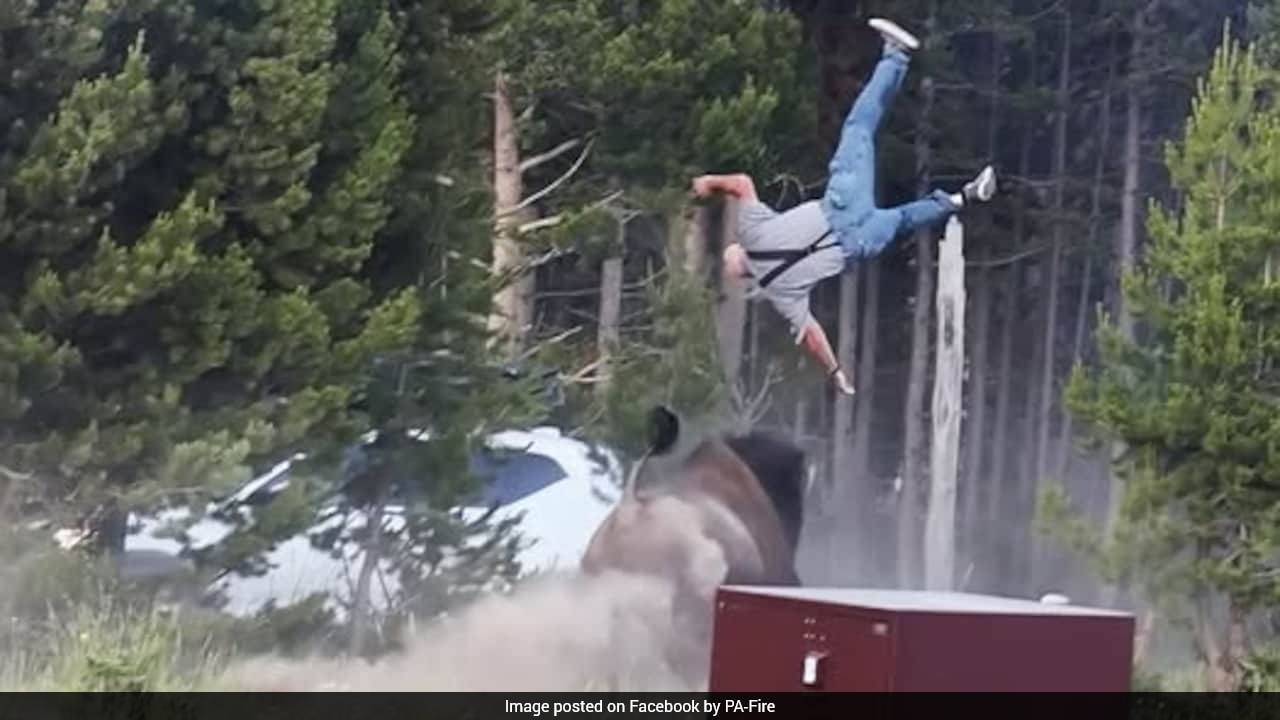
A standard wildlife encounter story follows a predictable script. A tourist gets too close to a 2,000-pound bison in Yellowstone National Park, the animal charges, and the human is tossed through the air like a ragdoll. The internet mocks the victim, the park issues a boilerplate press release about maintaining a 25-yard distance, and the public moves on until the next viral video emerges.
But dismissing these incidents as mere tourist stupidity ignores a systemic failure in how modern national parks manage the collision between wild nature and industrial-scale tourism. The recent incident where a visitor was thrown eight feet into the air by a bison is not an isolated anomaly. It is the logical consequence of a park system that actively markets wilderness while infrastructure and crowd dynamics subtly encourage dangerous behavior.
The Illusion of the Safe Frontier
National parks operate under a contradictory mandate. They must preserve wild ecosystems while simultaneously making them accessible to millions of visitors every year. This creates a psychological disconnect for the average traveler.
When a person enters a park through a managed gate, pays a fee, and drives on paved roads past manicured visitor centers, their perception of risk drops significantly. The setting feels curated. Because the environment looks managed, visitors subconsciously assume the wildlife is part of the exhibit.
Bison appear deceptively docile. They spend hours standing in meadows, chewing cud, looking very much like oversized domestic cattle. This placid exterior masks an animal capable of sprinting at 35 miles per hour and pivoting with incredible agility. A human standing 10 feet away has zero reaction time when that mass decides to clear its personal space.
The Problem With Warning Signs
Park management relies heavily on signs. Graphic flyers showing a silhouette of a person being gored are handed out at every entrance station. Yet, these warnings fail to change behavior in a meaningful way.
Behavioral science explains why. When compliance requires self-regulation in a crowd, individual responsibility dilutes. If twenty people are standing near the boardwalk taking photos of a bull bison, a newcomer assumes the situation is safe. Social proof overrides a paper brochure. The collective herd mentality of tourists routinely overpowers the survival instincts of the individual.
The Instagram Influence and Spatial Crowding
The rise of smartphone photography has fundamentally altered how visitors interact with public lands. The goal is no longer just to witness an animal, but to document oneself in proximity to it.
Safe Distance (25 Yards) -------------------> [ Bison ]
Actual Distance (Social Media Range) -> [ Tourist ] [ Bison ]
This shift from observation to participation forces tourists to breach the established 25-yard safety buffer. To get a high-quality photo without a telephoto lens, a person must physically move closer. In crowded areas like the Norris Geyser Basin or Hayden Valley, the geography compounding this issue. Paved boardwalks and viewing platforms frequently cut directly through historical wildlife corridors.
When a herd of bison decides to cross a boardwalk, hundreds of visitors are trapped in a bottleneck. Some back away, but others press forward to capture the moment. The animal finds itself cornered by a wall of screens and human bodies. Agitation turns to aggression, and a charge becomes inevitable.
Infrastructure Strain and the Limits of Enforcement
Yellowstone was never designed to handle over four million visitors annually. The infrastructure is buckling under the weight, and so is the law enforcement apparatus.
A thin cohort of park rangers is tasked with patrolling more than two million acres. They cannot play babysitter at every roadside pullout. On any given summer day, a single ranger might be managing traffic jams caused by wildlife—locally known as "bison jams"—where hundreds of vehicles park illegally on road shoulders while passengers pour into the fields.
- Enforcement Reality: Fines for harassing wildlife exist, but they are rarely applied unless an injury occurs.
- Resource Allocation: Rangers spend more time directing traffic and managing trash than policing wildlife distances.
- The Deterrent Gap: Without visible, consistent penalties for crossing safety lines, compliance remains entirely voluntary.
Relying on voluntary cooperation in an environment designed for mass consumption is a losing strategy. The park cannot fence off the animals without destroying the very essence of a national park, yet it cannot control the influx of human behavior with signs alone.
Rethinking the National Park Experience
If the park service wants to stop the cycle of goring injuries, the approach to visitor management needs a structural overhaul. Treating these events as individual lapses in judgment ignores the environmental design choices that facilitate them.
One potential solution involves restricting private vehicle access in high-congestion zones during peak seasons, relying instead on mandatory shuttle systems. This model, used successfully in places like Zion National Park, drastically reduces the chaotic roadside pullouts where close-range wildlife encounters often happen. When people are moved in structured groups led by trained drivers, the opportunity for individual reckless behavior drops.
Another avenue is modifying boardwalk design. Raising boardwalks higher or installing subtle, natural barriers like dense boulder fields along paths can physically discourage visitors from stepping off the designated trails into wildlife territory.
The current trajectory is unsustainable. As regional populations grow and international tourism rebounds, pressure on Yellowstone will only increase. Expecting millions of untrained, distracted people to flawlessly self-regulate around unpredictable megafauna is an expensive delusion.
The next time a tourist is launched into the air, blame the individual, certainly. But save some scrutiny for the system that put them in that position.