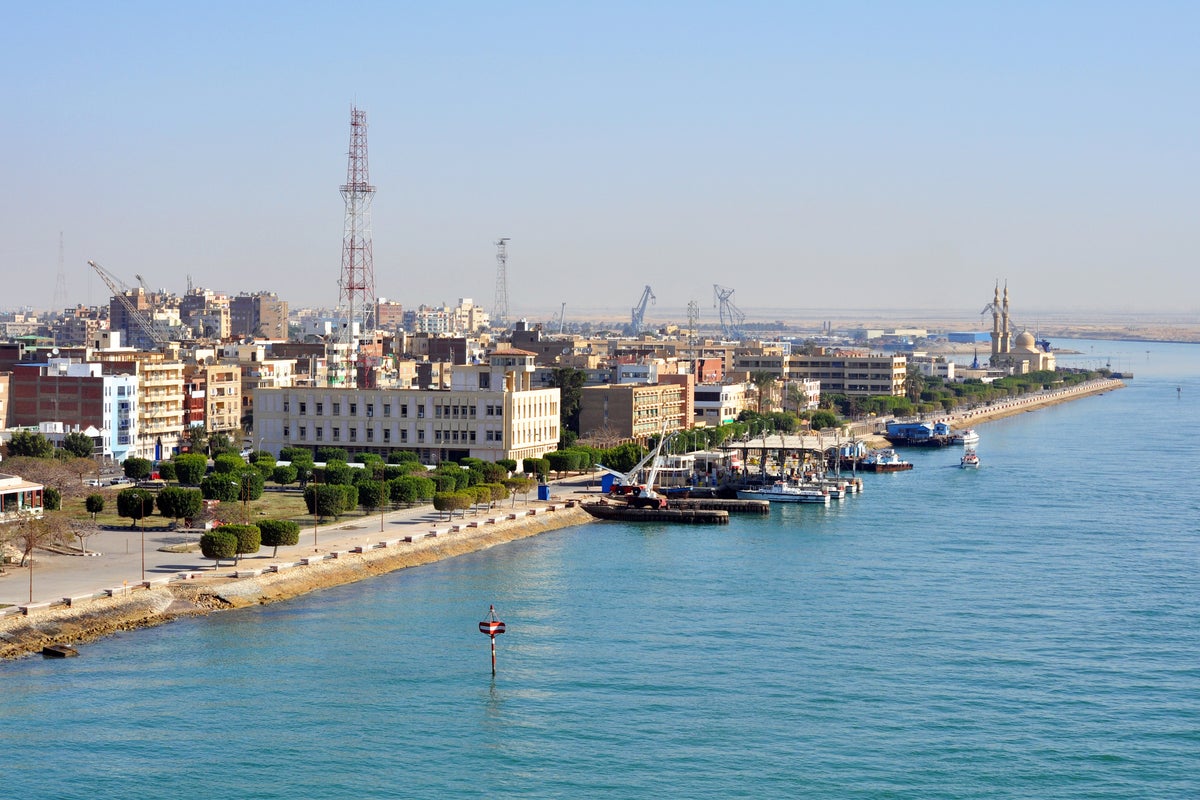
A sudden jolt woke up millions of people across Egypt and parts of the wider Middle East at 3:00 a.m. Beds shook, windows rattled, and sleepy residents scrambled onto balconies as a magnitude 5.5 to 5.6 earthquake struck roughly 38 to 40 kilometers north of Suez.
When the earth moves in a region that rarely experiences major seismic activity, panic spreads instantly. Social media flooded with updates from Cairo, the Suez region, and as far away as Israel, Jordan, Lebanon, and the Gaza Strip. People wanted to know one thing immediately: was this a foreshock to something worse?
Here is what actually happened, how authorities responded, and why an earthquake centered near Suez managed to wake up half the region.
Breaking Down the Numbers and the Epicenter
Seismological agencies gave slightly different readings in the hours following the tremor, which is normal for deep or shallow crustal shifts. Egypt's National Research Institute of Astronomy and Geophysics initially measured the event at magnitude 5.2 before revising it up to 5.5 and 5.6. Meanwhile, the German Research Centre for Geosciences recorded it at 5.4 at a shallow depth of 10 kilometers, and the U.S. Geological Survey pinned the shallow tremor at magnitude 5.0.
Depth matters immensely when evaluating damage. At only 10 kilometers deep, the energy traveled efficiently through regional crustal formations.
The epicenter sat in a zone sensitive to tectonic adjustments linked to the Gulf of Suez system. While major, catastrophic quakes are rare in Egypt, the country intersects active fault lines where the African, Arabian, and Eurasian plates interact.
Why People Across the Middle East Felt It
If you were sitting in parts of southern or central Israel, or up through Amman and Beirut, you likely felt a rolling motion. Why did a moderate quake near Suez travel so far?
Large sedimentary basins and specific regional crustal structures can channel seismic energy across long distances without losing much punch. Because it hit in the dead of night when background environmental noise and urban vibration were virtually zero, even minor ground movements felt much more violent to people trying to sleep.
The Immediate Emergency Response
Egyptian Health Minister Khaled Abdel Ghaffar acted quickly, ordering emergency response plans activated nationwide and placing ambulance services on maximum alert. Hospitals linked their emergency rooms, and the Egyptian Red Crescent deployed field teams to check for structural vulnerabilities.
Initial assessments brought good news compared to historical disasters. Officials reported no widespread casualties or catastrophic collapses. However, local incidents highlighted ongoing risks in older neighborhoods. Authorities evacuated three families from an aging building in the Rod al-Farag district of northern Cairo after noticing structural shifts, and emergency responders checked a collapsed balcony near the epicenter in Suez.
The Red Crescent issued urgent warnings telling residents to stay away from old, dilapidated buildings that lack modern seismic reinforcement.
Putting the Tremor Into Historical Context
Egyptians are rarely tested by major earthquakes, which makes events like this deeply unsettling. Collective memory in Cairo still holds the scars of the October 1992 earthquake. That magnitude 5.8 event struck close to the capital, claiming over 500 lives and leaving thousands homeless because of vulnerable older housing stock.
Comparatively, this recent Suez tremor was less destructive, but it served as a harsh wake-up call about urban density and infrastructure standards.
Practical Safety Steps If You Experience a Tremor
Earthquakes don't give you time to think. If you live in an earthquake-prone zone or experience sudden shaking, you need automatic habits.
- Drop, Cover, and Hold On: Get under a sturdy desk or table immediately. Protect your head and neck from falling glass or debris.
- Stay Away From Glass: Windows are usually the first things to shatter during structural flexing.
- Inspect Your Home Before Re-entering: If you live in an older building that creaked or cracked during the shake, get outside and wait for official clearance before going back to bed. Do not use elevators.