Li Wei sits in a quiet corner of a Raffles Place cafe, his fingers tracing the condensation on a glass of iced kopi. Outside, the midday sun reflects off the glass towers of Singapore’s financial district with a clinical, blinding brilliance. To the casual observer, Li is just another businessman enjoying a moment of respite. In reality, he is a man orchestrating the migration of a family legacy.
He is part of a silent, massive movement of capital. For Li and thousands of others like him from mainland China, Singapore is no longer just a weekend getaway or a place to send a child for an English-based education. It has become a lifeboat.
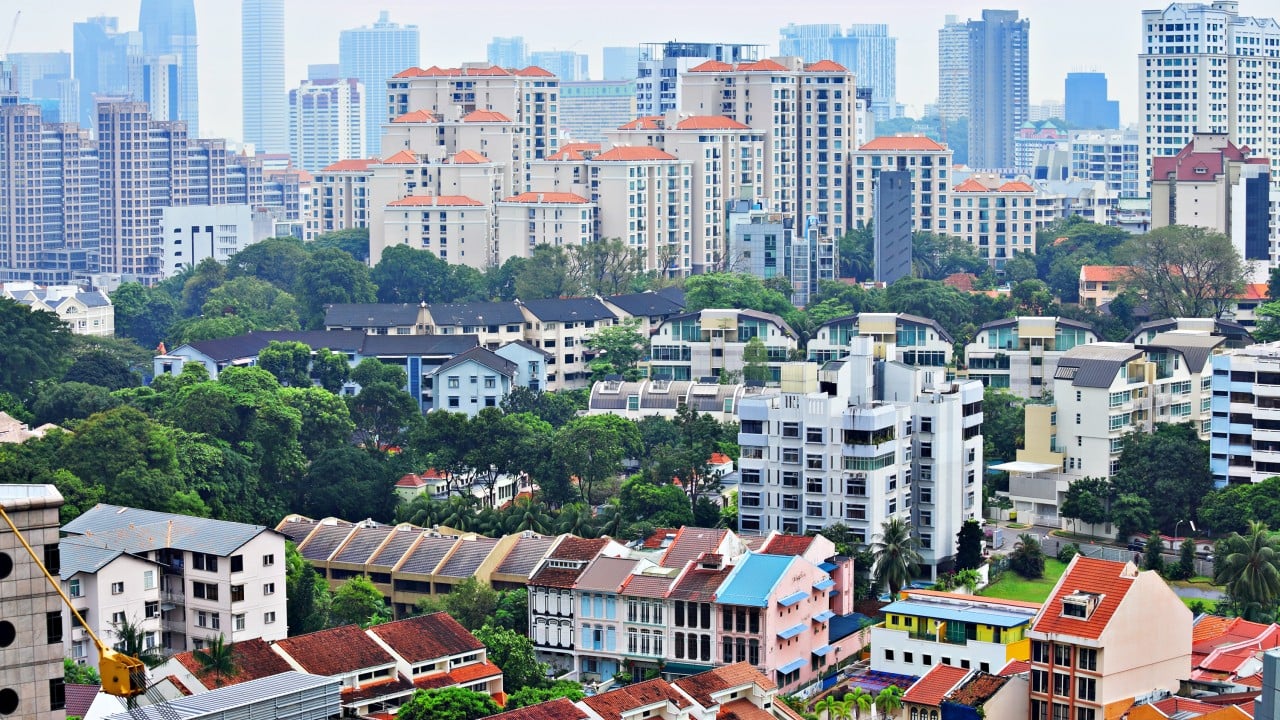
The numbers tell a story of cold, hard calculation. While global real estate markets have buckled under the weight of high interest rates and geopolitical tremors, Singapore’s luxury property sector has remained stubbornly buoyant. Recent data indicates that Chinese buyers remain the top foreign cohort for high-end residential sales in the city-state. They aren't just buying apartments; they are buying the concept of "certainty."
The Weight of the Great Wall
To understand why a tech entrepreneur from Shenzhen would pay a 60% Additional Buyer’s Stamp Duty (ABSD) to own a penthouse in District 9, you have to understand the claustrophobia of the modern Chinese market.
Inside China, the economic weather has turned. The property giant Evergrande’s collapse wasn't just a corporate failure; it was a psychological earthquake. For decades, the Chinese middle and upper classes viewed domestic real estate as an invincible asset class. When those foundations cracked, the instinct to diversify became an obsession.
Then there is the regulatory storm. Beijing’s "Common Prosperity" drive, while aimed at social equity, has left many of the nation’s wealthiest individuals feeling exposed. They look at the horizon and see a landscape where the rules can change overnight.
Contrast this with Singapore.
Here, the law is a predictable machine. Contracts are sacrosanct. The currency is one of the strongest in the world. For someone like Li, the 60% tax—which sounds like a dealbreaker to a Western investor—is viewed as an insurance premium. You pay the entry fee for the privilege of sleeping in a bed that won't be moved by a sudden policy shift three thousand miles away.
A City Built on the Sound of Silence
Singapore has mastered the art of being a "safe haven." It is a term used so often in financial journals that it has lost its visceral meaning. In this context, "safe" means your children can walk to a park at 10:00 PM without a second thought. "Safe" means the government has a hundred-year plan for rising sea levels and an even longer one for fiscal stability.
Consider a hypothetical scenario: A family office in Shanghai manages three generations of wealth. If they invest in London, they face a weakening pound and political volatility. If they look at New York, they see rising crime and a complex tax web. When they look at Singapore, they see a mirror of their own culture—Confucian values, Mandarin-speaking services, and a relentless focus on order—but with a British-inspired legal framework.
It is the ultimate hybrid. It feels like home, but it functions like a Swiss vault.
This influx of capital has fundamentally altered the local streets. Walk through the Orchard Road corridor or the Sentosa Cove docks, and you will hear more Mandarin than English. The luxury car showrooms are busy. The international schools have waiting lists that stretch into the next decade.
The Invisible Resistance
But water flowing into a glass eventually reaches the rim. The Singaporean government is acutely aware that while foreign investment is the lifeblood of a city-state, it can also become a poison if it makes life unaffordable for the locals.
The 60% ABSD was not a random figure. It was a surgical strike. The government wanted to cool the market without freezing it. They wanted to signal to the world that while Singapore is open for business, its homes are not mere chips on a global gambling table.
The tension is palpable. Young Singaporean couples looking at their first HDB flats or entry-level condos see the headline-grabbing prices of luxury bungalows and wonder if they are being priced out of their own future. The "safe haven" for the billionaire can feel like a "gilded cage" for the middle class.
Li Wei knows this. He sees the headlines. He understands that he is a guest, albeit a very wealthy one. He chooses his property with a "low profile" mindset. He isn't looking for the loudest, glitziest mansion. He wants a high-floor unit in a discreet development where the security guards are professional and the neighbors mind their own business.
The Architecture of Trust
Why does the capital keep coming despite the cooling measures? Because trust is the rarest commodity in the 21st century.
When a Chinese investor looks at Singapore, they aren't just looking at square footage. They are looking at the "MAS"—the Monetary Authority of Singapore. They are looking at a central bank that manages the exchange rate with the precision of a watchmaker.
In a world of "deglobalization," Singapore has doubled down on being a global hub. It has positioned itself as the neutral ground of Asia. If the US and China are the two giants in a room, Singapore is the sturdy, well-lit table between them. You can do business on that table. You can leave your wallet on that table and know it will be there in the morning.
The shift is also generational. The older cohort of Chinese investors was content to keep their money in China, close to the source of their power. The younger generation—the "sea turtles" who studied in Ivy League schools or at Oxford—are more global. They want their wealth in a jurisdiction that speaks the language of international finance. They want to be able to move their capital to London, New York, or Tokyo at the click of a button. Singapore provides that bridge.
The Cost of the Lifeboat
There is a certain irony in the "safe haven" status. The more chaotic the rest of the world becomes, the more attractive Singapore looks. War in Europe? Capital flies to Singapore. Tech crackdowns in Silicon Valley or Beijing? The talent moves to Singapore.
But this status comes with a hidden psychological cost. There is a relentless pressure to maintain perfection. A single lapse in security, a single major corruption scandal, or a significant shift in the tax code could break the spell. The city-state is running a marathon at a sprinter’s pace, constantly innovating to stay one step ahead of the competition.
For the investor, the "hidden cost" isn't the tax. It’s the isolation. Moving your wealth is easy; moving your life is harder. Li Wei’s parents still live in a provincial capital in China. They don't want to move. They don't understand why he would pay so much for a "small" apartment in a humid city where the food is too sweet and the rules are too many.
Li tries to explain it to them through the lens of history. He tells them about the cycles of dynasties, the way fortunes are made in a generation and lost in a day. He tells them that in Singapore, time moves differently. It moves slower. It is a place where you can build something and reasonably expect your grandchildren to still own it.
The Final Calculation
As the sun begins to set, casting long, amber shadows across the Padang, the city transitions. The office lights flicker on, creating a digital tapestry of commerce.
The trend of Chinese capital flowing into Singaporean property isn't a fad. It is a structural realignment of the world’s wealth. It is the result of a thousand individual decisions made in boardrooms in Shanghai and tea houses in Hangzhou.
Is the market too hot? Perhaps. Is the 60% tax a deterrent? To the speculator, yes. To the man looking for a fortress? No.
Li Wei finishes his coffee and stands up. He has a meeting with a property agent in ten minutes to view a unit at a new development in the Core Central Region. He isn't looking for a "flip." He isn't looking for a 10% return in twelve months.
He is looking at the horizon, where the red sun is dipping below the South China Sea. He is looking for a place where the ground doesn't shake. He is looking for a home that feels like a vault, and a vault that feels like a home.
In the high-stakes game of global wealth, the winner isn't the one with the most money. It’s the one who still has it when the storm finally breaks.