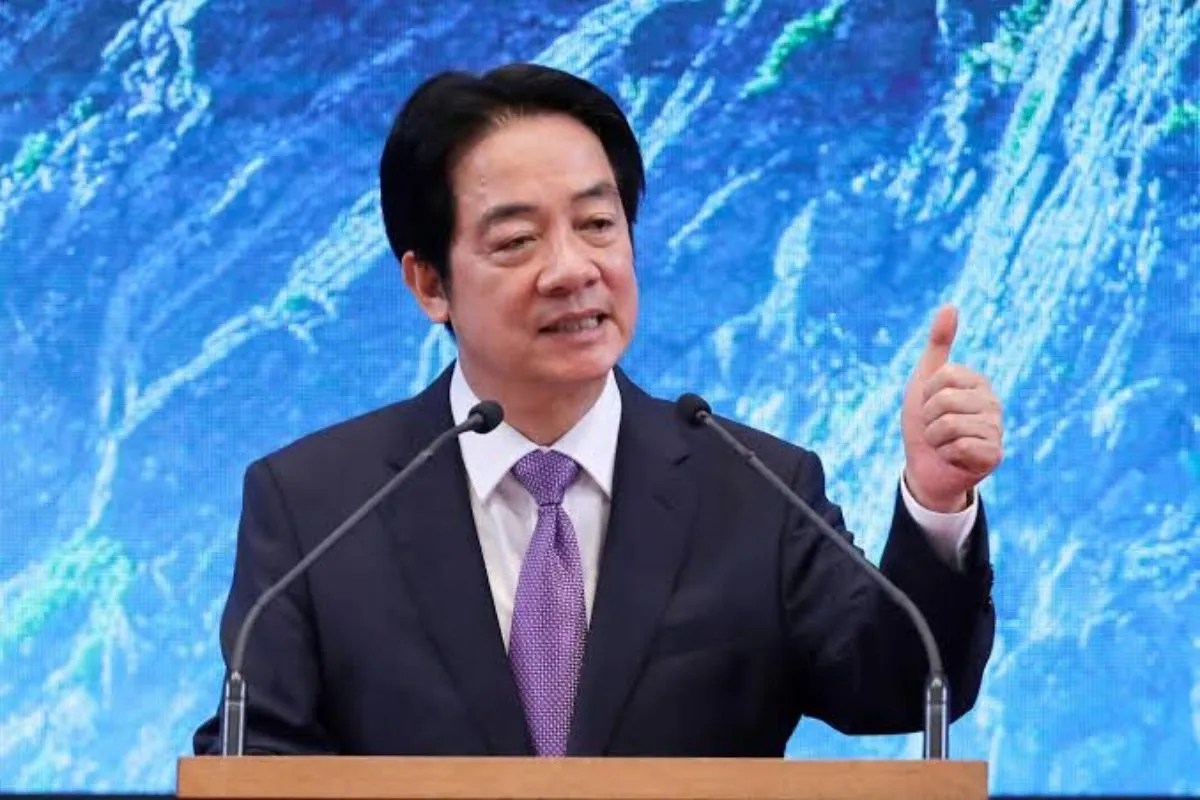
Beijing is fighting a war without firing a single bullet. Taiwanese President Lai Ching-te explicitly warned his party and the global community about a quiet, insidious escalation in cross-strait pressure. China has deployed a weapon designed to reshape reality through judges, registries, and legal threats. It is called lawfare, and its latest manifestation is the Ethnic Unity and Progress Promotion Law, which went into effect on July 1. This strategy bypasses naval blockades and missile tests entirely. It aims to create a binding legal net over citizens who live hundreds of miles beyond the reach of the Chinese Communist Party.
Taiwanese authorities are sounding the alarm because this strategy addresses a foundational vulnerability. Beijing claims jurisdiction over an island it has never ruled, using domestic statutes to criminalize foreign behavior. Under the vague provisions of this new law, any individual or organization, anywhere in the world, can be held legally liable if they are deemed to undermine ethnic unity or promote division. This does not just apply to political speech in Taipei. It directly threatens Taiwanese executives, international researchers, and foreign businesses operating globally. By establishing a framework for transnational repression, Beijing wants to induce a psychological freeze.
The Extraterritorial Trap
Traditional military pressure relies on visible force. Fighter jets breach the median line of the Taiwan Strait, and naval vessels circle the coast. Lawfare operates in the shadows of bureaucratic processes. This strategy relies on ambiguity. The text of the new ethnic unity law does not define what specific actions constitute an offense. This lack of definition is intentional. It forces individuals to self-censor out of fear. A Taiwanese business owner attending a trade conference in Southeast Asia could find their assets frozen or face arrest during a layover in a country that maintains an extradition treaty with Beijing.
This is not a theoretical scenario. President Lai noted that China has already executed over 110 documented instances of cross-border repression targeting Taiwanese citizens. The strategy aims to make the cost of maintaining a distinct identity unmanageable. By declaring that anyone identifying as Taiwanese rather than part of a single, homogenized Chinese nation is a criminal, Beijing attempts to dismantle the island's political legitimacy from the inside out.
The strategy creates intense pressure on corporate entities. Multi-national corporations operating in the region face an impossible choice. They must either comply with Beijing's broad definitions of unity or risk sudden regulatory retaliation within the massive mainland market.
Mapping the Target Zones
Taiwanese intelligence agencies have identified several specific groups highly vulnerable to this legal offensive.
- Academics and Historians: Researchers documenting the unique linguistic and cultural evolution of Taiwan's indigenous populations or the distinct history of the island.
- Technology Executives: Business leaders managing semiconductor supply chains who refuse to prioritize mainland entities over global clients.
- Civil Society Organizers: Non-governmental workers coordinating democratic advocacy networks or funding regional human rights initiatives.
Decentralizing Communications to Mitigate Risks
Taipei is shifting away from purely diplomatic protests to address this systemic threat. The vulnerabilities are material, particularly regarding critical infrastructure. Taiwan relies almost exclusively on fragile submarine internet cables to maintain connectivity with the rest of the world. In February 2023, two of these telecommunication lines serving the outlying Matsu archipelago were severed, cutting off the local population for weeks. If Beijing combines legal pressure with physical isolation, the island faces sudden economic detachment.
Taiwanese lawmakers are fast-tracking significant amendments to local telecommunication laws. The goal is straightforward. Parliament is removing long-standing ownership hurdles to allow global satellite constellations, including Starlink, to operate within the country. Previously, strict regulations mandated a Taiwanese chairperson and a 49 percent foreign ownership cap for telecom operators. These protectionist rules kept major low-Earth-orbit providers out of the domestic market.
+-----------------------------------+-----------------------------------+
| Previous Policy Framework         | Incoming Crisis Policy            |
+-----------------------------------+-----------------------------------+
| Strict 49% foreign telecom cap    | Deregulated foreign satellite access|
| Reliance on subsea data cables    | Redundant space-based networks    |
| Passive diplomatic pushback       | Active transnational exposure     |
+-----------------------------------+-----------------------------------+
This structural shift follows critical lessons from recent conflicts in Eastern Europe. Space-based communications offer immediate operational redundancy. Even if subsea infrastructure is compromised during a political crisis, decentralized satellite networks ensure the financial sector and governing bodies remain online. Diversifying the satellite grid directly undermines Beijing's ability to isolate the island digitally.
The Failure of Regional Deterrence
The current international approach to countering Chinese lawfare remains deeply flawed. Western allies regularly dispatch naval freedom-of-navigation patrols through the Taiwan Strait. These operations are necessary, but they do not counter the weaponization of domestic legal codes. Gunboat diplomacy cannot overturn a warrant issued by a court in Shanghai or counter a coordinated corporate boycott enforced by Chinese regulatory agencies.
International institutions remain slow to adapt to this challenge. The United Nations and the European Parliament have expressed formal opposition to Beijing's forced assimilation laws, yet these statements lack enforcement mechanisms. This leaves small democratic partners to bear the brunt of asymmetrical legal maneuvers on their own.
Taipei is adjusting its defense strategy by building a public early-warning framework. The administration is training civil servants, business associations, and travelers to recognize the indicators of legal entrapment. This includes mapping shifting extradition treaties and monitoring the specific legal pretexts Beijing uses to freeze foreign bank accounts.
Democracy requires physical security, clear communication channels, and a rejection of authoritarian legal concepts. President Lai delivered his warning during a speech marking the anniversary of the lifting of Taiwan's historical martial law. The historical parallel was clear. Having spent decades dismantling internal authoritarian structures, the island has no intention of submitting to an external one. The battle line is no longer just the maritime border. It runs directly through global regulatory bodies, corporate compliance offices, and digital communication networks.