The coffin arrived draped in a Serbian flag, carried off a government plane by soldiers at Belgrade airport. Inside was Ratko Mladic, the notorious former Bosnian Serb military commander who died in a UN detention unit in The Hague while serving a life sentence for genocide and war crimes. His homecoming has immediately reignited bitter ethnic tensions across the Balkans and triggered sharp warnings from Western capitals.
Love him or loathe him, Mladic remains a flashpoint. Decades after the 1992–1995 Bosnian War left over 100,000 dead, his death at age 84 hasn't brought closure. Instead, it's turned into a high-stakes political showdown over how Serbia handles its dark past and its fragile European future.
The Return to Belgrade and the Optics of Power
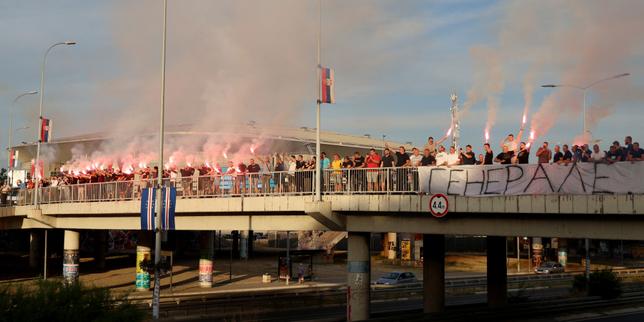
Accompanied by his family and Serbian Justice Minister Nenad Vujic, Mladic’s remains were swiftly transferred to a military hospital for an autopsy requested by his relatives. Pro-government media outlets broadcast footage of young men gathering on highway overpasses, lighting flares and waving banners as the police-escorted convoy rolled past.
President Aleksandar Vucic announced that the state would provide logistical support for the arrangements, anticipating massive crowds. Yet, the exact nature of the funeral honors has shifted under intense international pressure. While local officials initially floated the idea of a full state send-off, European watchdogs quickly drew a hard line.
EU Enlargement Commissioner Marta Kos made it clear that glorifying a convicted war criminal flies in the face of core European values. Croatian Prime Minister Andrej Plenkovic went even further, warning that official state honors could effectively slam the door on Serbia's long-stalled EU accession path.
Two Realities, Zero Reconciliation
How can one man be viewed as both a monster and a hero? Walk through Belgrade today, and you'll find an irreconcilable divide.
To the international community, and especially to the victims' families, Mladic is the "Butcher of Bosnia". He is the architect of the 43-month siege of Sarajevo and the mastermind behind the 1995 Srebrenica massacre, where forces under his command systematically slaughtered more than 8,000 Muslim men and boys. It stands as Europe's first legally acknowledged genocide since World War II.
Yet, step into certain circles in Serbia or the Republika Srpska entity in Bosnia, and the narrative flips entirely. To his sympathizers, Mladic is framed as a patriotic defender who fought to protect Serbs from falling victim to historical enemies. This deep-seated denial of established tribunal facts keeps old wounds wide open. When people can live side-by-side while harboring entirely contradictory versions of mass murder, true regional stability remains impossible.
What Happens Next for Belgrade
Mladic is scheduled to be buried at a Belgrade cemetery following a public viewing at a local church. Tens of thousands of mourners are expected to turn out, presenting a major security and public relations headache for the ruling populist government.
Vucic has tried to walk a narrow tightrope, balancing domestic nationalist appeasement with the diplomatic demands of Brussels. But you can't have it both ways. Codering nationalist sentiment while pretending to pursue European integration creates a permanent roadblock.
The return of Mladic's body proves that the ghosts of the nineties are still running the show in the Balkans. Until leaders stop treating convicted war criminals as political leverage, the region will stay trapped in its violent past.