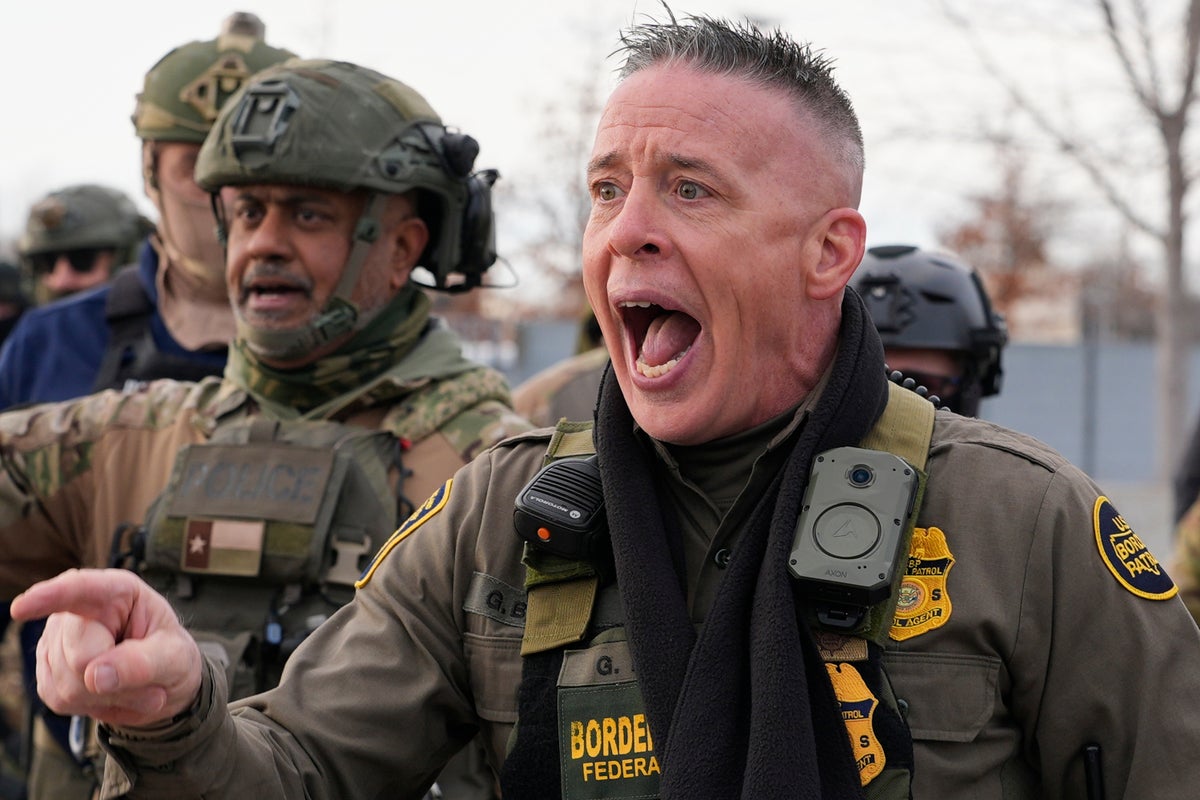
Gregory Bovino did not just lead the Trump administration’s mass deportation efforts; he performed them. Clad in tactical gear and a signature olive-green overcoat that critics likened to authoritarian regalia, the 29-year Border Patrol veteran became the face of a new, aggressive era of interior enforcement. His "turn and burn" strategy was designed to shatter the slow, methodical pace of traditional immigration investigations in favor of high-velocity, high-impact sweeps. From the parking lots of Los Angeles Home Depots to the residential streets of Chicago and Minneapolis, Bovino’s mandate was clear: maximize arrests and project an image of unyielding federal power.
But the very theatrics that propelled Bovino to the inner circle of the White House ultimately facilitated his exit. By late March 2026, sources confirmed Bovino’s plan to retire, following a series of fatal encounters in Minneapolis and a string of judicial rebukes that exposed the tactical and legal fragility of his "Metro Surge" operations. His departure marks the end of a specific brand of law enforcement that prioritized optics and speed over the painstaking legal work required to sustain long-term federal policy.
The Architecture of Turn and Burn
Bovino’s ascent began in earnest last summer when he was plucked from his role as Chief Patrol Agent of the El Centro sector in California. The administration needed a commander-at-large who was willing to move Border Patrol agents away from the physical border and into the heart of "sanctuary cities." Bovino was that man. He rejected the "paint-drying" pace of surveillance-heavy ICE operations. Instead, he favored "Operation Return to Sender"—a model where agents acted on administrative warrants to forcibly enter homes and workplaces.
In Los Angeles, Bovino’s teams netted thousands of arrests in a matter of weeks. They smashed car windows of non-compliant drivers and patrolled public parks on horseback. Bovino defended these tactics as "prudent" and "thoughtful," arguing that a show of overwhelming force actually prevented greater violence. To Bovino, the border was not a line on a map but a mobile jurisdiction that followed his agents wherever they deployed.
The Judicial Wall and the Chicago Friction
The transition from rural border enforcement to urban policing proved more volatile than the administration anticipated. In Chicago, Bovino’s "Operation Midway Blitz" hit a significant legal wall. U.S. District Judge Sara Ellis issued a rare public rebuke, accusing Bovino of being "evasive" and providing "cute" responses during depositions. The court found that Bovino’s claims—including an allegation that he was hit with a rock before deploying tear gas—were contradicted by video evidence showing he threw the canister first.
The Chicago operations highlighted a growing rift between Bovino’s tactical squads and the federal judiciary. While Bovino claimed his agents were acting within the Constitution, the courts began to see a pattern of fabricated threats used to justify chemical irritants and heavy-handed crowd control. This friction did not slow him down. If anything, the controversy solidified his standing with the President, who valued his "out there" persona as a symbol of strength.
The Minneapolis Breaking Point
The momentum of the "Metro Surge" collapsed in the Twin Cities. In January 2026, the deaths of two U.S. citizens—Renee Good and Alex Pretti—at the hands of federal agents turned Minneapolis into a political and literal battleground. Good was shot in her car; Pretti, a 37-year-old nurse, was killed during a chaotic confrontation where Bovino immediately claimed the suspect intended to "massacre law enforcement."
Bystander video once again told a different story. The footage showed Pretti holding a cell phone, not a weapon, in the moments leading up to the fatal encounter. The gap between Bovino’s public narrative and the documented reality became too wide for even his staunchest allies to bridge. Within days of Pretti’s death, the White House began the process of sidelining Bovino, eventually replacing him with border czar Tom Homan to oversee a "reset" of the operation.
Allegations of Internal Decay
Beyond the public violence, Bovino’s downfall was accelerated by reports of his conduct behind closed doors. In early 2026, it emerged that Bovino was under investigation for making disparaging, antisemitic remarks directed at Minnesota’s top federal prosecutor, Daniel Rosen. During a conference call regarding Saturday operations, Bovino reportedly mocked Rosen’s observance of the Sabbath, asking if "Orthodox criminals also take off on Saturday."
These remarks alienated the very Department of Justice officials needed to prosecute the cases Bovino was building. When a commander loses the trust of the prosecutors and the patience of the courts, his utility to an administration evaporates. The "tough guy" image, once a political asset, became a liability that suggested a lack of professional discipline.
The Final Act in El Centro
Bovino’s return to the El Centro sector was less a homecoming and more a quiet exile. His access to official social media accounts was briefly revoked, and the administration’s tone shifted toward a more targeted, less theatrical enforcement model. By mid-March, the "Commander-at-Large" was preparing his retirement paperwork, leaving behind a trail of lawsuits and a deeply divided law enforcement community.
The legacy of Greg Bovino is a cautionary tale about the intersection of policing and political performance. He demonstrated that while "turn and burn" tactics can produce high arrest numbers in the short term, they struggle to survive the scrutiny of the legal system and the weight of public outcry when things go wrong. His retirement marks the closing of a chapter where the spectacle of the arrest was more important than the integrity of the process.
The federal government is now left to manage the fallout of Bovino’s operations, including hundreds of pending legal challenges and a shattered relationship with municipal leaders. For the Border Patrol, the challenge remains: how to enforce federal law in a way that is sustainable, lawful, and divorced from the personality of a single, controversial commander. Bovino is leaving, but the tactics he pioneered remain a part of the national infrastructure, waiting for the next commander willing to put on the coat.
Contact the Department of Homeland Security's Office of Inspector General to track the ongoing investigations into the Minneapolis shootings and Bovino’s conduct during the Metro Surge.