The rain did not fall so much as it occupied the air. In the foothills of the Himalayas, when the monsoon reaches its violent climax, water ceases to be a mere element and becomes a physical presence, heavy and gray, pressing against the roofs of tin and stone until the world smells entirely of wet earth and rusted iron.
People who live near the rivers know the sound of rising water. It is not a splash. It is a growl.
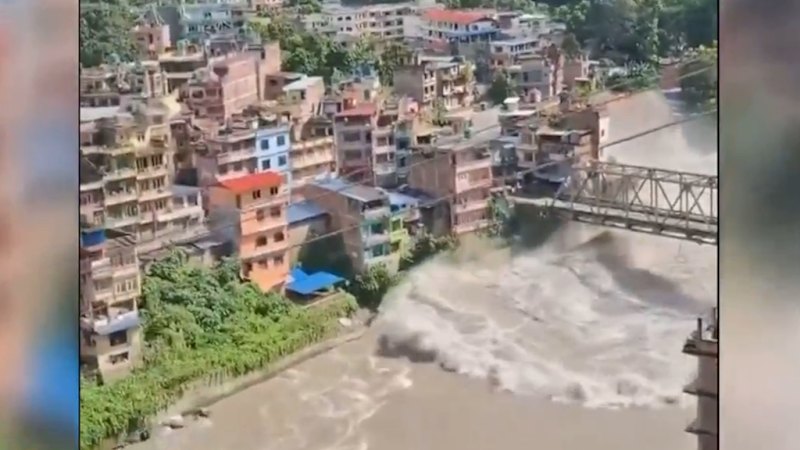
By three in the morning, the growl had turned into a roar that shook the foundations of houses built to withstand generations of wind. In districts like Kathmandu, Lalitpur, and Kavrepalanchok, hundreds of families woke to a terrifying reality. The rivers had broken their banks, transforming familiar valley floors into raging, mud-choked torrents.
Sleep is a fragile thing when the earth is liquid.
Consider the sheer scale of the disruption: hundreds dead, thousands unaccounted for, and entire neighborhoods reduced to heaps of gray silt and splintered timber. These are the numbers reported in the cold dispatches of morning news feeds. But numbers are defensive armor. They protect us from the unbearable weight of individual grief.
To understand what happened, you have to look past the macro-statistics and imagine a single room. Picture a small concrete home where a mother listens to the frantic drumbeat of rain on corrugated metal. She holds her sleeping child tighter, not yet knowing that the road outside has vanished, replaced by a brown, swirling highway of debris. When the wall finally gives way, there is no time for panic. There is only the sudden, icy shock of the current, the loss of footing, and the desperate reach for something—anything—that will hold.
Nature does not negotiate.
For days, rescue crews fought insurmountable odds. Helicopters beat desperately against torrential winds, trying to spot stranded survivors clinging to rooftop remnants or precariously perched trees. But how do you rescue thousands when every bridge is a crumpled accordion of steel and concrete?
Roads were swallowed by massive landslides. Whole hillsides simply let go, sliding down into the valleys below like wet blankets, carrying vehicles, livestock, and homes with them. The topography of Nepal, breathtaking in its majestic verticality, turned into a deadly trap. Water rushed down the steep gradients with the speed of an express train, gathering momentum and mass, turning ordinary streams into unstoppable battering rams.
Communication lines went dark. Power grids failed. In the immediate aftermath, survivors found themselves isolated, cut off from medical aid, clean water, and the comfort of knowing whether their loved ones across town had survived the night.
We often talk about climate volatility as a future threat, a distant abstraction debated in air-conditioned conference rooms miles away. But for the people of Nepal, the future arrived abruptly in the dark hours of the monsoon. It arrived as a wall of water carrying the wreckage of upstream forests and the remnants of human lives.
The immediate danger of the floodwaters eventually recedes, but the true crisis begins long after the cameras leave. Stagnant water breeds disease. Displaced families crowd into temporary shelters, sharing scarce blankets and meager rations. Schools are repurposed as relief camps, their blackboards looking down on rows of traumatized children staring blankly at the floor. The economic shockwaves ripple outward, destroying crops that were weeks away from harvest, wiping out livelihoods built over decades of backbreaking labor.
Yet, amid the devastation, human resilience flares with stubborn brilliance. Neighbors pull neighbors from swirling windowsills using ropes fashioned from twisted sheets. Strangers share the last remaining dry portions of rice. Local volunteers navigate swollen, debris-choked currents on makeshift rafts, refusing to wait for official rescue coordination that is bottlenecked by blocked mountain passes.
This is the hidden cost of our changing planet. It is not just measured in billions of dollars of infrastructural damage or the tragic tally of lost lives. It is measured in the quiet erasure of shared histories, the sudden disappearance of family heirlooms swept away in an instant, and the lingering sound of rushing water that haunts the survivors long after the skies have cleared.
The monsoon will return next year. The mountains will continue to stand, scarred by fresh gray gashes where the earth gave way. The riverbeds will shift, carving new paths through the valleys, reminding everyone who dwells within their reach that the earth is a living, breathing force, indifferent to our borders, our plans, and our sorrow.