Water does not care about borders. It cuts through silt and stone, carving its own maps while prime ministers and diplomats argue over ink on paper.
Stand on the banks of the Padma where it widens into Bangladesh, and you can smell the silt. It is a rich, heavy scent, the smell of life being dragged down from the Himalayas, washing across a delta that has fed millions for centuries. But for decades, that smell has carried an undercurrent of anxiety. Every drop of water that completes its long journey south tells a story of negotiation, of upstream gates closing and downstream fields cracking open under a merciless sun.
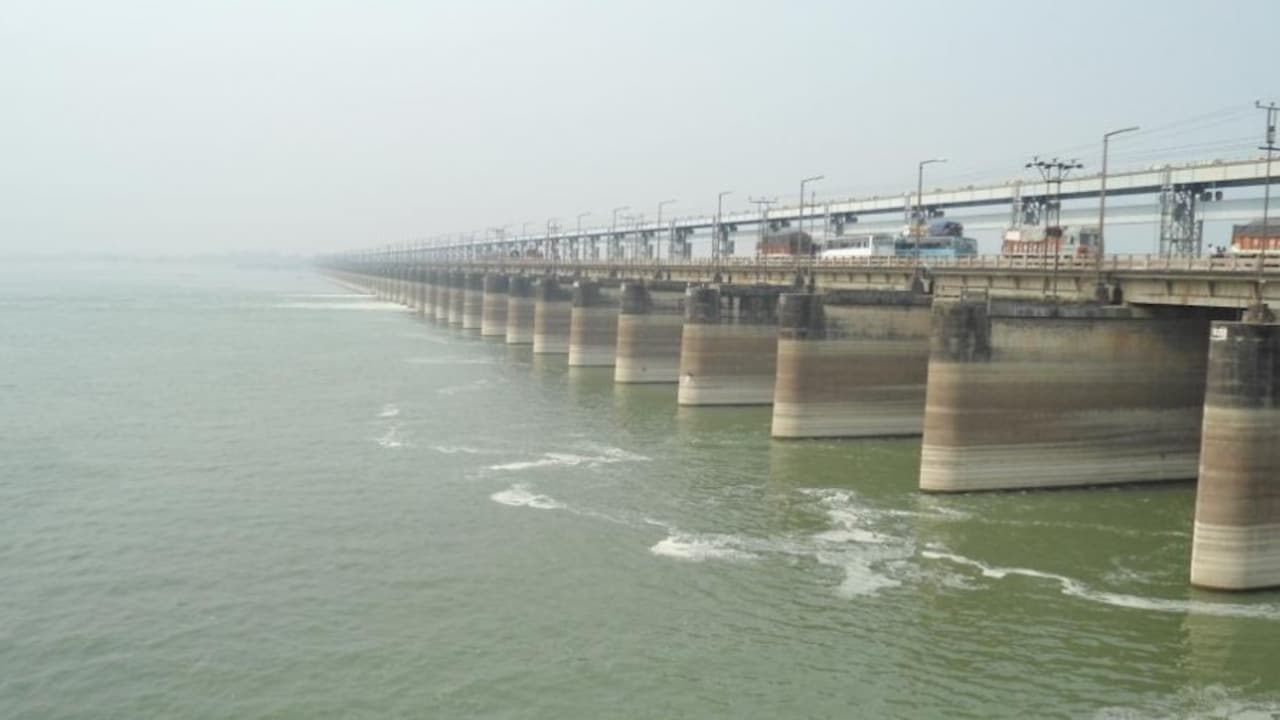
December twelfth is approaching. That is the deadline, the invisible cliff edge. By then, Dhaka and New Delhi must decide the fate of the 1996 Ganga Water Sharing Treaty, an agreement that has dictated the flow of life through the Farakka Barrage for thirty years. To an outsider reading a dry report in a capital city, this is a diplomatic scheduling milestone. To a fisherman whose wooden boat scrapes against a dry riverbed in Rajshahi, it is a matter of breath.
Rivers have memories. They remember when they were wild.
The Anatomy of an Agreement
To understand why this December matters so intensely, you have to look back at how a river was sliced into fractions.
In the 1970s, India constructed the Farakka Barrage just sixteen kilometers upstream from the Bangladeshi border. The goal was simple engineering logic: divert enough water from the Ganges into the Hooghly River to flush out silt and keep the port of Kolkata navigable. But water is a zero-sum game in a dry season. Every cubic foot diverted north meant one less foot available for the millions of farmers downstream in East Pakistan, later Bangladesh, who relied on the Padma for irrigation during the lean dry months of spring.
For two decades, tension brewed. Crops withered. Salinity crept upstream from the Bay of Bengal, poisoning freshwater aquifers, turning once-lush mango orchards brittle and gray. The ecosystem itself began to unravel, swallowing fisheries and altering the delicate balance of the Sundarbans, the largest mangrove forest on earth.
Then came 1996. A breakthrough. Prime Minister Sheikh Hasina and Prime Minister H.D. Deve Gowda signed a thirty-year treaty. It was a mathematical compromise, a formula based on ten-day averages of historical water flows measured at Farakka. If the water was abundant, both sides shared it equally. If it dropped below a certain threshold, guarantees kicked in to ensure neither side was left entirely dry.
Thirty years sounded like an eternity in 1996. Now, that clock has run down to its final ticks.
What is at Stake in the Delta
Numbers on a spreadsheet rarely capture the heartbreak of a dry well.
Consider a hypothetical farmer named Rahim, whose family has worked the same three acres of land in Pabna for four generations. Rahim does not care about geopolitical leverage or maritime boundaries. He cares about his boro rice crop. Rice is thirsty. It drinks deep during the dry season between January and May. If the water fails to arrive through the interconnected canal networks fed by the Padma, Rahim has to pump groundwater.
Groundwater sounds like an infinite savior until you pull it up and find it tastes like salt.
When upstream flows dwindle, the Bay of Bengal pushes its heavy, saline tongue further up the river channels. This saltwater intrusion is a silent disaster. It does not crash ashore like a tidal wave; it seeps into the soil, coating plant roots in sodium, killing freshwater fish, and rendering handpumps useless. In coastal districts, women walk miles further each day just to find drinking water that does not taste like sweat and brine.
This is the human cost of the treaty renewal. It is not just about liters and cusecs. It is about whether a rural family can afford to stay on their land or whether they must pack their remaining belongings and migrate to the sprawling, suffocating slums of Dhaka, joining the swelling ranks of climate refugees.
The Geometry of Trust
Negotiating water is negotiating trust. And trust between nations is a fragile, easily silted-up channel.
As diplomats meet behind closed doors in Dhaka and New Delhi, the geopolitical landscape has shifted dramatically since 1996. Governments have changed. Regional alliances have frayed and rewoven. Climate change has thrown historical weather patterns into absolute chaos. The monsoon is no longer punctual. Glaciers in the Himalayas, the ultimate source of these mighty rivers, are retreating faster than scientists predicted, threatening the base flow of the Ganges during the dry months.
This means a simple renewal of the old treaty, a mere copy-and-paste extension for another thirty years, might not be enough. The math of 1996 assumed a climate that no longer exists.
Environmental scientists argue that any new agreement must account for ecological flows. A river is not just a pipe for human consumption; it is an organism. If you starve a delta of silt entirely, the land sinks. Bangladesh is a deltaic nation, built entirely of silt deposited by its rivers. Without fresh sediment washing down from the north, the land cannot replenish itself against rising sea levels. The country effectively begins to drown from both sides—rising seas from the ocean and blocked water from the land.
Yet, upstream pressures are equally real. India faces its own staggering agricultural demands in states like Uttar Pradesh and Bihar, where groundwater tables are plummeting and populations are booming. Farmers in Uttar Pradesh need irrigation just as desperately as farmers in Rajshahi.
This is the diplomatic knot. How do you divide a shrinking pie between two massive, thirsty populations?
The Rhythm of the Silt
History suggests that rivers can either drive nations apart or force them to find a shared language.
In the tea stalls of Kushtia, old men lean over cracked ceramic cups of shakha tea and talk about the water the way farmers in Kansas talk about the rain. They remember the dry years before the treaty, when the Padma looked like a series of disjointed puddles separated by vast sandbars where cattle grazed. They remember the return of the water after 1996, the way the hilsa fish—that silver, prized delicacy of the Bengal delta—began swimming upstream in greater numbers once the flows were stabilized.
The hilsa is a barometer of health. It is anadromous, born in the sea, maturing in the freshwater rivers. When the water flows freely, the hilsa thrives. When the gates stay shut, the fish turn back.
As December twelfth approaches, negotiators are tasked with more than renewing a legal document. They are tasked with preserving the ecological rhythm of a subcontinent. Every conversation held in air-conditioned conference rooms echoes down into the muddy channels where fishermen cast their nets in the pre-dawn mist.
Silence hangs heavy over the border.
The river keeps moving. It slips past concrete barriers, past steel gates, past iron-clad treaties and political speeches, heading south toward the vast, open embrace of the sea. Whether it carries life or scarcity depends entirely on the signatures scribbled on paper in the weeks to come.
The water waits for no one. But it remembers everything.