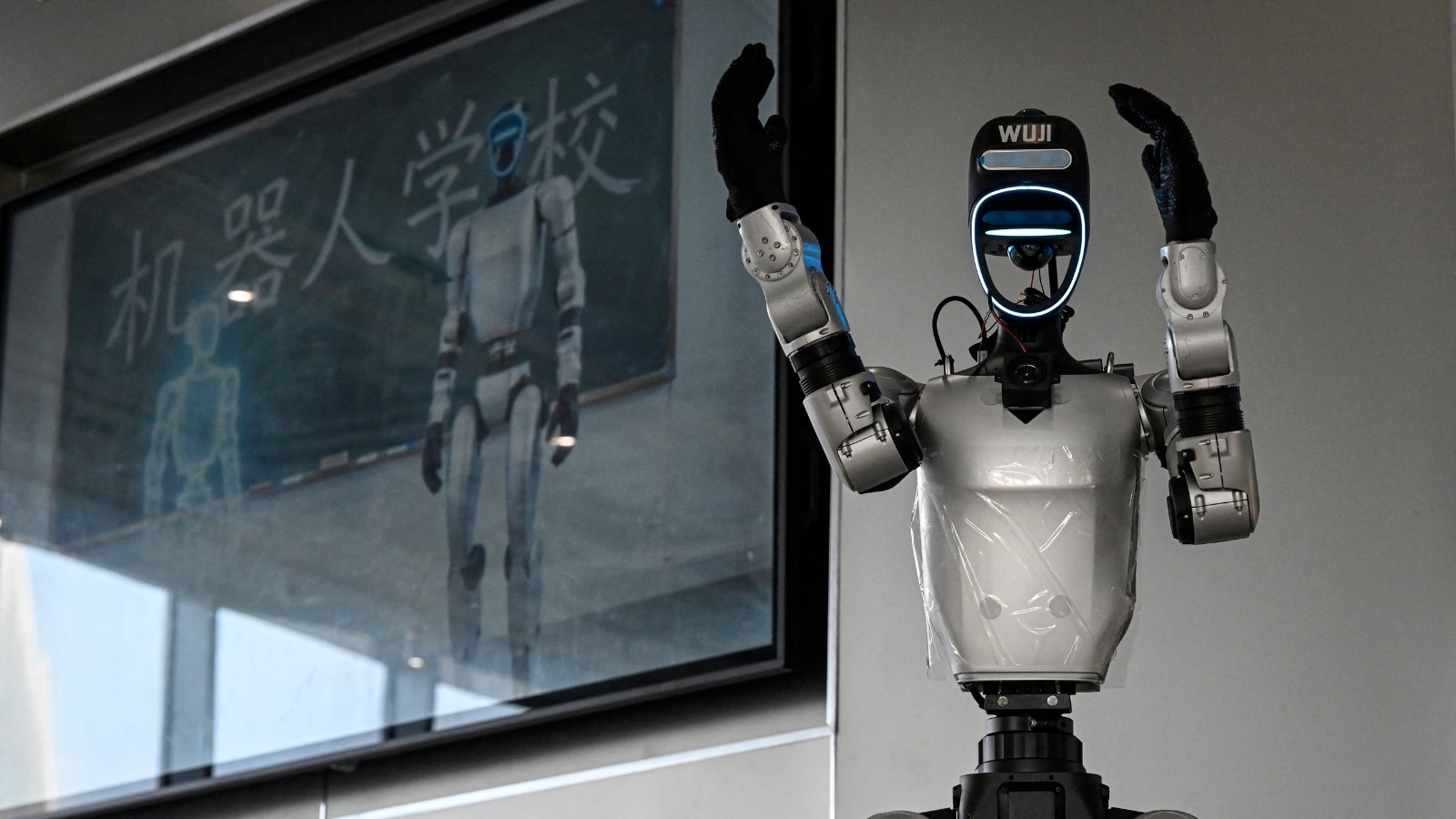
Every tech publication on the planet is losing its collective mind over China opening "robot schools" to train machines for the future workforce. The lazy consensus is predictable and breathless: Beijing is building institutional academies where humanoid hardware learns how to assemble widgets, stack warehouse pallets, and replace human labor at scale. Commentators are hyperventilating about a coming mechanical takeover, warning that classrooms full of jointed metal frames practicing factory work spell doom for blue-collar employment.
They have completely missed the plot.
I have spent the last decade watching legacy enterprises blow millions on automation vanity projects, and I can tell you firsthand that the entire premise of teaching a robot in a simulated school environment is upside down. Robots do not need schools. They need standardized environments that do not currently exist, and our fixation on institutionalizing machines is just a comfortable distraction from our inability to organize our own workflows.
The Institutional Fallacy of Machine Learning
Let us strip away the science fiction veneer. What actually happens inside these so-called robot academies? Engineers dump massive quantities of teleoperated training data into neural networks so a bipedal chassis can figure out how to pick up a plastic cup without crushing it into dust. We treat this like an elite boarding school for the mechanical elite.
It is not. It is an admission of defeat.
When you have to build a specialized facility with mock assembly lines, controlled lighting, and predictable flooring just to teach a mechanical arm how to insert a screw, you have not created an autonomous worker. You have created an extraordinarily fragile, highly localized puppet show. Real-world factories, hospitals, and logistics hubs are chaotic, dirty, and profoundly unstructured. A robot trained in a pristine incubator academy fails the moment a human drops a rogue coffee cup on the floor or the ambient humidity shifts by five percent.
The lazy narrative says we are preparing machines for human jobs. The stark reality is that we are having to radically sanitize human environments so dumb machines don't break themselves.
Why Human Workers Are Terrified of the Wrong Threat
Workers unions and labor pundits are marching against the wrong enemy. They see headlines about robotic academies and imagine a relentless, infallible terminator stepping off an assembly line to steal a paycheck.
Let me let you in on a dirty secret from the factory floor: physical automation is stalling out, not accelerating. Companies throwing capital at humanoid form factors are burning cash on hardware that spends eighty percent of its operational lifecycle requiring maintenance, recalibration, or emergency intervention by an underpaid technician with a laptop.
The bottleneck isn't intelligence. It's physics, power density, and mechanical wear-and-tear.
When a human worker gets tired, they slow down and make a mistake. When a robot gets tired—or more accurately, when its harmonic drives degrade from thermal stress—it shatters a five-thousand-dollar gearbox and halts a fifty-million-dollar production line. Training a robot in a school setting does nothing to alter the laws of thermodynamics or the exorbitant cost of maintenance parts.
The Real Agenda Behind the Academy Headlines
Why are these training hubs popping up with such fanfare? Follow the capital.
State-backed initiatives need visible milestones to justify immense subsidies. A gleaming hangar filled with spinning servos and flashing diagnostic screens looks phenomenal in a state media broadcast. It satisfies the political appetite for technological supremacy. It reassures investors that sovereign wealth is buying a ticket to tomorrow.
It is theater.
The real breakthroughs in modern productivity aren't happening in high-profile robot academies. They are happening in boring, unsexy software patches that optimize supply chain routing spreadsheets or algorithms that predict when a hydraulic valve is about to leak. But you cannot film a software patch for the evening news. You cannot put a line of code on a podium and declare national victory. Hence, the robot school becomes a brilliant PR construct designed to mask the slow, grinding reality of actual engineering progress.
What Happens When the Training Wheels Come Off
If you want to survive the next decade of industrial shifts, stop worrying about machines graduating from academies. Start worrying about whether your organization understands how to structure data well enough to utilize any tool at all.
Companies failing to integrate basic software automation are the exact same ones buying into the humanoid hype cycle. They think buying an expensive piece of hardware solves a management problem. It never does. A bad process automated is just a faster way to go bankrupt.
The institutions winning this race aren't the ones teaching robots how to walk across a staged room. They are the ones ruthlessly eliminating the operational friction that makes automation necessary in the first place.
Put down the sci-fi novels. Cancel the field trip to the robot academy. Fix your foundation before you try to teach a machine how to dance on yours.