The amplifiers at the Merriweather Post Pavilion were still humming when the cold calculations of modern political optics began to settle over Washington.
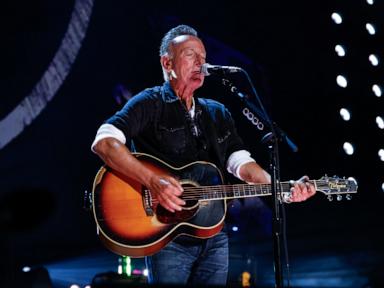
The Power to the People Festival, spearheaded by guitarist Tom Morello and anchored by a generational roster featuring Bruce Springsteen, Dave Grohl, Dave Matthews, and Joan Baez, was billed as a straightforward day of peace, music, and civic action. Yet beneath the surface of the star-studded anthems and voter registration tents lay a much sharper cultural fracture. This was not merely an afternoon concert. It was a calculated line in the sand drawn by an entertainment industry increasingly willing to weaponize its platform against political alignment.
To understand the weight of the event, one must look at the calendar it sought to disrupt. Conceived in the wake of high-profile artist pullouts from official national anniversary celebrations, the festival positioned itself as an ideological counterweight. The staging was intentional. Held mere weeks before a high-stakes midterm election cycle, the gathering bypassed traditional political rallies in favor of a direct-to-consumer cultural broadcast.
The music industry has long flirted with electoral politics, but the execution here signaled a distinct shift from passive advocacy to aggressive mobilization.
Artists like Killer Mike and Grandson didn't just sing; they issued blunt operational directives to the thousands in attendance. The messaging bypassed polite civic discourse, targeting local school boards, county commissions, and legislative seats with the kind of granular political focus usually reserved for professional operatives. When Grandson introduced performance art featuring provocative visual commentary, the online ecosystem fractured instantly, ensuring the event lived far beyond the lawn of the Maryland venue.
Yet, the presence of high-profile attendees off-stage spoke volumes about the shifting boundaries between Washington power and cultural dissent. Former Justice Department special counsel Jack Smith was spotted in the crowd, wearing a defiant "No Kings" Springsteen shirt. His appearance, quickly amplified across digital networks and met with swift online pushback from political figures, underscored the reality that this audience was not merely consuming art; they were signaling allegiance.
The festival proved that legacy rock acts and modern protest artists still retain a rare, potent currency: the ability to aggregate thousands of motivated voters into a single physical space. But it also exposed the limits of partisan entertainment. When a concert explicitly draws a boundary line, it risks preaching exclusively to an insulated choir, cementing ideological divides rather than persuading the uncommitted.
As the final notes of "This Land Is Your Land" faded into the Maryland night, the real test began not on the festival's twin stages, but in the quiet calculation of whether a guitar chord can genuinely move a voting district.