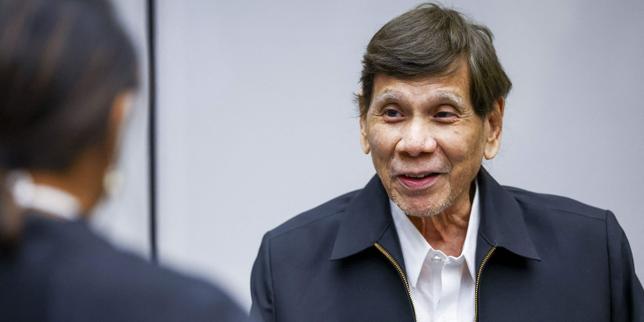
When former Philippine President Rodrigo Duterte was declared fit to stand trial by the International Criminal Court, the illusion of absolute impunity for populist strongmen took a massive hit. You don't see former heads of state from Asia hauled into a courtroom in The Hague every day. For years, Duterte operated as if state-sanctioned violence was completely immune to international law. Now, facing charges of crimes against humanity tied to his brutal drug war, he is finding out that borders don't shield leaders forever.
Let's look at what got us here. Between 2011 and 2019—spanning his tenure as Davao City mayor and later as the nation's president—thousands of suspected drug dealers and users were killed in extrajudicial operations. Prosecutors argue these weren't isolated police overreaches. They claim it was a systematic, widespread campaign orchestrated from the top down. Duterte didn't hide his intentions either. He openly encouraged police to shoot suspects and promised protection.
When the ICC began sniffing around, Duterte pulled the Philippines out of the court's founding treaty in 2019, thinking he had closed the door behind him. He guessed wrong. The court retained jurisdiction over alleged crimes committed while the country was still a member.
The Medical Battle Over Fitness to Stand Trial
Defense attorneys tried a predictable playbook. They argued that Duterte, now 81 years old, was simply too frail mentally and physically to face a complex international trial. They pushed for an indefinite adjournment, citing cognitive decline and age-related vulnerabilities.
The ICC didn't just take their word for it. Judges appointed an independent panel of medical experts—including specialists in geriatric neurology and psychiatry—to run rigorous cognitive and physical evaluations. The conclusion was clear. Despite his advanced age, Duterte was found capable of understanding the proceedings and effectively exercising his procedural rights.
That ruling shut down the defense's primary stall tactic and paved the way for the confirmation of charges. By April 2026, judges unanimously confirmed all charges of crimes against humanity, pushing the case forward to Trial Chamber III.
What’s Actually at Stake in This Courtroom
This isn't just about one aging politician. This trial sets a heavy precedent for international justice. Too often, domestic leaders use populist nationalism to shield themselves from human rights investigations. They claim sovereignty is a get-out-of-jail-free card.
The Duterte prosecution sends a sharp warning to authoritarian leaders everywhere. If you orchestrate mass violence against your own citizens, time and retirement might not save you. Even if domestic courts look the other way, international bodies are watching.
Victims and human rights advocates have waited a long time for this moment. For families who lost relatives during the height of the drug war, seeing a former president sit in a courtroom dock changes the narrative of power. It shifts accountability from an abstract ideal into a harsh reality.
The trial schedule is packed, with prosecutors preparing to call roughly 100 witnesses to establish the chain of command and prove how local directives translated into thousands of street-level killings. Defense teams will counter every claim, arguing that anti-drug operations were legitimate law enforcement responses to a national crisis.
Expect months of grueling legal arguments, intense scrutiny over evidence, and deep political fallout back in Manila, where Duterte’s political allies still hold significant influence. Accountability is finally on trial, and the entire world is watching the verdict.
Rodrigo Duterte ICC Hearing: Former Philippine President Faces Crimes Against Humanity
This video provides a direct look at the proceedings and legal arguments surrounding the high-profile International Criminal Court case against the former Philippine president.


