Hollywood is cannibalizing its own past again, and the internet is clapping like well-trained seals.
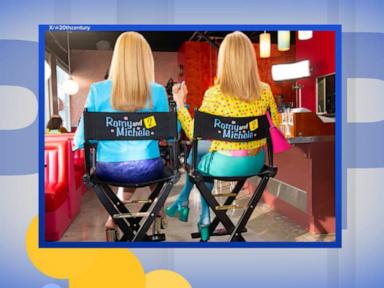
The recent announcement that a Romy and Michele’s High School Reunion sequel is officially in development triggered the predictable wave of millennial nostalgia. Fans are dusting off their platform sneakers, quoting lines about Post-it notes, and celebrating the return of Lisa Kudrow and Mira Sorvino. The collective consensus is clear: we need this, we want this, and it’s going to be glorious. For an alternative perspective, read: this related article.
It isn't. It is going to be an unmitigated trainwreck.
The entertainment industry is trapped in a toxic loop of weaponized nostalgia, and audiences are falling for it hook, line, and sinker. We are mistaking our affection for the original 1997 cult classic for a genuine need to see these characters in their late 50s. By demanding a sequel, we aren't honoring the original; we are ensuring its legacy gets cheapened for a quick streaming-platform cash grab. Related insight on this trend has been shared by Rolling Stone.
Let's dissect exactly why this project is fundamentally doomed, why the premise of a modern reunion is flawed, and why Hollywood needs to step away from the 90s vault.
The Trap of Age-Inappropriate Whimsy
The original Romy and Michele worked because of a very specific, volatile cocktail of youth, delusion, and late-90s economic optimism.
In 1997, Romy and Michele were 28 years old. Their arrested development was charming. They were broke, rooming together in Venice Beach, eating gummy bears for dinner, and wearing neon club wear. At 28, pretending to invent Post-it notes to impress high school bullies is a hilarious, desperate act of social survival. It is relatable because your late 20s are inherently a time of panic and identity formation.
Now do the math. In 2026, Romy and Michele are roughly 57 years old.
The math changes the genre entirely.
- The 20s Context: Clueless, fashion-obsessed women navigating a low-stakes existence.
- The 50s Context: Severe executive dysfunction, financial instability, and a tragic refusal to adapt to adulthood.
If Romy and Michele are still living the exact same way at nearly 60, the comedy evaporates. It stops being a lighthearted romp and becomes a depressing character study on systemic failure or cognitive decline. If they have grown up—if they are now successful, married, or settled—then the very friction that made them funny is gone. You cannot win.
I have spent nearly two decades watching studios revive dormant intellectual property. The pattern is always the same: executives try to freeze-dry characters in a specific decade, completely ignoring that human biology and social expectations move forward.
The Death of the "Slow Burn" Cult Classic
We need to address the flawed premise of the "People Also Ask" ecosystem surrounding this announcement. Fans are constantly searching: Why did it take so long to get a Romy and Michele sequel? The question itself implies that a sequel was always earned, always necessary, and merely delayed by Hollywood bureaucracy. This is Revisionist History 101.
Romy and Michele’s High School Reunion was not a box office juggernaut. It made roughly $29 million on a $17 million budget. It became a classic through the now-extinct ecosystem of cable TV repeats, Blockbuster rentals, and word-of-mouth sleepovers. It was a slow burn.
Box Office Blueprint vs. Modern Streaming Logic
├── 1997: Mid-budget comedy -> Box office flop -> Rental market savior -> Cult status.
└── 2026: Nostalgia announcement -> Social media hype -> Algorithm bait -> Instant forgettability.
The modern streaming apparatus cannot replicate how the original grew its audience. A sequel today won't be allowed to sit on a shelf or build a slow, passionate subculture. It will be dumped onto a streaming homepage, pushed by an algorithm for a weekend, and forgotten by the next Friday.
The original film survived because it was unique. The sequel will exist solely as data-driven content designed to prevent subscriber churn.
High School Reunions are Computationally Irrelevant
The entire narrative engine of the original film relied on a social construct that no longer exists: the mystery of what happened to your high school classmates.
In 1997, if you wanted to know what the "A-Group" was doing, you actually had to show up to the reunion or wait for someone to print a physical directory. The tension of the movie relies entirely on the information asymmetry between Romy/Michele and the girls who tortured them. They could lie about inventing Post-it notes because there was no instant way to verify the claim.
Try running that plot today.
- Scenario A: Romy claims she invented a new form of software.
- Reaction: Christie Masters looks at LinkedIn on her phone before Romy even finishes her sentence.
- Result: The plot terminates in four seconds.
We live in an era of radical, non-consensual transparency. Everyone knows exactly how miserable, successful, or unhinged their high school peers are because we are forced to witness it daily on Instagram and Facebook. The "High School Reunion" as a cultural milestone is dead. High school never ends; it just moved to the cloud.
To make a sequel work, the writers will have to construct elaborate, artificial reasons for why these characters don't use smartphones, don't have an online footprint, or care about a physical reunion in the first place. The moment a script requires that much narrative scaffolding just to keep the premise alive, the comedy dies.
The Danger of Over-Writing Fluff
The dialogue in the original film, penned by Robin Schiff, is a masterclass in stylized, rhythmic idiocy. "I'm the cute one, she's the pretty one." "A quick fashion note." It felt organic to the characters because it was born out of Schiff's play, The Ladies Room.
When you try to recreate that specific lightning in a bottle thirty years later, it almost always curdles into self-caricature. Look at Zoolander 2. Look at Dumb and Dumber To. Look at Anchorman 2.
When writers return to characters after decades away, they don't write the characters; they write memes of the characters.
The Degradation of Comedic Dialogue
Original Line: Natural, unforced weirdness that catches the audience off guard.
Sequel Line: A calculated callback designed to be clipped for a TikTok soundbite.
Romy and Michele will be forced to look at the camera, metaphorically speaking, and deliver lines that scream, “Look! We’re doing the thing you liked thirty years ago!” It becomes a karaoke version of comedy.
Admit the Cost of the Contrarian Stance
To be completely fair, there is a single, razor-thin path where this project doesn't completely humiliate everyone involved. If the creative team leans heavily into the dark, existential dread of aging as an outsider—if they make a bitter, sharp, satirical comedy about the absolute horror of entering your elder years with zero safety net—it could be groundbreaking.
But let’s be real. That is not what Disney or any major studio is going to greenlight. They want bright colors, dance sequences to 90s pop hits, and a heartwarming message about friendship. They want comfort food.
Comfort food that has sat out on the counter since 1997 is toxic.
Stop asking for sequels to movies that captured a specific moment in time. Some stories are meant to end when the credits roll, the two girls drive off in their pink convertible, and "Stay" by Lisa Loeb plays us out.
Leave them in 1997. They were happy there, and frankly, so were we.