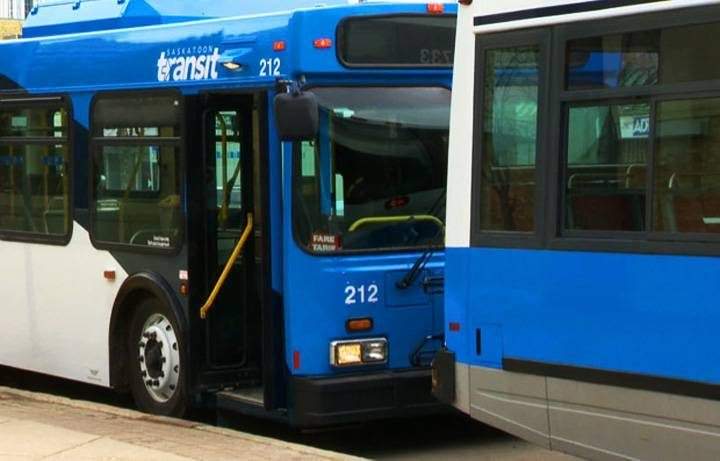
Merchants along First Avenue are terrified of painted yellow lines and curb extensions. They are running the exact same playbook every incumbent retailer pulls out of the drawer the moment a city council dares prioritize moving human beings over storing empty metal boxes. The narrative is predictable. Business advocacy groups warn that losing parking spaces means losing shoppers, retail sales will flatline, and customers will abandon the corridor for suburban strip malls with asphalt oceans for parking lots.
It is the standard reflex of short-sighted commercial anxiety. It is also completely wrong.
I have spent two decades watching urban retail corridors undergo transit transformations. I have seen shop owners threaten to chain themselves to parking meters, predicting economic ruin every time a municipality trims curbs to install dedicated transit lanes. In almost every case, the doomsayers confuse automobile storage with customer volume. They look at a parking stall directly in front of their door and assume that empty asphalt equals revenue, ignoring the foot traffic generated by a reliable, high-frequency transit line that actually drops people directly onto the sidewalk instead of past it at fifty miles per hour.
First Avenue does not suffer from a lack of parking. It suffers from a lack of arrival velocity.
Let us look at the mechanics of urban retail. A driver circling a block three times hunting for a free curb spot is not a high-value customer. They are a frustrated nuisance occupying public space for free while blocking the flow of commerce. When advocacy groups argue that removing a handful of street parking spots destroys economic viability, they assume that every car parked on First Avenue belongs to a paying patron who will vanish into thin air the moment they have to walk thirty paces from a side street or park in a multi-level municipal structure. The data from transit priority overhauls in mid-sized North American cities tells a radically different story. Foot traffic rises when transit reliability improves. People do not buy products because they can park six inches from the threshold; they buy products because they can reach a destination without wanting to scream at the steering wheel.
Retailers are defending a business model built for the 1970s. The lazy consensus among commercial lobbies assumes that urban density and transit upgrades are hostile takeovers of local commerce. Let us dismantle that assumption piece by piece.
The Parking Fallacy and the Economics of Space
Walk down any commercial strip on a Tuesday afternoon and count the cars parked for six hours straight. Those are employee vehicles or commuter freeloaders taking advantage of unpriced or underpriced municipal curbs. They are not rotating. They are not churning customers into local boutiques or cafes. They are squatting on public land.
When a city converts a curb lane into a dedicated transit corridor, street capacity for mass-moving vehicles increases exponentially. A single bus moves fifty to seventy people. Fifty cars take up an entire block of linear space and carry roughly fifty people, assuming zero carpooling. Yet merchants fight tooth and nail for the right to store fifty cars rather than welcome thousands of transit riders past their display windows every single hour.
I have spoken with municipal planners who cower at the mere mention of removing parking because a vocal group of store owners screams loudest at public hearings. Local politicians fold because business associations frame the debate as an existential threat to survival. But survival requires adaptation, not protectionism.
If your retail strategy depends on a customer winning a lottery for a curbside parking spot right in front of your shop, you do not have a business model. You have a prayer.
Real commercial vitality comes from street life, walkability, and high-frequency foot traffic. When transit moves faster, people use it more. When people use transit more, they stop spontaneously. They see a sweater in a window they would have zoomed past at forty kilometers per hour in a sedan. They duck into a bakery because the bus dropped them twenty feet from the door instead of forcing them to trek across an asphalt crater.
What the Transit Skeptics Miss About Customer Behavior
The loudest voices against the First Avenue redesign claim that suburban shoppers will never set foot downtown if they cannot park within spitting distance of the cash register.
This argument relies on a fundamental misunderstanding of who actually shops in urban commercial districts. Suburban drivers who demand free, immediate parking are already captured by big-box power centres off the ring road. They are driving out to box stores with acres of parking anyway because they prefer buying bulk goods under fluorescent lights. Trying to beat suburban malls at the parking game is a losing battle downtown merchants will always lose.
Downtown districts win on experience, density, and serendipity. You cannot replicate the texture of a vibrant urban corridor inside a suburban retail park. But you can kill that texture by forcing pedestrians to dodge cars, choke on exhaust, and navigate narrow, neglected sidewalks while city space is wasted on vehicle storage.
Imagine a scenario where First Avenue prioritizes people who actually spend money in the district rather than people treating the street as a high-speed bypass or a free overnight garage.
In this scenario, transit riders get home fifteen minutes faster. Parents pushing strollers do not fear for their lives crossing intersections. Outdoor patios expand because the city reclaims dead asphalt for pedestrian life. Retail sales climb not despite the bus lanes, but because of them.
Of course, my contrarian approach has a downside. Construction pain is real. During the months when concrete is poured, curbs are shifted, and signals are rewired, businesses take a hit. Cash flow dips. Dust gets everywhere. Municipalities routinely bungle the construction phase, offering zero financial cushioning or logistical support to mom-and-pop shops already operating on razor-thin margins. That is the dirty secret urban planners rarely admit. The long-term gain requires short-term pain, and municipal compensation packages for disrupted businesses are usually an insult.
Admitting that construction hurts does not invalidate the transit plan; it means cities need to stop treating small businesses as collateral damage during infrastructure upgrades. Saskatoon should provide direct tax credits and grants to merchants along First Avenue during the build phase. Cushion the blow, get the concrete set, and let the transit priority lanes do their job.
Dismantling the People Also Ask Confusion
Let us address the queries floating around local forums and search engines regarding this transit shift.
People ask: Do dedicated bus lanes actually hurt local businesses?
The short answer is no, but the nuance matters. In the short term, construction disrupts foot traffic. In the medium to long term, retail revenue along transit priority corridors typically increases or stabilizes better than control streets. The businesses that suffer are almost always those that fail to adapt their marketing to pedestrian customers or rely entirely on commuter drive-by traffic that never stops anyway.
People ask: Where will drivers park if curb spaces are removed?
The wrong question. The goal of a modern city is not to guarantee every motorist a private parking stall wherever they happen to want to stop. The goal is to move people efficiently. Drivers will park in nearby parkades, structured lots, or side streets, or they will choose a mode of transport that does not require hauling two tons of steel for a single cup of coffee. Expecting taxpayers to subsidize private vehicle storage on
Why Fighting Saskatoon First Avenue Transit Plans Is Economic Suicide
business, news
The merchant lobby down First Avenue is panicking over transit blueprints again. Business advocates claim that prioritizing buses will choke off foot traffic, kill curb parking, and spell absolute ruin for local shops. It is the same tired script trotted out every single time a growing city tries to move past car dependency. Merchants scream about lost parking spaces as if concrete asphalt stalls are the sole engine of human commerce. They are wrong. They are looking at urban economics through a rearview mirror.
I have watched urban retail districts across North America wage holy wars against transit lanes, bike paths, and pedestrian zones. Store owners predict immediate bankruptcy. They forecast dystopian ghost towns. Then the asphalt gets reallocated, rapid transit lines drop in, and the districts boom. The panic is not based on reality. It is a failure of imagination wrapped in nostalgia for a suburban driving culture that urban cores can no longer sustain.
Let us dismantle the core myth driving this resistance. The assumption is simple: car equals customer, bus equals barrier. If someone cannot park their sedan directly in front of the boutique door, they will not buy anything.
Data from dozens of revitalized urban corridors tells a completely different story. Car drivers spend money, yes, but they spend it in short, transactional bursts, and they occupy valuable public space for hours at a time while leaving zero money in the municipal tax base for parked inventory. Transit riders, pedestrians, and cyclists visit more frequently, stay longer, and cumulatively outspend drivers over the course of a month. When you replace a single curbside parking slot with a high-frequency transit stop, you are not destroying customer access. You are replacing a low-velocity storage bay for private metal with a high-volume funnel for human foot traffic.
Ask the local business owners protesting First Avenue how many of their daily shoppers actually park directly in front of their shops. The honest answer is a fraction of a percentage. Most park in nearby lots or walk from adjacent blocks. The obsession with immediate curb parking is an emotional security blanket, not an economic lifeline.
Merchants are also ignoring the compounding cost of inaction. Saskatoon is not a sleepy prairie town anymore. It is growing, densifying, and choking on peak-hour congestion. If First Avenue remains chained to car-first infrastructure, getting down that corridor will become so painful that shoppers will abandon the urban core entirely for suburban strip malls with massive asphalt deserts. By fighting transit priority, local businesses are not protecting their customer base. They are actively helping big-box power centres drain their lifeblood.
The transit plan for First Avenue forces a choice between moving people efficiently or moving private cars inefficiently. Physics dictates that cars lose this battle in dense environments. A single bus can replace forty automobiles on the road. Forty automobiles demand acres of storage. Moving people by the thousands requires dedicated transit corridors. When you starve transit of space to preserve parking, you trade long-term economic vitality for short-term parking convenience.
Admitting the downside is part of being honest about urban transitions. Change hurts. Construction periods for transit upgrades are brutal on cash flow. Dust flies, sidewalks get torn up, and navigating the corridor becomes annoying for a few months. That is the real pain point. Business advocates often conflate the temporary disruption of construction with the permanent structural threat of transit lanes. City hall needs to own that construction phase aggressively. Municipalities should deploy direct business interruption grants, streamlined patio permits, and aggressive marketing campaigns to keep foot traffic flowing while shovels are in the ground. If you break an egg to make an omelet, you do not blame the eggs; you manage the kitchen better.
Instead of fighting the city over bus plans, merchants should be demanding denser zoning along the corridor. They should be asking for multi-story residential infill directly above or adjacent to their storefronts. Transit-oriented development turns bus stops into literal goldmines. Imagine a scenario where hundreds of new residents live within a three-minute walk of your shop, all of them connected to the rest of the city by a rapid transit line that stops right outside your door. That is not an urban nightmare. That is the definition of a thriving high street.
The merchants threatening legal challenges and public resistance against First Avenue upgrades are fighting a war they already lost against math and urban demographics. You cannot drive your way out of congestion by building more lanes, and you cannot shop your way to prosperity by hoarding parking spaces.
Stop treating transit as an enemy of commerce. It is the only delivery mechanism left that can save downtown retail from being swallowed by online delivery giants and sprawling highway plazas. Adapt to the foot traffic, demand better municipal construction support, and stop defending parking lots like they are sacred artifacts. The buses are coming. Build your business around the people riding them, or watch them ride right past you.


