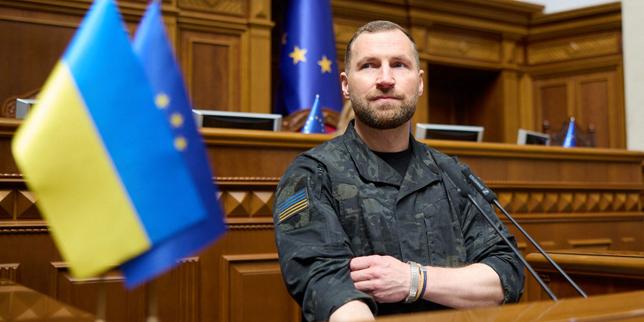
The Ukrainian parliament has officially installed Yevhenii Khmara as the nation’s Minister of Defence, securing a mandate of 312 votes. While the headcount reflects a decisive legislative seal of approval, the real story lies beneath the parliamentary surface. Khmara, a former major general and lead architect of the Security Service of Ukraine (SBU) special operations unit known as "Alpha," represents a fundamental shift in how Kyiv intends to prosecute the war. The era of the civilian-political administrator at the helm of the Ministry of Defence has been sidelined in favor of an intelligence and special operations heavyweight.
This appointment is not merely a personnel change. It is an institutional transition. For months, the resignation of Mykhailo Fedorov and the subsequent, often turbulent, political maneuvering that followed served as a distraction from the broader tactical evolution. By placing an SBU veteran—someone whose career was defined by counter-terrorism, unconventional warfare, and deep-strike doctrine—in the most powerful seat in the defense establishment, the administration has signaled that the front line is now inseparable from the shadow war.
Khmara brings a specific pedigree to the role. His tenure as the acting head of the SBU, and his prior command of the Alpha group, means he enters the ministry with intimate knowledge of the very units responsible for high-risk, asymmetric missions deep within occupied territory and across the Russian border. His stated priorities are blunt: more Ukrainian-made weapons, precision long-range strikes on Russian strategic assets, and a ruthless modernization of the domestic defense industry.
The political friction surrounding this move remains palpable. Opposition lawmakers have voiced concerns about the transparency of the nomination process and the centralization of authority. When questioned by parliamentarians about his military standing, Khmara offered a technical answer, citing his discharge under Article 26 of the law governing military service. He stands before the cabinet as a civilian, yet his DNA is purely operational. This tension—between the legal requirement for a civilian minister and the practical demand for a commander who speaks the language of special operations—is the defining feature of his term.
We have reached a phase in the conflict where the traditional procurement models of the early years are proving insufficient. Modern warfare requires a marriage of high-tech manufacturing and intelligence-led strike capabilities. Khmara’s background is perfectly suited for this evolution, provided he can navigate the labyrinthine bureaucracy of the Ministry of Defence without losing the agility that made his SBU units effective. The concern for seasoned observers is whether an intelligence officer can successfully manage the massive, often sluggish, logistics of a national army. Intelligence thrives on secrecy and speed; ministry work demands transparency and sustained industrial scale.
The public outcry that greeted the ousting of the previous minister, Mykhailo Fedorov, persists in the form of quiet skepticism. Citizens and soldiers alike are wary of reshuffles that feel more like consolidating power than optimizing the force. However, the sheer scale of the vote for Khmara suggests that the political class, regardless of internal misgivings, recognizes the necessity of this pivot. The war has become a battle of industrial capacity and intelligence precision.
The strategy is clear. The administration intends to bridge the gap between intelligence gathering and kinetic execution. If Khmara succeeds, the Ministry of Defence will no longer be the body that simply purchases equipment. It will act as the hub for a unified strike doctrine, where the SBU’s intelligence capabilities directly dictate the manufacturing priorities of the state.
This is a high-stakes gamble. By appointing a man who built his reputation in the shadows, Kyiv is betting that the path to victory lies in the ability to project force where the enemy feels safest. It is a transition that leaves little room for conventional diplomacy or administrative delays. The legislative approval is behind him, and the mandate is unambiguous. The military machinery is being re-engineered, and the operator is finally sitting in the driver’s seat. Whether that machine holds together under the pressure of the coming winter and the grind of attrition remains the question that will define this tenure. The shift is complete. Now, the results must follow.