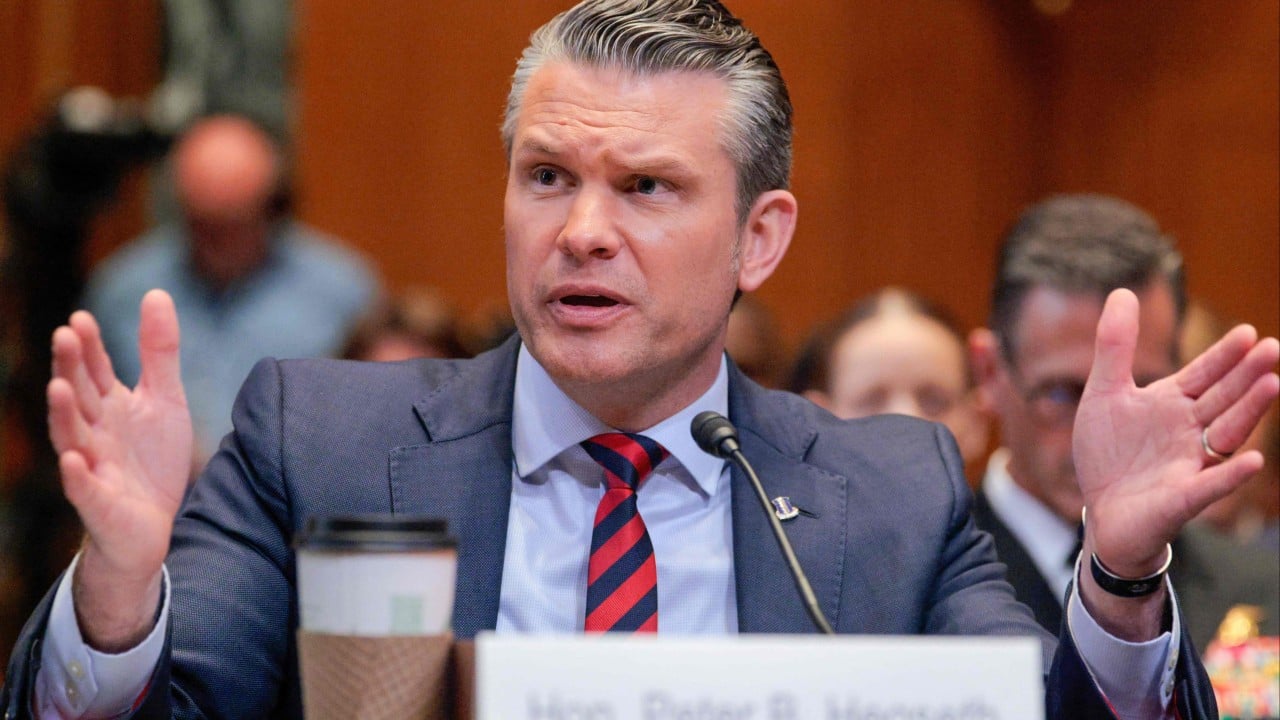
Sending a Defense Secretary on a presidential state visit to China isn’t just unusual. It’s a total break from the diplomatic playbook. When Donald Trump touched down in Beijing this week, the presence of Pete Hegseth by his side sent a message that trade deals and photo ops aren't the only things on the table. We’re watching a high-stakes pivot where military leverage is being used to fix a broken global economy.
You’ve probably seen the headlines about the Iran war and spiking gas prices. That’s the real backdrop here. Trump isn't just in China to talk about semiconductors or farm exports; he’s there because the Strait of Hormuz is effectively a no-go zone, and he thinks Beijing has the keys to reopen it. Bringing the Pentagon’s top boss along is a blunt way of telling Xi Jinping that the "strong and direct relationship" they keep talking about has to produce security results, not just polite handshakes.
The Military Shadow Over the Great Hall
Most presidents keep their Defense Secretary at home or in separate regional meetings during a state visit. It keeps the "optics" focused on cooperation rather than confrontation. Trump doesn't care about those old-school rules. By including Hegseth in the official delegation, the administration is linking economic stability directly to military deterrence.
Hegseth has already been doing the heavy lifting behind the scenes. Just weeks ago, he secured high-level assurances from Beijing that they wouldn’t send surface-to-air missiles to Iran. That’s a massive win that most diplomats would’ve taken months to negotiate. Seeing him in Beijing now tells us that the U.S. is looking for more than just "non-interference." They want China to actively lean on Tehran to end the maritime blockade that’s strangling global energy supplies.
Why China Actually Holds the Cards
It’s easy to think the U.S. is coming from a position of total strength, but the reality is messier. Inflation is hitting Americans hard, and a lot of that is tied to the 10-week conflict in the Middle East. China knows this. They purchase about 90% of Iran’s oil exports. They have the financial leverage to end this tomorrow if they wanted to.
Beijing's confidence has grown since Trump’s last visit in 2017. They’ve moved from being a tech follower to a peer competitor in everything from EVs to AI. They aren't just "happy to be here." They’re looking to see what they can extract from Trump—perhaps concessions on Taiwan or a rollback of those 2025 tariffs—in exchange for playing peacemaker in the Gulf.
What’s Actually on the Agenda
Don't expect a boring list of talking points. This trip is about three massive "gives" and "gets" that will define the rest of 2026.
- The Iran Endgame: Hegseth and Marco Rubio are pushing for a "Complete and Final Agreement" with Iran. If China helps broker this, they prove they’re a global superpower on par with the U.S.
- The Taiwan Twist: Trump has already signaled he’s willing to discuss arms sales to Taiwan, a move that breaks decades of precedent. It’s a huge gambling chip.
- A New Board of Trade: The goal is to move away from constant tariff hikes and toward a structured "Board of Trade" to handle disputes before they spiral into trade wars.
The Risk of This Rare Diplomatic Move
There’s a reason people are calling this "rare." It’s risky. If Hegseth is there and no security deal happens, it makes the U.S. military look like it’s being ignored on the world stage. Critics are already pointing out that the U.S. has diverted massive resources away from the Pacific to deal with Iran, which is exactly what China wants.
If you’re watching this from home, the metric for success isn't the state banquet or the walk through the Temple of Heaven. It’s the price at the pump. If this weird, military-heavy diplomatic team can't get the oil flowing again, the whole trip will be remembered as a flashy photo op that failed to solve the one problem keeping Americans up at night.
Watch the next 48 hours closely. If we see a joint statement regarding "maritime security" or "regional stability," it means Hegseth’s presence worked. If the talk stays strictly on aircraft sales and soybean quotas, the military gamble didn't pay off. Either way, the era of keeping "defense" and "diplomacy" in separate boxes is officially over.
Keep an eye on the official White House social media feeds for updates on the Board of Trade progress. If those talks stall, expect the focus to shift immediately back to military posture in the South China Sea as a way to regain leverage.