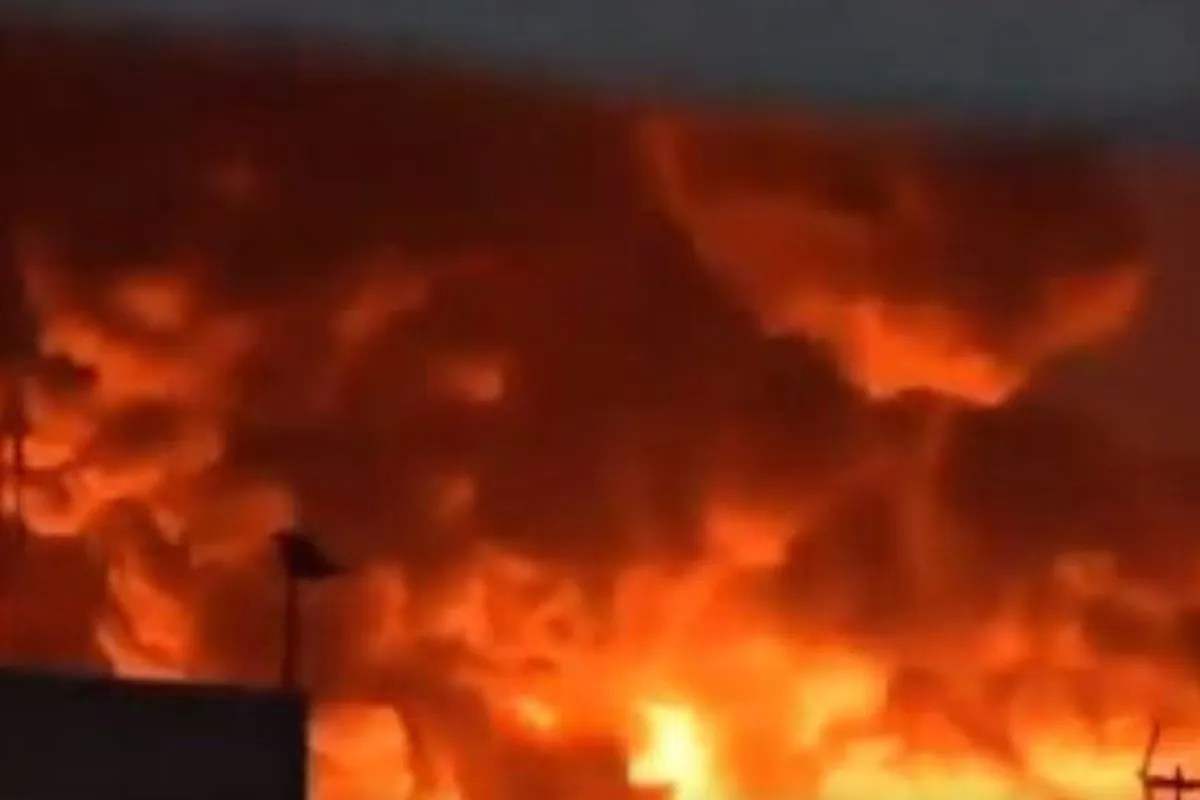
The smoke hanging over western Iraq tells a story older than the modern state system itself. Military operations involving regional heavyweights and international superpowers have once again thrust the Fertile Crescent into the center of a volatile geopolitical storm. United States and allied forces launched targeted airstrikes across multiple provinces, striking facilities tied to Iranian-backed militias. These actions come in direct response to persistent drone and rocket attacks on coalition bases, drawing Saudi Arabia and other regional actors into a tightening security matrix.
Everyone wants a clean narrative. Governments supply press releases detailing precision strikes, neutralized threats, and restored deterrence. Analysts on cable news draw arrows over maps of Baghdad, Tehran, and Riyadh, talking about escalation ladders and red lines. But maps lie. Lines drawn on parchment by colonial officers a century ago fail to capture the reality of porous borders, non-state armed groups, and transnational religious loyalties that actually govern power projection today.
Understanding the current round of military action requires looking past the immediate tactical exchanges. This crisis is not an isolated border skirmish. It is the violent friction point of a collapsing regional order where traditional deterrence has broken down entirely.
The Architecture of Shadow Conflict
Decades of asymmetric warfare transformed the Middle East into a laboratory for proxy conflict. Tehran spent forty years building the Axis of Resistance, a network of allied militias spanning Lebanon, Syria, Iraq, and Yemen. This strategy allowed Iran to project power across the region while maintaining plausible deniability. Regular armies avoid direct confrontation by fighting through local proxies.
Washington and its partners spent decades trying to counter this strategy with conventional military might. Aircraft carriers patrol the Persian Gulf. Fighter jets sit on tarmac in Jordan and the Gulf states. Yet, traditional military supremacy struggles against decentralized networks. A militia group operating an off-the-shelf commercial drone can disrupt multi-billion-dollar supply chains or threaten military garrisons with impunity.
When a coalition air strike hits an ammunition depot in Anbar province, it destroys physical infrastructure. It does not destroy the ideology, funding networks, or political legitimacy that these armed groups enjoy among segments of the local population.
Economic Realities Driving Regional Alignment
Security and money are inseparable. For years, Gulf monarchies viewed security through an exclusive lens of Western protection. That calculation changed. The realization that traditional security guarantees have limits forced capitals like Riyadh and Abu Dhabi to recalibrate their foreign policies.
Economic diversification requires stability. Megaprojects like Saudi Vision 2030 cannot survive regional conflagrations that scare off foreign direct investment and disrupt maritime trade routes in the Red Sea. This economic imperative explains the diplomatic thaw between Saudi Arabia and Iran brokered in Beijing. Riyadh wants a quiet neighborhood to build futuristic cities and transition away from oil dependency.
However, detente on paper does not erase decades of deep-seated sectarian and geopolitical rivalry on the ground. Tehran's network of aligned militias answers to ideological chains of command that do not necessarily pause simply because foreign ministries exchange pleasantries. When an Iraqi militia launches a projectile toward a coalition installation, it places Saudi Arabia in a delicate balancing act. Riyadh must condemn attacks on international shipping and regional stability while avoiding direct military entanglement that could derail its domestic economic transformation.
The Iraqi State Caught in the Middle
Baghdad faces an impossible balancing act. The Iraqi government is officially an ally of the United States, receiving military training and financial assistance. Simultaneously, many of the political parties and armed factions represented within the Iraqi parliament maintain deep, organic ties to Iran.
These armed groups operate under the umbrella of the Popular Mobilization Forces, a state-sanctioned security organization formed to fight extremist groups. Over time, these factions evolved into a parallel state apparatus. They hold immense economic power, control vital border crossings, and command street-level loyalty that often eclipses the authority of the central government.
When foreign fighter jets strike targets inside Iraqi territory, the sovereignty of Baghdad is violated from multiple directions. Prime Ministers find themselves issuing ritualistic condemnations of unauthorized military actions while lacking the coercive power to stop militia groups from firing rockets in the first place. The Iraqi citizen bears the human cost of this institutional paralysis. Inflation rises, infrastructure crumbles, and the promise of post-conflict reconstruction remains unfulfilled as long as the country serves as an open-air arena for foreign score-settling.
Beyond Deterrence
Military planners talk endlessly about restoring deterrence. The underlying theory assumes that if you hit an adversary hard enough, they will calculate that the cost of future attacks outweighs the benefits, causing them to back down.
That logic assumes rational actors operating within a stable framework. In decentralized proxy conflicts, the calculus is often inverted. For a non-state actor, absorbing a strike and surviving can elevate local prestige, mobilize recruits, and demonstrate defiance against a superpower. The very act of being targeted validates their resistance narrative.
More strikes create more targets. More targets require more security. More security deepens the militarization of civilian life.
The underlying structural pressures driving this instability remain unaddressed. Youth unemployment across the region hovers at unsustainable levels. Water scarcity threatens agricultural heartlands from the marshes of southern Iraq to the river basins of the Levant. Corrupt governance models fail to deliver basic public goods, creating a permanent pool of disaffected young men with few economic prospects outside of joining an armed faction that provides a steady paycheck and a sense of purpose.
Diplomacy remains stalled because neither side is willing to offer the fundamental concessions required for a durable settlement. Tehran wants a complete withdrawal of Western military forces from the region. Washington and its allies want a total dismantling of transnational militia networks and an end to ballistic missile proliferation. Both demands are totalizing. Neither is achievable through current methods.
The cycle continues. Sirens echo across military installations. Defense analysts adjust their spreadsheets. Diplomatic cables flow between capitals. And beneath the surface, the structural fault lines of the region shift further apart, waiting for the next tremor to break the fragile surface entirely.