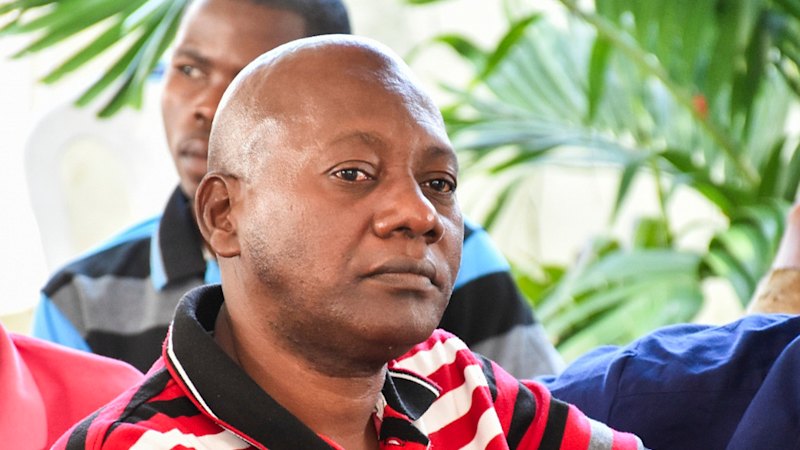
Two hundred years in prison still feels small next to 190 dead children. That is the brutal math sitting at the center of Kenya's most harrowing modern criminal case, where Good News International Church leader Paul Mackenzie was convicted of murdering 190 children and one adult through starvation and direct homicide at Shakahola Forest.
People search for this case because the scale is almost impossible to wrap your head around. How do parents let their kids starve? How does a preacher operate for years in plain sight before bodies start turning up in shallow graves? And what happens in court when prosecutors try to prove murder by fasting?
The short answer is that extreme religious coercion doesn't work like a switch flipping overnight. It works by slowly cutting people off from every outside lifeline—schools, hospitals, neighbors, and common sense—until obedience feels like survival. In Mombasa High Court, Justice Diana Kavedza sentenced Mackenzie to 200 years behind bars after finding him guilty of the 191 deaths, splitting the sentence into 100 years for murder by starvation and 100 years for direct homicide.
How Shakahola Forest Turned Into a Killing Ground
Shakahola sits near Kenya's southeastern coast, not far from Malindi, where dense bush offers cover that bustling city streets never could. When authorities first began unearthing bodies in 2023 following a tip-off, the scope shocked even seasoned investigators. Emaciated remains turned up in shallow graves and latrines, with postmortems and court findings pointing to starvation alongside asphyxia, neck compression, traumatic head injury, and cases where victims were buried alive.
Let's be honest about what made this case so chilling. According to court accounts and reporting on the trial, followers weren't simply left alone to fast peacefully in the woods. Justice Kavedza noted that children watched siblings die after days without food, and anyone caught trying to steal food or water faced beatings, bound hands, and confinement in locked structures turned into fasting bays.
Witnesses and relatives described a phased plan that started with the most vulnerable—children first, then women and young men, and finally older men—while residents lived in makeshift shelters divided into zones named after biblical places like Jerusalem and Judea. Calling that "voluntary fasting" is a stretch that the court flatly rejected. When kids are locked away from food and beaten for seeking water, that isn't a spiritual retreat. It's captivity.
Why Warning Signs Were Missed for Years
If you've followed Kenyan news closely, the most frustrating part of the Shakahola story isn't just what happened inside the forest. It's how long authorities knew Mackenzie existed before real action stopped him.
Police had searched his premises back in 2017, and authorities shut down his church in Malindi in 2019—after which he simply moved operations into Shakahola Forest. Even in mid-March 2023, when a local man reported that his brother and wife had starved their children to death on Mackenzie's orders, Mackenzie was arrested, released on bail, and allegedly moved up the predicted date of the end of the world before police re-arrested him in April 2023.
President William Ruto acknowledged in 2023 that state agencies should have prevented the tragedy and took responsibility as president. During sentencing in November 2026, Justice Kavedza went a step further, agreeing that Kenyan institutions had failed and urging Parliament to enact laws that stop a repeat.
There is a real tension here that lawmakers across East Africa have struggled with for years. Freedom of worship is protected, and heavy-handed state crackdowns on churches carry their own risks of abuse or political targeting. Yet doing nothing while a leader tells families that hospitals and schools are "satanic" leaves children completely unprotected. Saying "we respect religious freedom" shouldn't mean looking away when minors are kept out of school, denied medical care, and starved.
What the Legal Case and Unanswered Questions Mean
Proving criminal liability in cult deaths is notoriously tough. Defense lawyers argued that the prosecution leaned heavily on circumstantial evidence, hearsay, and contested forensic findings, while Mackenzie maintained he didn't force victims to starve. Yet the court concluded that his directives, control over the community, and the treatment of victims crossed straight into murder.
Still, the November 2026 sentencing doesn't close every chapter. Across the wider Shakahola investigation and related inquiries, total suspected deaths have been reported in the hundreds—with over 400 bodies exhumed over three years and roughly 500 suspected victims cited in coverage of the broader crisis. Many victims remain unidentified, and Mackenzie has also faced separate charges, including terrorism-related counts and allegations tied to 52 deaths in Kwa Binzaro village, which he has denied.
For grieving families, legal verdicts only go so far when loved ones are still missing. Fathers and relatives outside court spoke about psychological trauma, broken families, and the agonizing limbo of not knowing whether missing wives and children are dead or alive. That human toll is easy to gloss over in headline counts of 190 children, yet every single number was a kid who never got to grow up.
Practical Steps for Families, Advocates, and Policymakers
While most readers won't face an extreme forest compound like Shakahola, high-control groups and abusive leaders rely on recognizable playbooks everywhere. Paying attention early makes a real difference.
- Watch for isolation first. High-control groups rarely start with extreme demands. They start by convincing members that outside family, doctors, teachers, or critics are hostile or spiritually corrupt.
- Track changes in how children are treated. Any group that discourages schooling, blocks medical care, or uses punishment and deprivation against children crosses from unconventional belief into child welfare danger.
- Document patterns before approaching authorities. If you suspect a relative or neighbor is being pulled into a coercive group, keep dates, messages, financial transfers, and witness details so local child protection services or police have concrete facts rather than vague worry.
- Support victim identification and family tracing. Families searching for missing relatives after mass-casualty or cult cases need transparent DNA matching, clear communication from investigators, and trauma counseling—not silence after the cameras leave.
- Push for targeted oversight focused on welfare, not belief. Practical reform doesn't require policing theology; it requires clear child-protection enforcement, mandatory reporting of medical neglect, and real follow-through when prior complaints or bail conditions are ignored.
A 200-year sentence puts a label on what happened in Shakahola Forest, and the court did its job by naming it murder. Real prevention starts long before a preacher ever leads people into the woods—by acting on early warnings, protecting children's basic right to food and care, and refusing to treat obvious danger as just another private matter of faith.