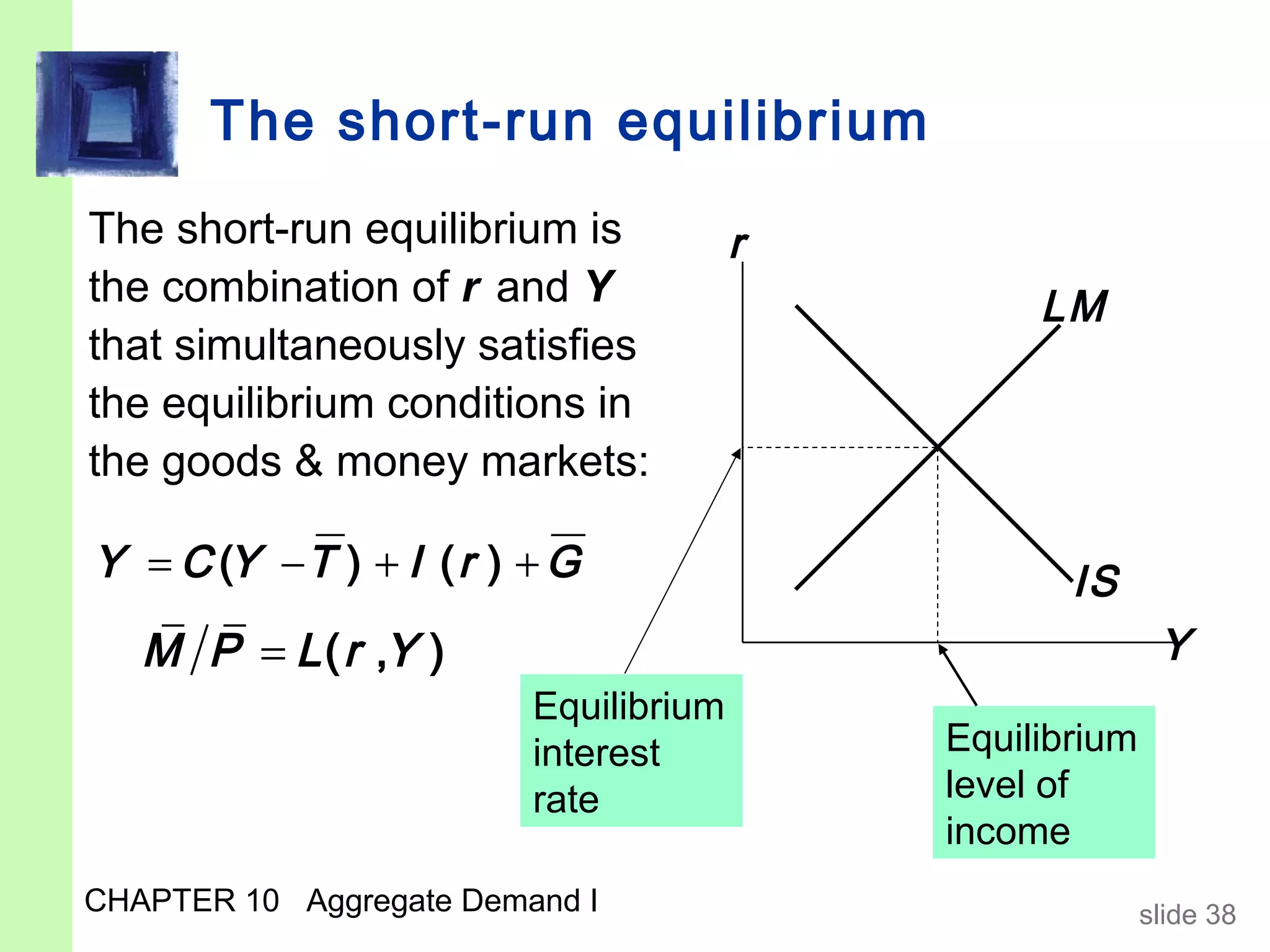
The current disconnect between central bank policy rates and long-term economic productivity suggests a terminal rate miscalculation that threatens to destabilize capital allocation for the next decade. When market participants claim "short rates have overshot," they are rarely discussing a simple numerical error by a committee; they are describing a fundamental rupture in the relationship between the cost of capital and the marginal efficiency of investment. This overshoot is not a temporary spike but a structural misalignment driven by lagging indicators, a misunderstood neutral rate ($r^*$), and the exhaustion of fiscal dominance.
The Three Pillars of Interest Rate Overshoot
To quantify whether rates have exceeded their sustainable ceiling, we must decompose the rate environment into three distinct mechanical pillars. An overshoot occurs when the interaction of these variables creates a restrictive force that outpaces the economy’s ability to generate nominal growth.
1. The Lagging Feedback Loop
Monetary policy operates with what Milton Friedman famously termed "long and variable lags." However, in a modern, service-based economy with high levels of fixed-rate corporate debt, these lags have extended. Central banks often continue hiking until a "break" is observed in the labor market or the financial system. Because these data points are backward-looking, the "terminal rate" is frequently discovered only after it has already become destructive. This creates a policy inertia where the real interest rate—the nominal rate minus inflation—continues to climb even as economic momentum stalls.
2. The Miscalculation of $r^*$
The neutral rate of interest, or $r^$, is the theoretical level at which the economy sits at full employment with stable inflation. The primary argument for an overshoot rests on the premise that $r^$ remains lower than policymakers believe. If the structural drivers of low rates—demographics, high global savings, and slowing productivity—persist, then a 5% policy rate is not "restrictive," it is "prohibitive." The gap between the current policy rate and a suppressed $r^*$ represents the magnitude of the overshoot.
3. Financial Conditions vs. Policy Rates
A nominal policy rate of 5.5% does not impact all sectors equally. An overshoot is often hidden by the "barbell effect" of the credit market. Large-cap firms with termed-out debt remain insulated, while small-to-medium enterprises (SMEs) and consumers face effective rates in the double digits. When the weighted average cost of capital (WACC) for the productive economy exceeds the Return on Invested Capital (ROIC), the "overshoot" transitions from a theoretical risk to a hard ceiling on growth.
The Cost Function of Monetary Restriction
The damage of an interest rate overshoot is best measured through its impact on the "Liquidity-Solvency Gradient." This framework illustrates how rising short rates first drain liquidity from the system before eventually challenging the solvency of leveraged entities.
- Phase I: Liquidity Drainage. As short rates rise, the opportunity cost of holding cash increases. Capital migrates from zero-yield bank deposits into money market funds and short-term Treasuries. This creates a "deposit beta" problem for regional banks, forcing them to restrict lending to maintain their margins.
- Phase II: The Refinancing Wall. Solvency issues arise when the "debt maturity wall" is reached. If short rates remain high (the overshoot phase), companies must refinance debt issued at 2% or 3% at much higher levels.
- Phase III: CapEx Suppression. The most insidious effect is the cancellation of long-cycle projects. When the risk-free rate is 5%, a project requiring a 10% hurdle rate becomes unviable once risk premiums are added. This leads to a "hollowing out" of future productive capacity.
Logical Flaws in the Higher for Longer Narrative
The prevailing "higher for longer" sentiment assumes that the economy has undergone a structural shift that justifies permanently higher rates. However, this narrative ignores the friction created by debt-to-GDP ratios that are significantly higher than they were in previous high-rate cycles.
In 1980, when Paul Volcker pushed rates to 20%, U.S. federal debt-to-GDP was approximately 35%. Today, it exceeds 120%. The "Fiscal Multiplier of Interest" creates a feedback loop: higher rates increase the government's interest expense, which expands the deficit, which requires more issuance, which puts further upward pressure on rates. At a certain point, the central bank is no longer fighting inflation; it is inadvertently fueling it through fiscal channels or, conversely, risking a systemic credit event. This fiscal constraint is the ultimate "hard stop" that proves short rates have entered an overshoot zone.
Quantifying the Delta: Nominal Growth vs. Interest Expense
A definitive way to measure the overshoot is to compare the Nominal GDP growth rate to the effective interest rate on total debt.
$$NGDP_Growth < Effective_Interest_Rate$$
When this inequality holds true, the economy is effectively liquidating its capital base to service its debt. Currently, in several developed markets, the "Real Rate" (Nominal Rate - Inflation) has moved from negative territory to significantly positive in a record timeframe. This velocity of change is as critical as the terminal level itself. The "Shock Coefficient"—the speed at which rates rose—has prevented the private sector from adjusting its balance sheets, making a 5% rate in 2024 far more restrictive than a 5% rate in 2006.
Structural Bottlenecks in the Transmission Mechanism
The reason an overshoot is so difficult to correct is that the transmission mechanism of monetary policy is currently asymmetric.
- Housing Lock-in Effect: High short rates have driven up mortgage rates, but because most existing homeowners have locked in low 30-year fixed rates, they do not move. This reduces housing inventory, keeps prices high, and keeps the "Shelter" component of inflation artificially elevated. The central bank then keeps rates high to fight this "inflation," even though high rates are the very thing causing the supply shortage.
- Corporate Cash Hoarding: The largest companies are currently earning more on their cash reserves than they are paying on their long-term debt. This creates a perverse incentive where the "tight" policy actually increases the net income of the wealthiest corporations while crushing the bottom 50% of the economy.
Strategic Realignment for a Mean-Reverting Rate Environment
The evidence suggests that we are currently in the "overshoot tail" of the hiking cycle. The probability of a sharp correction in short rates increases as the cumulative weight of the "Refinancing Wall" hits the small business sector.
Strategic positioning requires a move away from the "cash is king" mentality that dominated the initial hiking phase. As short rates plateau and the overshoot becomes undeniable, the focus must shift to:
- Locking in Term Duration: Capturing long-term yields before the inevitable pivot.
- Identifying "Rate-Sensitive Dislocation": Seeking assets that have been discounted based on a 5.5% terminal rate that is fundamentally unsustainable.
- Deleveraging Variable Obligations: Prioritizing the elimination of any debt tied to SOFR or other short-term benchmarks, as these will remain volatile during the "break" phase of the overshoot.
The terminal rate is not a static number; it is a moving target influenced by global productivity and fiscal capacity. By every objective metric of debt sustainability and investment hurdle rates, the current short-term rate structure has exceeded the economy’s long-term equilibrium. The correction will likely be as rapid as the ascent.
Maintain maximum liquidity in the immediate term to exploit the volatility that occurs when the "overshoot" narrative collapses and the market aggressively prices in a return to a lower, structural $r^*$. Position portfolios for a steepening yield curve, as the short end must eventually fall to meet the reality of stagnating nominal growth.