The air inside the clinic in North Kivu always smelled of the same three things: damp concrete, chlorinated bleach, and the quiet, metallic tang of fear.
Outside, the equatorial sun beat down with a relentless, heavy glare, turning the red dirt roads into baked ceramic. Inside, beneath the hum of a single battery-powered fan, time moved in a different rhythm. It ticked forward in the monitored drop of an intravenous drip, the rustle of protective plastic gowns, and the sharp, piercing gasp of a patient fighting for breath against an invisible enemy that had once again broken through the fragile barriers of human defense.
We talk about outbreaks in numbers. We tally them in columns on global dashboards, sorting data points into confirmed cases, suspected infections, and grim totals of lives lost. Yet numbers are a protective armor. They shield us from the raw, jagged edges of reality. They let distant observers look at a tragedy on a screen and nod with clinical detachment, as if a spike in mortality were merely a statistical anomaly on a weather chart.
Step inside the ward, however, and the statistics vanish. There are no percentages here. There are only names, faces, and the agonizing weight of absence.
The Anatomy of an Unfolding Crisis
To understand why the latest weekly reports out of the Democratic Republic of Congo carry such a devastating resonance, we have to look past the bureaucratic shorthand of epidemiological updates. We have to look at the geometry of containment.
Ebola does not sweep through a region like a sudden hurricane. It moves more like a creeping shadow, exploiting every fracture in social trust, every gap in infrastructure, and every lingering tradition of communal care. When a community buries its dead with the intimacy of washing hands and sharing grief, an ancient act of love becomes an accidental vector of transmission.
Consider a hypothetical village nestled in the green folds of the eastern highlands—let us call it Mavivi. In Mavivi, health clinics are not around the corner. They are hours away by foot, across rivers swollen by seasonal rains. When a fever begins with shaking chills, body aches, and a deceptive exhaustion that feels like ordinary malaria, the first instinct is to stay home. Families rally around the sickbed. Mothers press cool cloths to burning foreheads. Neighbors drop by to offer comfort and shared cassava.
By the time the diagnosis is whispered in the corridors of a treatment center, the circle of exposure has already widened. This is the cruel mechanics of the virus. It punishes our most noble impulses. It turns empathy against us.
Recent weekly metrics out of the region confirm a grim acceleration. The numbers of new fatalities are climbing, hitting peaks that send shockwaves through international response teams. Why now? Why do these surges continue to erupt despite decades of medical experience and the existence of vaccines that can tilt the balance between life and death?
The answer is rarely simple. It lives in the friction between medical science and human reality.
The Friction of Trust
Medicine is a science of molecules, but public health is an art of human connection. You can manufacture millions of doses of recombinant vector vaccines. You can pre-position personal protective equipment in regional hubs. You can draft flawless logistical blueprints in air-conditioned offices thousands of miles away.
If the people on the ground do not trust the strangers in white plastic suits, none of it matters.
History leaves scars. When communities have endured decades of armed conflict, political instability, and fractured state services, skepticism is not stubbornness; it is a rational survival mechanism. Rumors travel faster than ambulances. When individuals vanish into isolated treatment tents and frequently do not return, whispers take root. People begin to wonder if the cure itself is the danger.
I remember talking to an elder in a community recovering from an earlier wave. His hands were calloused from decades of working the volcanic soil, his eyes clouded with a deep, weary sorrow. He did not speak in terms of viral loads or chain reactions. He spoke of dignity.
"When we cannot bury our mothers the way our ancestors did," he told me, his voice barely rising above the rustle of the wind in the banana trees, "it feels as though we are losing more than their lives. We are losing our history."
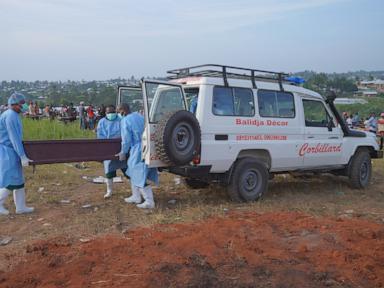
That is the invisible stake of every public health crisis. It is not just about stopping the replication of a filovirus inside human cells. It is about preserving the social fabric from tearing entirely apart. When health workers adapt—when they invite community leaders into the design of safe burial protocols, when they listen more than they lecture, when they honor grief while enforcing safety—the curve begins to bend. But trust takes years to build and seconds to shatter. Every logistical delay or miscommunicated directive opens a crack through which the virus slips back in.
Walking the Edge of Resilience
To witness an Ebola response from the inside is to inhabit a paradox of profound despair and breathtaking courage.
You see local nurses who have lost colleagues, friends, and family members walking back through the gates of the isolation ward every single morning. They strap on their gear, check each other's seals with methodical precision, and step into the red zone. They do not do it for glory. They do it because the alternative is surrender, and surrender is not an option when your neighbors are dying.
They feed patients who are too weak to lift a spoon. They hold the hands of children frightened by the alien appearance of masked faces. They celebrate the moment a patient walks out of the exit corridor, receiving the clean bill of health that signals victory over an adversary that claims the majority of its untreated victims.
That discharge ceremony is a moment of pure, unadulterated catharsis. The entire clinic staff gathers, clapping rhythmically against the plastic of their aprons, singing songs of release as the survivor steps across the threshold into the bright afternoon light. For a few minutes, the rising death tolls, the logistical bottlenecks, and the geopolitical anxieties fade away. There is only the survivor, the road home, and the stubborn proof that human resilience can outrun the fever.
The Horizon We Face
As the latest data points are processed and global health agencies mobilize additional resources, the immediate future remains precarious. The weekly death tolls remind us that the crisis has not conceded defeat. The virus is patient, opportunistic, and indifferent to our fatigue.
Yet we are not powerless. Every vaccinated contact, every safe burial executed with respect and care, every rumor met with honest, transparent dialogue builds another brick in the wall of containment.
The story of North Kivu is not simply a chronicle of tragedy. It is an ongoing testament to what happens when ordinary people are asked to bear an impossible weight, and somehow find the strength to lift it together. The fever may rise, but against the collective will of those determined to protect their homes, it will eventually break.