In a quiet reception room thousands of miles from Washington and Tehran, tea is served in delicate glass cups. Steam rises into the cool air, carrying with it the invisible weight of millions of lives hanging in the balance. There are no cameras present. No flashbulbs puncture the dim lighting. No podiums wait for grand declarations. Yet, inside this unassuming space, diplomats are attempting to engineer something extraordinary: a fragile bridge across a chasm of decades-old hostility.
Diplomacy in the modern age often looks like high-profile summits, televised handshakes, and carefully choreographed press conferences. But the real work—the agonizing, painstaking effort to prevent catastrophe—almost always happens far away from the spotlight. Today, Pakistan stands as the unlikely custodian of one of the world's most delicate communications channels, passing quiet messages between the Islamic Republic of Iran and the United States.
It is a role borne of necessity, history, and a shared realization that when direct lines are severed, indirect whispers are the only guardrails left to prevent direct conflict.
The Messenger in the Middle
To understand why Islamabad holds the keys to this backchannel, one must look at the geography of necessity. Iran sits at a critical geopolitical crossroads, bounded by economic isolation, regional rivalry, and an ongoing standoff over its nuclear ambitions. Across the Atlantic, American policymakers face a complex matrix of security commitments, domestic pressure, and global priorities. Direct communication between the two powers has been broken for over four decades, ever since the storming of the U.S. embassy in Tehran in 1979.
When official channels die, backchannels become vital organs.
Pakistan has long maintained a uniquely dual relationship. It shares a long, porous desert border with Iran, linked by deep cultural, economic, and security ties. At the same time, Islamabad has maintained decades of defense and diplomatic engagements with Washington. This distinct position allows Pakistani envoys to step into rooms where American and Iranian officials cannot comfortably sit together.
When an Iranian diplomat expresses openness to talks under a Pakistan-brokered framework, it is not merely a technical statement of foreign policy. It is a calculated signal sent through a trusted conduit. It tells the world that despite the fiery rhetoric broadcast on evening news networks, the fundamental instinct for self-preservation and strategic bargaining remains very much alive.
The Human Reality Behind High-Stakes Geopolitics
It is easy to analyze geopolitical maneuvers as if they were moves on a chessboard, abstract and unfeeling. But behind every diplomatic note passed through an intermediary lies an undeniable human cost.
Consider a family living in a suburban neighborhood outside Tehran. For them, diplomatic openness or closure is not an abstract concept discussed in think tanks. It dictates whether essential medicines are available at the local pharmacy. It determines whether inflation will devour their monthly savings before the third week of the month. It dictates whether their children will grow up in a stable region or under the perpetual shadow of military escalation.
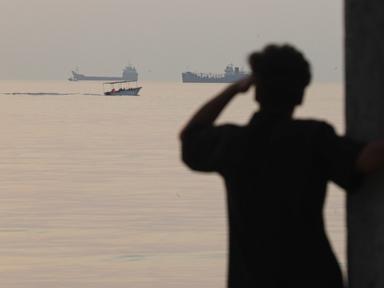
Now consider a service member stationed on an American naval vessel patrolling the narrow, congested waters of the Strait of Hormuz. For that sailor, a single miscalculation or misread signal between two hostile forces can mean the difference between a routine deployment and an immediate crisis.
This is what backchannels are truly designed to protect. They exist to ensure that miscommunication does not spark a fire that neither side intended to light. When an envoy confirms that the door to negotiation remains unlocked, it provides a quiet sigh of relief to millions who will never know the envoy's name.
How Quiet Messages Travel
The mechanics of indirect diplomacy are intentionally slow and methodical. When one side wishes to test a proposal, the process unfolds with deliberate precision:
- Drafting the Signal: Officials in the capital draft a message, balancing firmness with enough ambiguity to allow room for maneuver.
- The Neutral Ground: The message is conveyed to designated intermediaries—in this case, Pakistani diplomats trained in the delicate language of neutral transmission.
- Transmission and Translation: The intermediary delivers the message to the opposing party, ensuring that intent is preserved while filtering out unnecessary provocation.
- Assessment and Response: The recipient analyzes the offer, formulates a response, and returns it through the same circuitous loop.
This process lacks the speed of a phone call, but its slowness is precisely its strength. It provides cooling-off time. It prevents impulse decisions driven by news cycles or social media outrage. It allows both governments to explore possibilities without committing political suicide at home.
The Architecture of Miscalculation
History is littered with conflicts that nobody actually wanted. Wars frequently start not because one party calculated that war was desirable, but because both parties miscalculated the other's resolve, intentions, or red lines.
Without a functioning channel, simple misunderstandings compound rapidly. A routine naval exercise is misconstrued as an impending attack. A rhetoric-heavy public speech intended for a domestic audience is interpreted across the globe as a declaration of intent. Suspicion breeds counter-measures, and counter-measures breed escalation.
The existence of a broker changes this equation. It provides a pressure-release valve. When rumors swirl or tension spikes in regional flashpoints, the middleman can ask the simple, crucial question that prevents disaster: Is this an action of intent, or is it a misunderstanding?
The Quiet Path Ahead
Diplomacy is rarely swift, and it is almost never clean. The announcement that Iran remains open to dialogue through Pakistan’s mediation does not guarantee a breakthrough. It does not erase decades of deep-seated distrust, economic sanctions, or regional conflict.
What it does offer is a path. A narrow, treacherous, and quiet path, but a path nonetheless.
As long as messages continue to travel between capitals through the quiet corridors of intermediary embassies, the possibility of a non-violent resolution remains alive. In a world increasingly defined by noise and confrontation, the most important words are often the ones spoken in the quietest tone, through the most unexpected messengers.