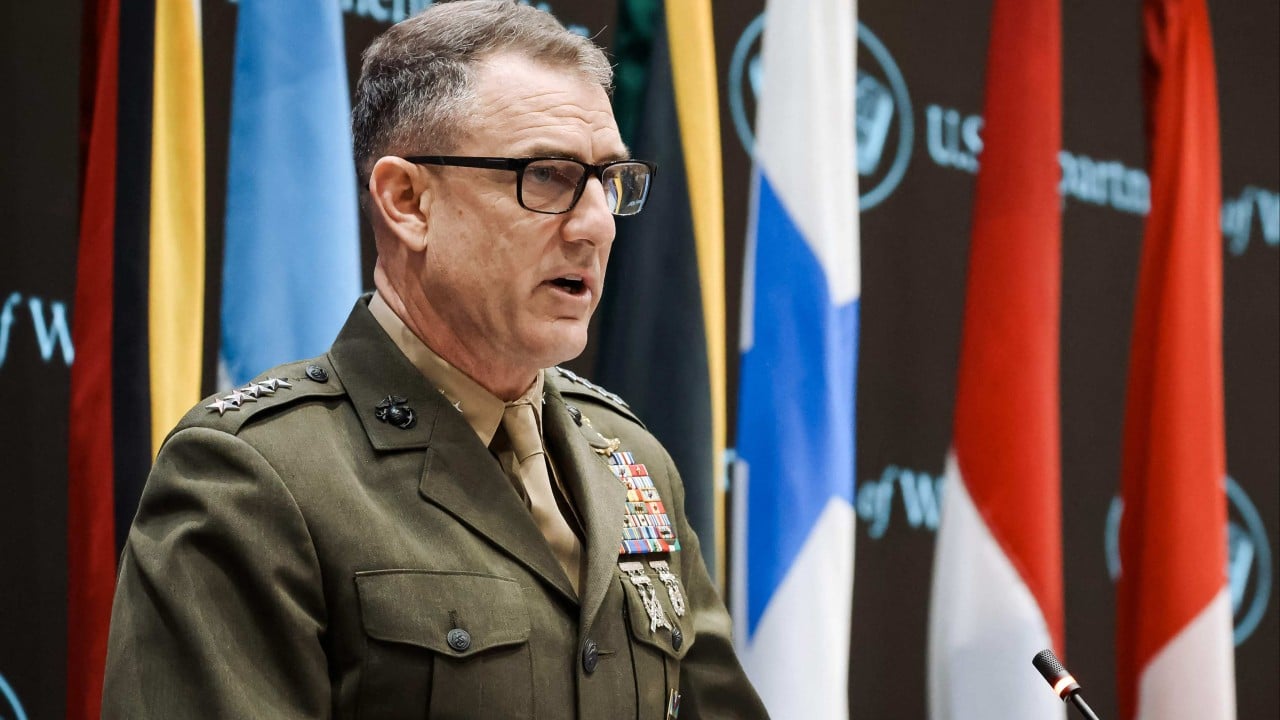
General Laura Richardson, the outgoing commander of U.S. Southern Command, recently dropped a number in front of Congress that should have stayed in the headlines longer than a news cycle. Twenty-three. That is the specific count of Chinese-backed port projects currently dotting the coastlines of Latin America and the Caribbean. This is not just a collection of commercial contracts or a series of innocent infrastructure upgrades. It is a methodical, state-directed effort by the People’s Republic of China (PRC) to secure "dual-use" facilities that can pivot from moving soy and iron ore to docking warships with a single phone call from Beijing.
The United States has long treated its "near abroad" with a mixture of periodic neglect and reactive diplomacy. Meanwhile, China has been playing a much longer game. By embedding itself into the literal bedrock of Western Hemisphere trade, the PRC is creating a logistical reality where the U.S. military could find itself locked out of its own neighborhood during a global conflict.
The Dual Use Trap
When a Chinese state-owned enterprise (SOE) like COSCO Shipping or China Merchants Port Holdings signs a deal to build a deep-water terminal, they aren't just looking for a return on investment. They are looking for depth. Specifically, the kind of depth required for a Type 055 destroyer.
Standard commercial ports require specific draft clearances, crane capacities, and refueling infrastructure. By over-engineering these facilities—building them larger and deeper than current local trade demands—China ensures they are "ready" for naval applications. This is the dual-use doctrine. It allows Beijing to maintain a "civilian" footprint that provides plausible deniability while establishing the skeletal structure of a global blue-water navy support network.
In Peru, the megaport of Chancay serves as the most glaring example. This $3.5 billion project is majority-owned by COSCO. It isn't just a port; it’s a direct pipeline to Shanghai that bypasses North American hubs entirely. While Washington frets over TikTok algorithms, Beijing is quite literally pouring the concrete for a new world order in the Pacific.
Debt as a Tool of Sovereignty Erosion
The mechanics of these deals are designed to favor the lender at the expense of the host nation's long-term autonomy. Most of these 23 projects are financed through opaque loans from the China Development Bank or the Export-Import Bank of China.
When a Latin American government—often struggling with inflation or commodity price volatility—cannot meet the repayment terms, the PRC doesn't just send a collection agency. They renegotiate for equity. We saw this play out in Sri Lanka with Hambantota, where a 99-year lease was handed over to China after debt levels became unsustainable.
In Latin America, the pressure is more subtle but equally effective. It manifests as "favorable" access for Chinese fishing fleets, the adoption of Huawei’s 5G infrastructure, or the sudden severance of diplomatic ties with Taiwan. Panama, El Salvador, and the Dominican Republic all flipped their recognition to Beijing shortly after significant infrastructure "gifts" were discussed.
The Intelligence Shadow
A port is more than a place to move boxes. It is a massive data collection node. In the modern era, logistics is information.
By controlling the port's management software and the physical cranes (often manufactured by ZPMC, a Chinese state-owned company), the PRC gains visibility into every piece of cargo moving through the region. They know what the U.S. is buying, what it is selling, and the exact timing of those shipments.
- Signals Intelligence: Proximity to major shipping lanes allows for the monitoring of naval movements.
- Cyber Vulnerability: Integrating Chinese-made "smart port" technology creates backdoors into national power grids and communication networks.
- Economic Coercion: If a country takes a political stance Beijing dislikes, those "efficient" Chinese-run ports can suddenly experience "technical delays" that strangle the local economy.
The U.S. military isn't just worried about missiles. They are worried about a scenario where, in a moment of crisis, the Panama Canal or the Strait of Magellan is functionally controlled by a competitor who can turn off the lights with a keystroke.
Why the U.S. is Losing the Ground Game
For decades, the American approach to Latin America has been characterized by private-sector led investment. The U.S. government doesn't own shipping companies. It doesn't tell Walmart where to build a distribution center.
China, conversely, operates as a monolithic entity. When the PRC arrives in a country like Argentina or Brazil, they bring the bank, the construction crew, the shipping line, and the diplomatic corps in one package. They move faster than the World Bank and ask fewer questions about environmental impact or human rights than the IMF.
To a local politician looking to show progress before the next election, a "no-strings-attached" Chinese port looks a lot better than a decade of U.S. bureaucratic oversight. The reality that those strings are merely invisible until they are pulled is a problem for the next administration.
The Geographic Stranglehold
Look at a map of the 23 projects Richardson mentioned. They aren't random. They cluster around strategic "choke points."
The Panama Canal Perimeter
China has secured port facilities at both the Atlantic and Pacific entrances to the Canal. While the Canal itself remains neutral under treaty, the surrounding logistics are increasingly dominated by Chinese firms. If you control the docks, the tugboats, and the pilots, you don't need to "seize" the canal to influence who gets through.
The Caribbean Arc
From Jamaica to the Bahamas, Chinese investment is circling the soft underbelly of U.S. maritime defenses. A port in the Bahamas is less than 200 miles from the Florida coast. This isn't just about trade; it's about proximity to U.S. military installations and testing ranges.
The Atlantic Access
In Argentina, the "Space Station" in Neuquén—managed by the Chinese military—combined with interests in southern ports near the Strait of Magellan, gives Beijing a foothold in the South Atlantic. This allows them to monitor satellite communications and potentially disrupt the alternative route to the Pacific if the Panama Canal is ever compromised.
Beyond the Concrete
The focus on "23 ports" actually undersells the scale of the problem. These ports are the anchors for a much larger ecosystem of Chinese influence.
We are seeing a "Digital Silk Road" being built alongside the physical one. When China builds a port, they also install the fiber optic cables. They provide the facial recognition cameras for "security." They build the data centers that house the host nation's government records.
By the time the U.S. realizes a country has drifted too far, the entire digital and physical nervous system of that nation is running on Chinese hardware. You cannot simply "pivot" away from that. It is a total integration that makes decoupling almost impossible without collapsing the host country's infrastructure.
Reversing the Momentum
The United States cannot out-spend China in a race to build unnecessary concrete. That is a losing game. Instead, the focus must shift to strategic alternatives and transparency.
The U.S. needs to leverage the Development Finance Corporation (DFC) to provide credible, high-quality alternatives that emphasize long-term sovereignty over short-term cash. But more importantly, there needs to be a massive push for radical transparency. The details of these Chinese port contracts—the "hidden" clauses that surrender land rights or judicial oversight—need to be dragged into the light of day.
When the local population realizes that their national assets have been collateralized for 99 years, the political cost for leaders who signed those deals becomes untenable.
The tracking of 23 projects is a diagnostic. It tells us the "cancer" of influence is spreading. But a diagnosis without a treatment plan is just a death certificate. The U.S. has to stop treating Latin America as a "region of concern" and start treating it as a theater of active economic and logistical competition.
If the current trend continues, the next time the U.S. military looks south, they won't see a map of sovereign partners. They will see a series of "civilian" outposts that are one executive order away from becoming hostile territory. The concrete is drying, and the window to act is closing with every ton of cement poured into the Caribbean surf.