The rain in Munich does not care about global trade wars. It simply slickens the pavement outside a sleek, minimalist showroom where a young couple stands staring through the glass. Inside sits a sharp, compact electric hatchback. It has a glass roof, a digital dashboard that looks like a command center, and a price tag that defies everything the husband and wife expected to see in 2026.
For months, they wanted to go green. They looked at the local heritage brands—the names their parents and grandparents bought. The sticker shock was always the same. Thirty-five thousand euros. Forty thousand. More than a down payment on a modest home in the suburbs. But this car in the window is different. It is built across the ocean, imported through massive shipping ports, and costs barely twenty-four thousand euros.
To the young couple, this is not a geopolitical flashpoint. It is a lifeline. It is the chance to drive a modern car without drowning in debt.
A thousand miles away in Brussels, bureaucrats view that same hatchback as a Trojan horse. Behind closed doors, officials pore over shipping manifests and industrial subsidy spreadsheets, preparing to slam the brakes on an automotive invasion that took the Western world completely by surprise. The European continent is caught in a profound dilemma: protect its historic industrial backbone or meet its aggressive climate goals using cheap foreign technology.
There is no easy exit from this highway.
The Ghost in the Machine
To understand how we arrived at this intersection, you have to look beneath the hood of the global economy. For a century, Europe—and Germany in particular—ruled the asphalt. The internal combustion engine was a masterpiece of European engineering, a complex ballet of pistons, valves, and precision manufacturing that took generations to perfect. This mastery created millions of stable, high-paying jobs. It built cities. It defined national identities.
Then, the rules changed. The future became electric.
An electric vehicle is fundamentally different from a gas-powered one. It is essentially a giant battery wrapped in a software-driven metal shell. When the playground shifted from mechanical engineering to chemical engineering and software development, the historic advantages of Western automakers began to erode.
Consider a hypothetical auto worker named Thomas. He represents a generation of skilled labor in Baden-Württemberg. For twenty years, Thomas machined engine blocks to tolerances measured in microns. His father did the same. Today, Thomas watches as his factory floor is reconfigured. The complexity he spent his life mastering is being replaced by modular battery packs that arrive pre-assembled.
While Europe was perfecting the fuel injector, overseas competitors spent fifteen years securing the supply chains for lithium, cobalt, and nickel. They built massive battery gigafactories with heavy state backing. They learned how to manufacture electric cars at a scale and a cost structure that Western legacy brands cannot match.
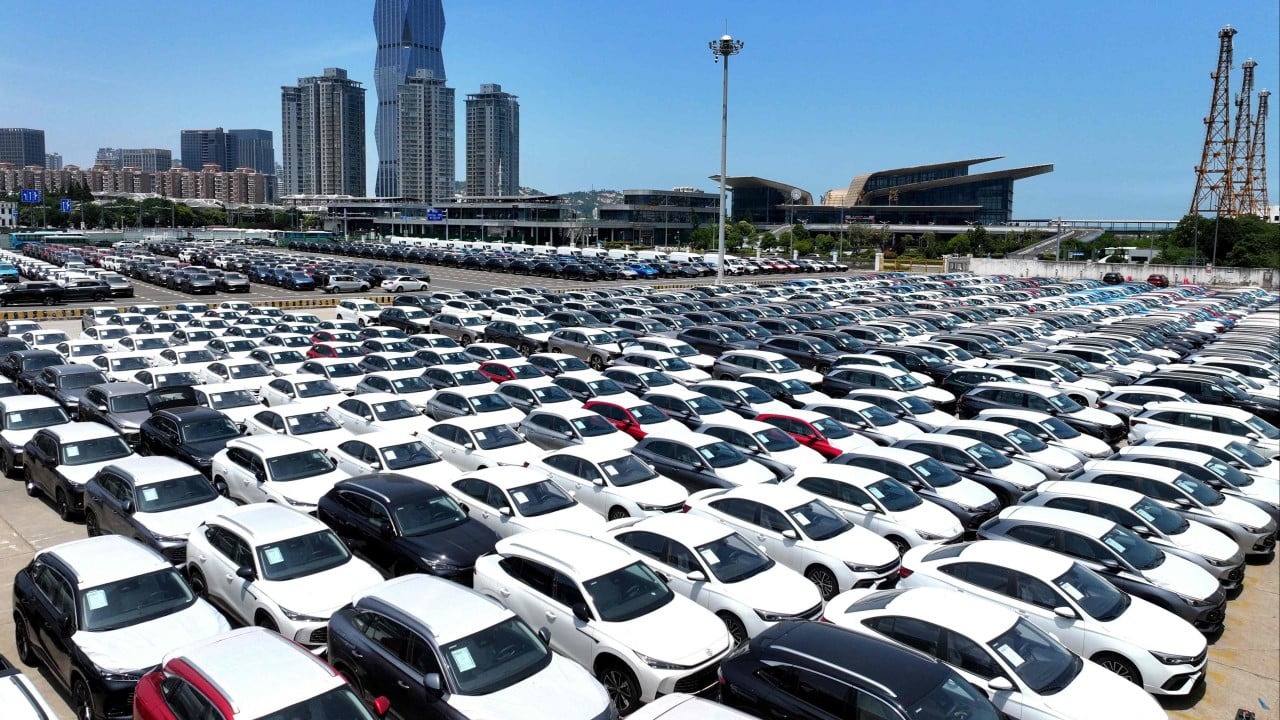
The result is sitting in showrooms across Paris, Berlin, and Madrid. Chinese brands, along with Western brands manufacturing inside China, are flooding the European market. Their market share has climbed steadily, capturing a significant slice of the electric vehicle market in just a few short years. They are no longer the poorly built novelties of twenty years ago. They are safe, highly advanced, and undeniably cheap.
The Tariff Trap
The response from Brussels is a classic tool of old-world statecraft. Tariffs.
The European Commission launched an intensive anti-subsidy investigation, concluding that foreign state coffers poured billions into their domestic EV industries, allowing them to underprice European manufacturers unfairly. To level the playing field, policymakers are implementing provisional duties, stacking extra taxes on top of the standard ten percent import rate. On paper, it looks like a protective shield for Thomas and his factory.
But economic architecture is rarely that simple.
When you raise taxes on imported cars, you do not just punish the foreign manufacturer. You punish the consumer standing in the rain in Munich. The price of that twenty-four thousand euro hatchback jumps. The affordable option vanishes, leaving buyers with a stark choice: buy a premium European electric car they cannot afford, stick with their aging, polluting diesel vehicle, or stop driving altogether.
There is a glaring contradiction at the heart of this policy. European leadership has repeatedly pledged to phase out the sale of new combustion engine cars by 2035. It is a massive, legally binding commitment to combat climate change. Yet, by restricting access to the most affordable electric vehicles on the market, the region risks stalling its own green transition. You cannot force a population to buy electric while simultaneously pricing them out of the market.
The real problem lies elsewhere, buried in the corporate boardrooms of Europe's own automotive giants.
For years, many legacy brands dragged their feet on electrification. They relied on the fat profit margins of luxury gas-powered SUVs to keep shareholders happy. They treated electric vehicles as a compliance exercise rather than the inevitable future. Now, they are caught in a pincer movement. On one side are agile overseas competitors offering low prices; on the other are strict emissions mandates from their own governments.
Tariffs buy time. They do not buy innovation. A temporary tax barrier might protect a local factory for a year or two, but it does not magically build a domestic battery supply chain or rewrite outdated software platforms.
The Retaliation Ripple
Every action triggers an equal and opposite reaction in global commerce. The moment Europe threatens to penalize imported cars, the threat of retaliation looms over other sectors of the economy.
Trade wars do not stay confined to one industry. If Brussels hits foreign electric vehicles, other nations look for vulnerabilities to strike back. Suddenly, European luxury goods, French wines, Italian cheeses, and German heavy machinery find themselves in the crosshairs. A dairy farmer in Normandy or a winemaker in Tuscany could see their livelihood damaged because of a dispute over car batteries in Brussels.
Worse still, many European car companies are deeply entangled with the very market they are trying to block. German automakers sell millions of luxury vehicles overseas. They operate massive joint-venture factories there. If a full-scale trade war erupts, the retaliation could devastate the European brands' most profitable operations abroad, starving them of the capital they need to fund their own electric transition at home.
It is a dizzying, high-stakes game of economic chicken.
The Road Left Untravelled
What if the focus is entirely wrong?
Instead of building walls to keep competitors out, the path forward might require building the infrastructure to bring them in on Europe’s terms. Some foreign brands are already adapting to the tariffs by announcing plans to build factories inside Europe. They are looking at sites in Hungary, Spain, and Poland.
This shifts the entire dynamic. When a foreign company builds a factory inside Europe, they employ European workers. They pay local taxes. They source components from local suppliers. Thomas, the factory worker, might still see his job change, but the manufacturing ecosystem stays alive on European soil.
This approach requires humility. It requires admitting that the West lost the first round of the battery race and must now learn from its rivals. It means encouraging joint ventures and technology transfers, much like other developing automotive markets did decades ago.
But that requires long-term strategic vision, a commodity often in short supply during an election cycle when protectionist rhetoric wins easy votes.
The View from the Concrete
Back in Munich, the young couple steps away from the showroom window. They pull their coats tighter against the chill. They decide to wait. They will see if the prices go up when the new duties take effect, or if a better deal appears down the line.
Their decision, multiplied by millions of households across the continent, will dictate the future of the European environment and its industrial economy.
The heavy trucks loaded with new hatchbacks continue to roll off the transport ships at the ports of Rotterdam and Zeebrugge, moving silently down the highways. The brakes are being pressed in Brussels, but the momentum on the ground is already proving incredibly difficult to stop.