For decades, the sky was a boundary. We looked up at the stars and saw poetry, distance, and safety. The atmosphere was a thick, protective blanket keeping the chaos of the cosmos far away from our daily lives. But quiet changes happen above the clouds while we walk our dogs, pay our bills, and argue about local politics.
Consider what happens next when the frontier of human conflict shifts from dirt and ocean to the silent dark of orbit.
We tend to think of space exploration as an idealistic endeavor. Silver rockets, Apollo patches, equations scratched on blackboards, humanity reaching for the unknown. Yet, beneath that romantic gloss lies a harder truth. Space has always been about dominance. The first satellites weren't launched to map nebulas; they were sent to look down, to listen, and to measure enemies.
Now, that observation has evolved. It is no longer just about watching. It is about control.
The Invisible Network
Step outside tonight. Look past the streetlights. If you know where to look, you might see a pale, steady point of light moving with unnatural speed against the static constellations. It is not a plane. It does not blink. It is a machine, a hundred miles up, circling the globe every ninety minutes.
To understand the recent confirmation that defensive and strategic capabilities have shifted into orbit, you have to strip away the science fiction tropes. There are no orbital laser battles raining fire from the heavens. The reality is far more subtle, and in many ways, far more unsettling.
Think of modern infrastructure as a giant, fragile glass spiderweb. Every financial transaction, every weather forecast, every GPS turn-by-turn direction, and every secure military communication relies on invisible threads connecting computers on the ground to hardware in the void. If you want to blind a modern society, you do not bomb its power plants first. You reach for the assets hovering in the thermosphere.
Governments do not admit to militarizing the stars lightly. For generations, international treaties attempted to keep orbit pristine, a sanctuary free of destructive payloads. But treaties are only as strong as the fear of consequences. When nations watch their rivals test high-altitude interceptors and maneuverable spacecraft capable of tracking other satellites like hunting dogs, the calculus changes. Trust erodes. Paranoia takes the steering wheel.
The Weight of Silence
I spoke last year with an aerospace engineer who spent thirty years tracking orbital debris. He sat in a dimly lit control room, surrounded by monitors tracing thousands of glowing green tracks. He looked tired.
"People think space is empty," he told me, stirring a cup of cold coffee. "They think it's a vast, forgiving ocean. It isn't. It's a crowded highway with no speed limit and no traffic lights. And now, we are parking armed guards along the shoulders."
He pulled up a simulation on his screen. A red dot blinked, representing a classified payload. Near it, a blue dot representing a different nation's satellite drifted closer. And closer. They were miles apart, yet in orbital mechanics, miles mean seconds. A sudden burst of compressed gas, a minor trajectory correction, and a billion-dollar asset becomes shrapnel.
That is the hidden terror of weaponized orbits. It is not necessarily about an outright attack. It is about coercion. It is the diplomatic equivalent of a loaded pistol kept quietly on the desk during a negotiation. Everyone knows it is there. No one wants to test whether the person holding it is bluffing.
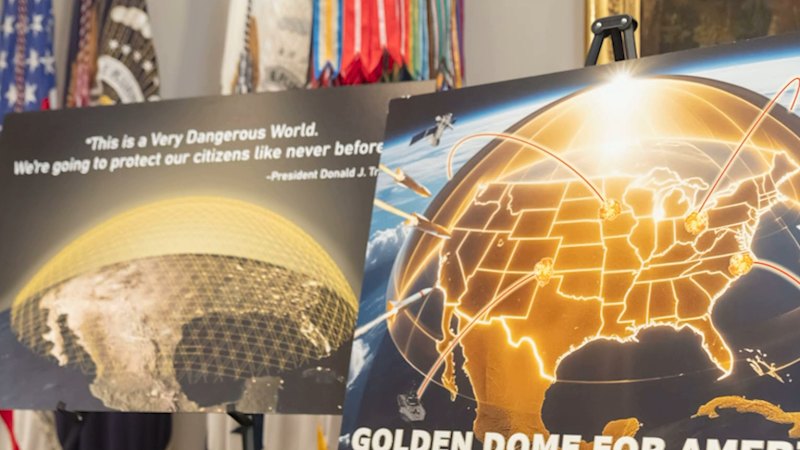
When the Pentagon officially acknowledged the deployment of advanced orbital defense systems, it wasn't a sudden shock to analysts who watch the telemetry data. It was merely the formal removal of a curtain. The race had already been run. The finish line had already been crossed. We were simply the last to know.
The Cost of Looking Up
What does this mean for the person on the ground?
Directly, nothing changes tomorrow morning. Your coffee will still brew. Your car will still start. Your phone will still connect to the nearest cell tower.
Indirectly, everything has shifted. We have traded the comforting illusion of a peaceful cosmos for a high-stakes chess match played in zero gravity. Every time a new rocket punches through the stratosphere, carrying secret cargo for national security, the invisible ceiling above our heads gets a little heavier.
We built our modern world on the promise of global connection enabled by the stars. Now, those very same vantage points are being armored against us. The sky is no longer just a mirror reflecting our highest aspirations. It has become another frontier of our oldest anxieties.
Look up tonight. The stars are still there, scattered like dust across the dark. But between them, moving silently in the night, are the new sentinels of our age, keeping watch over a world that refuses to find peace even in the stars.