Drop a wrapper on the sidewalk in Singapore, and you're gambling with a fine, a mandatory cleanup shift, or both. Do something annoying on a train in Hong Kong, and you might get a stern stare, a viral clip on social media, or a lecture from a stranger before a transit officer ever shows up.
Both cities pack millions of people into dense, high-speed spaces where small habits quickly turn into big friction. Yet when it comes to Hong Kong vs Singapore in tackling bad behaviour, the two places run on noticeably different playbooks. Singapore leans hard into statutory rules, visible enforcement, and behavioral conditioning. Hong Kong combines strict by-laws and raised fixed penalties with loud, immediate street-level pushback and a culture that often polices itself in real time.
If you're visiting, relocating, or just trying to understand why one city feels almost eerily orderly while the other feels brisk, gritty, and vocal, the contrast is hard to miss. Fines alone don't explain it. Neither does architecture. It comes down to how laws, shame, public space, and everyday habits collide.
Why Hong Kong vs Singapore in Tackling Bad Behaviour Looks So Different
On paper, both cities treat public order seriously because high density leaves zero room for selfishness. A spilled drink on a packed rush-hour car ruins everyone's morning. Litter blown into drains clogs streets fast in tropical downpours. Loud speakers on a quiet commute grate on tired nerves.
Still, the vibe on the ground feels distinct. Singapore built a reputation around predictable deterrence—clear prohibitions, strict penalties, and programs designed to make offenders feel the weight of their actions. Hong Kong has plenty of sharp rules on the books, too, especially on public transit and street cleanliness, yet daily enforcement often feels more uneven, reactive, or community-driven.
I've spent time watching how locals and newcomers react to everyday slip-ups in both cities, and the biggest surprise isn't the rulebook. It's how fast social norms kick in when official enforcement isn't standing right next to you. In Hong Kong, people rarely suffer annoying habits in silence for long. In Singapore, people often expect the system—and the rules behind it—to draw a bright, unmistakable line.
How Singapore Enforces Public Order From Fines to Cleaning Vests
Singapore's approach to public misbehaviour is famous worldwide, sometimes to the point of caricature. People still bring up chewing gum as if it's the whole story, when in reality it's just one piece of a much broader public-order puzzle.
Under Singapore's Environmental Public Health Act, the National Environment Agency enforces strict cleanliness rules, starting with a composition sum of S$300 for a first-time littering offence. Repeat or more serious offenders can face court prosecution, steeper fines, and a Corrective Work Order (CWO). Introduced in 1992 and expanded to allow up to 12 hours of public cleaning work—often worn in high-visibility vests—a CWO isn't just about sweeping leaves. It's meant to force offenders to experience the physical grind of cleaning up after careless people while making the consequence visible in public.
Transit rules follow a similarly tight logic. On Singapore's MRT network and bus system, eating or drinking is prohibited except in designated areas, with maximum fines reaching S$500 under rapid transit regulations, while littering, spitting, or soiling facilities can carry penalties up to S$5,000. Even carrying unsealed durians is banned on transit because strong smells don't stay contained in a closed cabin.
The Misconception About Chewing Gum and "Fine City"
Visitors love calling Singapore a "fine city," and honestly, the pun sticks because the penalties are real. Still, people often get the chewing gum rule backward. Bringing a small amount of gum for personal use isn't the same thing as selling it commercially or spitting it out onto public property. Historically, gum stuck to train doors and seats caused real maintenance headaches and service disruptions, which turned a minor habit into a transit reliability issue.
What makes Singapore's model work isn't just the dollar figure printed on a sign. It's consistency, CCTV coverage, clear signage, and the expectation that rules apply without much theatrical debate. That said, strictness has trade-offs. Some critics argue heavy reliance on penalties and surveillance can make public life feel overly regulated or dampen spontaneous pushback among citizens. That debate is fair—deterrence keeps streets clean, though it doesn't automatically create warmth.
How Hong Kong Handles Nuisances, Transit Etiquette, and Street Friction
Hong Kong doesn't lack laws against bad behaviour. Far from it. Offences range from street cleanliness and obstruction rules under ordinances enforced by authorities like the Food and Environmental Hygiene Department to strict transit by-laws on the MTR.
In October 2023, Hong Kong raised its fixed penalty for public cleanliness offences—including littering, spitting, and fouling streets—from HK$1,500 to HK$3,000, while raising penalties for heavier issues like shop-front extensions and illegal large-scale waste disposal to HK$6,000. That jump signaled that officials wanted sharper financial pain after years of inflation dulled older fines.
On the MTR, eating and drinking inside the paid area carries a maximum fine of HK$2,000, and other infractions—like smoking, spitting, littering, drunkenness, or causing a nuisance—can reach HK$5,000. Even taking a sip of water past the fare gates technically crosses the line. Yet day to day, Hong Kong feels less like a place where everyone tiptoes in fear of an instant ticket and more like a bustling city where unwritten etiquette and sharp tongues do heavy lifting.
Escalators, Backpacks, and Viral Shame
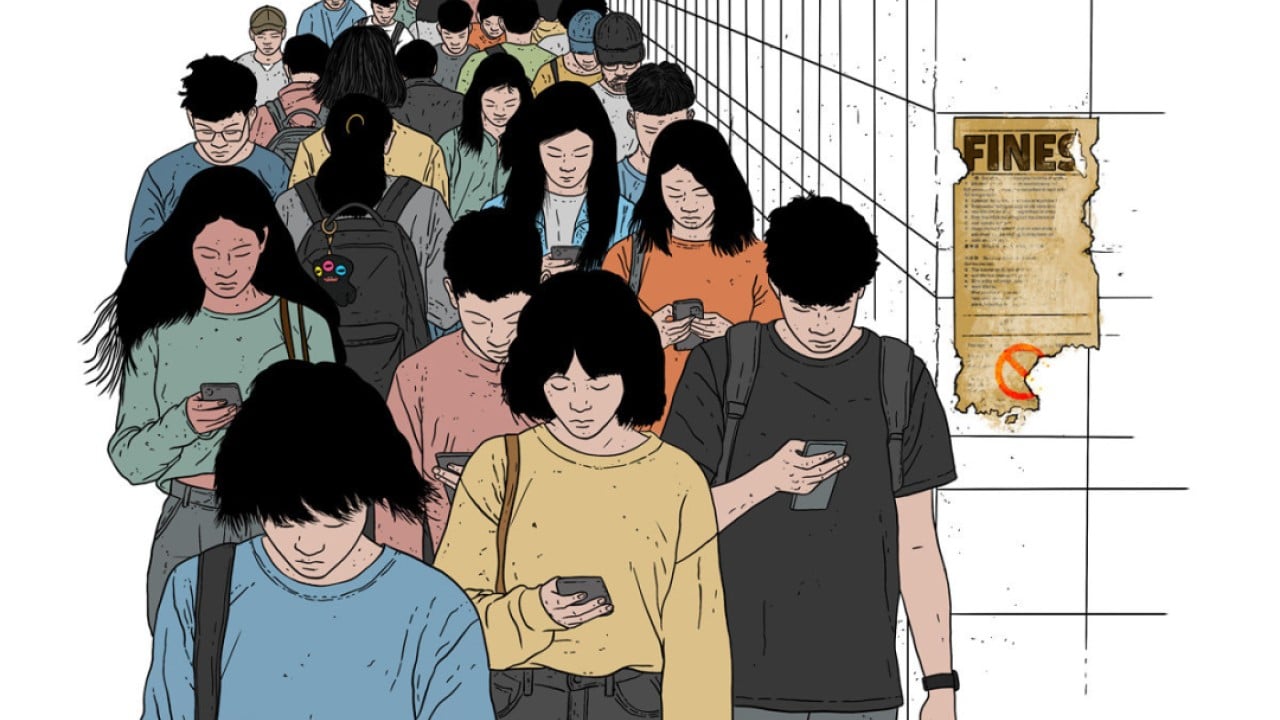
Watch a crowded Hong Kong rush hour and you'll see social enforcement in action. Stand on the wrong side of an escalator when someone is rushing, swing a bulky backpack into people's ribs, or blast audio from a phone speaker, and you'll quickly notice annoyed glances—or a direct remark. Interestingly, the MTR officially advises passengers to stand still on escalators for safety reasons, yet everyday habit often overrides the sign during busy commutes.
There's also a modern twist that didn't exist decades ago: smartphones. Bad behaviour on buses or trains in Hong Kong frequently ends up filmed and circulated online, turning a momentary lapse in manners into public humiliation. Whether that actually reforms habits is debatable. Sometimes it shames people into behaving better; other times it just inflames tempers in tight quarters.
Where Each City Wins and Where Both Struggle
Comparing Hong Kong vs Singapore in tackling bad behaviour gets much clearer when you look at specific friction points rather than broad stereotypes.
| Friction Point | Singapore's Edge | Hong Kong's Edge | Shared Headache |
|---|---|---|---|
| Street Litter and Grime | High-visibility CWOs and strict public-health enforcement keep streets notably tidy. | Higher fixed fines (HK$3,000) target careless disposal and street clutter directly. | Cigarette butts, food packaging, and high-foot-traffic hotspots still test cleaners. |
| Train and Bus Etiquette | Clear rules against food, drink, and nuisance behaviour backed by transit regulations. | Fast social policing and dedicated by-law checks inside paid transit zones. | Noisy device audio, blocked doors, and peak-hour crowding test patience in both. |
| Everyday Accountability | Predictable legal consequences reduce ambiguity about what's allowed. | Direct vocal pushback often stops inconsiderate habits on the spot. | Tourists and newcomers sometimes miss local rules until called out or fined. |
Neither city has solved human nature. Even with tough laws, people still argue in public, leave mess behind at popular spots, or act inconsiderately when tired, drunk, or in a rush. Singapore's strength lies in institutional follow-through and clear boundaries. Hong Kong's strength lies in streetwise momentum, candid social norms, and a fast-moving civic rhythm.
One mistake people make is assuming tougher fines automatically fix everything. Money doesn't stop everyone if a rule feels hard to enforce or if someone thinks they won't get caught. Conversely, relying purely on informal social pressure can backfire when tempers flare or when visitors simply don't know the local script.
Practical Next Steps If You're Traveling or Living in Either City
If you're heading to Singapore or Hong Kong—or comparing how both cities manage civic order—a few simple habits save you money, stress, and awkwardness:
- Finish food and drinks before entering paid transit zones: Don't assume a quick sip of coffee or water is harmless once you tap past the fare gates in either city.
- Carry your trash until you find a bin: Never toss wrappers, tissues, or cigarette butts on the pavement or platform, and avoid bringing unsealed pungent foods like durians onto transit.
- Use headphones and keep backpacks compact: In tight trains and buses, sound bleeds easily and big bags block aisles—both are top triggers for complaints.
- Read the room on escalators and queues: Pay attention to how locals stand, move, and line up during peak hours so you don't accidentally create a bottleneck.
- De-escalate instead of arguing: If someone calls you out—or if you witness a dispute—stepping back and staying calm keeps a minor annoyance from turning into a public-order headache.