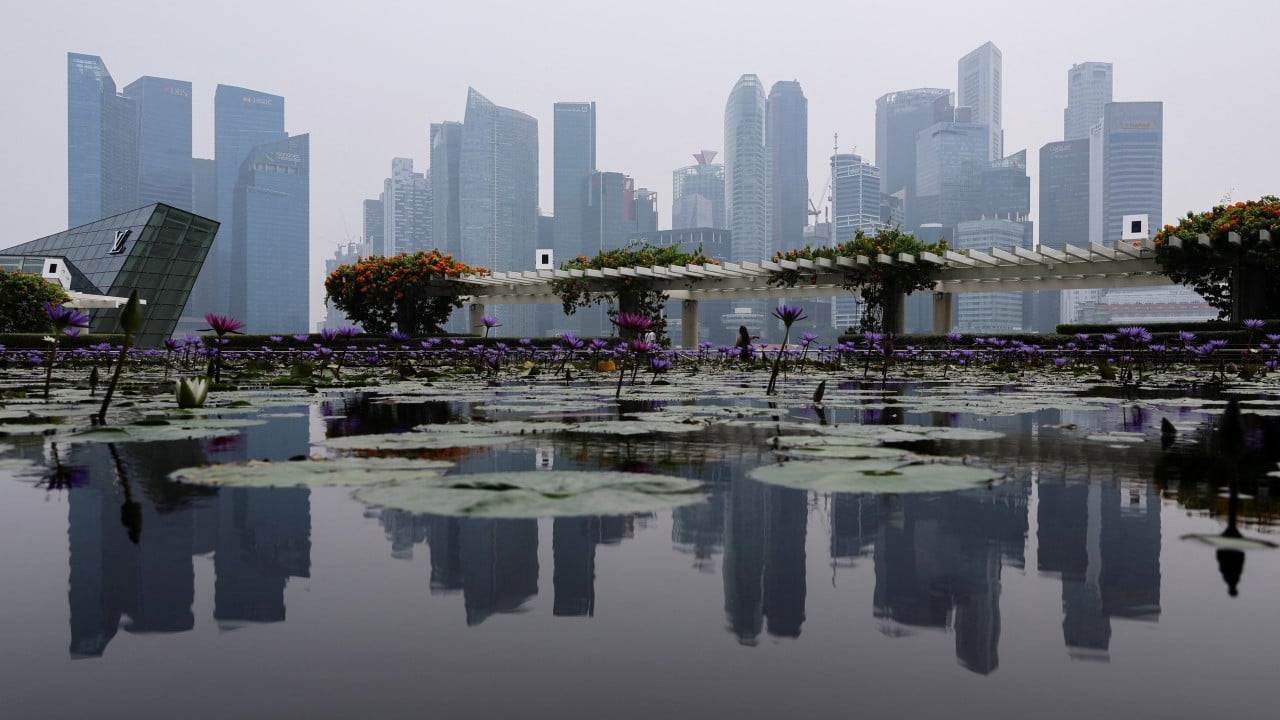
Every six months, another high-profile Sydney founder packs a Rimowa suitcase, books a one-way ticket to Changi, and publishes a breathless LinkedIn manifesto about lower tax rates and government grants. The narrative is as predictable as it is lazy. We are told that Australia's tech ecosystem is suffocating under heavy compliance, high capital gains tax, and a hostile regulatory environment, forcing our best and brightest to seek sanctuary in the pristine, efficient technocracy of Singapore.
It is a comforting myth for people who cannot scale past series A.
I have watched founders flush millions of dollars down the drain chasing the Singaporean ghost, believing that a flat corporate tax rate cures a broken product-market fit. They land in Southeast Asia expecting a frictionless rocket ship, only to find themselves trapped in a high-rent, intensely bureaucratic goldfish bowl where foreign talent passes through like a tollbooth and domestic market access is effectively zero.
Singapore is not a launchpad for Australian tech. It is a golden handcuff. And the founders moving there are running away from the exact domestic complacency they should be fighting.
Let us dismantle the core deception driving this migration. The standard argument claims that Australia's tax structure penalizes success, whereas Singapore rewards it. On paper, the math looks bulletproof. Australia hits you with a corporate tax rate hovering around thirty percent, while Singapore caps theirs at seventeen percent, offering various tax holidays for qualifying startup activities.
Here is what the breathless press releases leave out. Tax efficiency means nothing if your top-line revenue stalls out because you are trapped in a city-state of six million people with virtually no domestic consumer market. Australia gives you twenty-six million affluent, tech-literate consumers who speak English and buy software on credit cards without blinking. Singapore gives you a regional hub where you spend ninety percent of your burn rate trying to figure out how to localize your product for Indonesia, Vietnam, and the Philippines—three markets with vastly different regulatory frameworks, purchasing powers, and consumer behaviors.
You trade a predictable, high-value domestic testing ground for a hyper-dense island where office rents rival Manhattan and talent acquisition is an expensive blood sport. Foreign worker levy increases and stringent local hiring quotas mean you are paying executive-level salaries for mid-level engineers just to satisfy Ministry of Manpower compliance.
The founders who succeed in Singapore are rarely early-stage startups trying to build something from scratch. They are mature regional headquarters of multinational corporations that already have balance sheets thick enough to absorb the operational drag. For a seed-stage or series-A Australian SaaS company, relocating to Singapore is an expensive distraction disguised as an optimization play.
The Capital Mirage
Another persistent delusion is that Singapore solves the funding winter. You hear whispers in the cafes of Surry Hills and South Melbourne about how local venture capitalists are too risk-averse, whereas Singapore swims in sovereign wealth and family offices looking for the next breakout star.
Let us look at the actual mechanics of how capital moves in Southeast Asia.
Temasek and its downstream investment arms do not fund scrappy Australian dropouts because they have a cool pitch deck about automated invoice processing. They fund deep tech, logistics infrastructure, fintech plays with explicit government backchannels, and companies that physically anchor their intellectual property and operations within the republic. If you are an Australian company flying your flag in Singapore just to tap local funds, you will find that institutional capital there is fiercely nationalistic. They want local jobs, local founders, and local tax contributions. You are an outsider trying to arbitrage their ecosystem, and their due diligence committees know it.
Meanwhile, Australian venture capital has matured dramatically over the past decade. Funds like Blackbird, Airtree, and Square Peg have proven that domestic capital can scale global category creators from local soil. Canva did not need to abandon Surry Hills to become a multi-billion-dollar juggernaut. Atlassian built a global empire while keeping its soul deeply entrenched in Sydney, despite endless whining from commentators about local market constraints.
When founders blame the Australian capital ecosystem for their failures, they are usually deflecting from a harsher reality: their product is mediocre, their unit economics are upside down, and no amount of tax relief can save a business model that relies entirely on government subsidies and venture capital life support.
The Talent Trap
Let us address the human element. The prevailing wisdom insists that Singapore offers a superior talent pool sourced from the best universities across Asia and global expats chasing low personal income tax rates.
Imagine a scenario where you try to hire a senior machine learning engineer in Singapore right now. You are competing against Grab, Shopee, and a dozen well-funded crypto foundations that can throw equity and inflated base salaries at candidates until they stop looking at other offers. The turnover rate among tech talent in Singapore is notoriously brutal. Engineers treat companies like bus stops, jumping ship every twelve months for a twenty percent bump.
In contrast, Australian engineering talent—while expensive—tends to be intensely loyal and culturally aligned with domestic founders. The engineering hubs in Melbourne and Sydney produce world-class builders who understand Western product sensibilities. When you move your core engineering team to Singapore to save a few points on corporate tax, you often sacrifice cultural cohesion and institutional memory. You replace a dedicated squad of locals with transient mercenaries who view your company as a visa sponsor rather than a mission.
Furthermore, the cost of living adjustment destroys any theoretical tax savings for your rank-and-file employees. When a software engineer has to pay astronomical rental prices for a shoebox apartment in District 9, that low personal income tax rate feels entirely theoretical.
The Real Arbitrage
If moving to Singapore is a tactical error for ninety percent of Australian tech companies, what is the alternative? Stop looking for geographic silver bullets.
Geographic arbitrage only works when you build operational moats, not when you chase tax loopholes. If your business requires physical proximity to Asian manufacturing supply chains, logistics hubs, or enterprise banking clients in Southeast Asia, by all means, set up a regional office in Singapore. That is a rational, market-driven decision.
But if you are moving because you think the Australian Taxation Office is the primary obstacle between you and a billion-dollar valuation, you are delusional. The best founders do not optimize for the lowest possible tax bracket during their high-growth phase. They optimize for customer acquisition, product velocity, and market penetration.
Australia remains one of the most stable, high-trust, affluent testing grounds on the planet. If you cannot build a profitable, resilient business with healthy unit economics in a country where consumers have disposable income and stable infrastructure, you will not survive the brutal, cutthroat realities of the broader Asian market.
Singapore is a magnificent city-state. It is clean, safe, efficient, and ruthlessly well-managed. But it is not a cheat code for business success.
Stop packing your bags for Marina Bay. Fix your product, own your home market, and build something that actually deserves to scale.