Dryness.
It starts as a whisper right around the cheekbones on a brisk November morning, a faint tightness that you only notice when you yawn or stretch your jaw while reaching for a mug of coffee. By noon, if you happen to be sitting under dry office air or riding out a shift in weather, that whisper turns into a low, persistent hum. You touch your cheek and feel a slight drag where skin should glide. You apply something rich, something creamy, something promising a cushion of comfort, and for twenty minutes the relief feels real. Then the clock ticks on, the moisture evaporates into thin air, and your face feels right back where it started—maybe even a little hungrier than before.
I know that feeling intimately. Years ago, during a stretch of brutal winter travel and late nights staring at glowing screens, I had a bathroom shelf crowded with bottles that all claimed to rescue parched skin. Thick creams in heavy jars. Lightweight gels in sleek pumps. Lotions scented like vanilla bean or botanical gardens. I layered them with genuine hope, waiting for the day my skin would finally stop acting like dry soil after a five-minute drizzle. Instead, my skin felt perpetually overworked and strangely unquenched, caught in a cycle of quick fixes and lingering tightness.
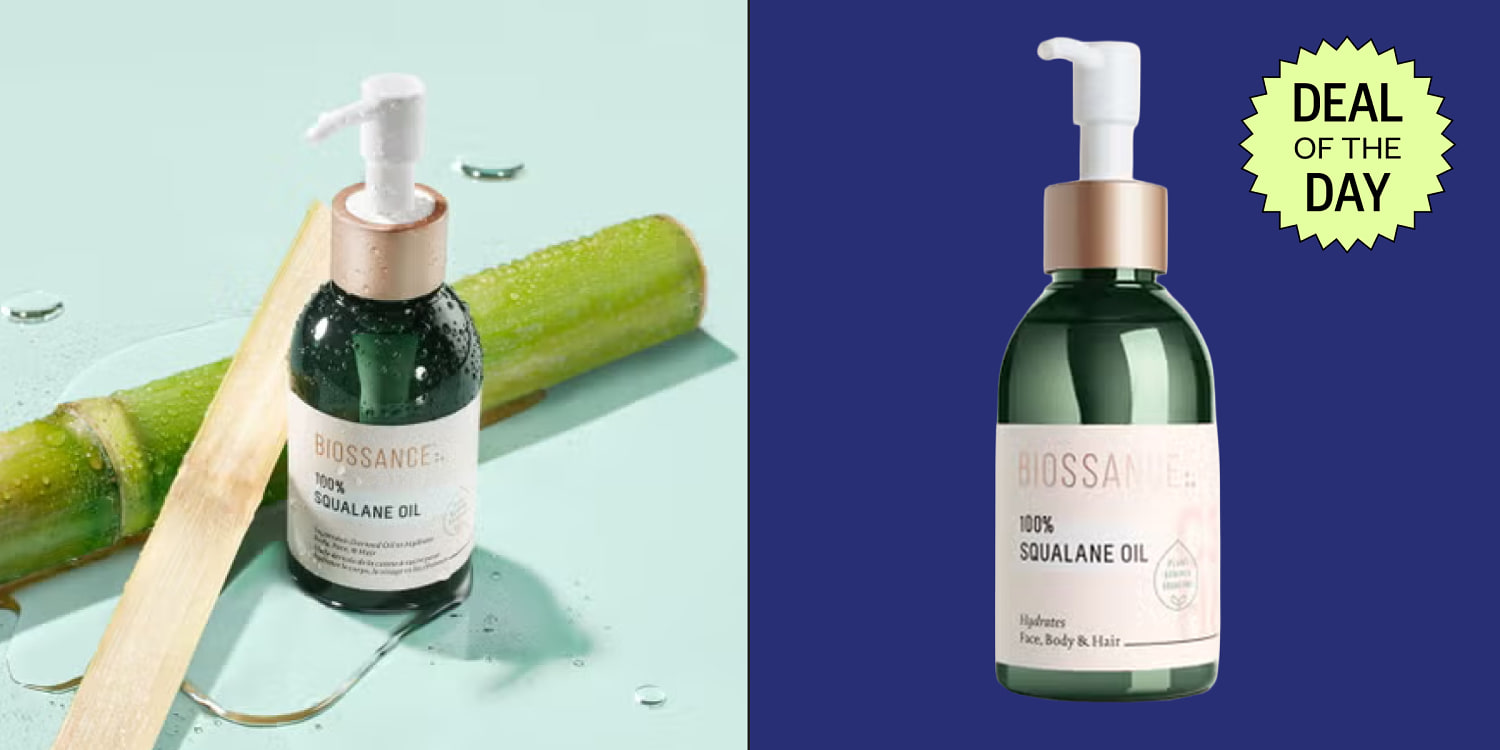
That is the quiet trap of modern skincare marketing. We are taught to treat every dry patch like a thirst emergency, to keep pouring water and heavy waxes onto the surface and hope something sticks. Yet there is a thirty-six-hour window right now where Biossance’s well-known squalane oil is priced at nineteen dollars while supplies last, and looking at a deal like that forces a bigger question than whether a discount is worth clicking. Why does one simple lipid draw so much attention when shelves are already packed with complicated formulas?
To answer that, we have to step past the price tag and look at what skin actually needs to hold onto peace.
The Leaky Roof Problem
Most people think dry skin simply lacks water. Water matters, of course. Hydrated skin looks plumper, softer, and more alive. Yet water is notoriously impatient. Left unguarded on the surface of the skin, water molecules evaporate quickly into drier surrounding air, taking any temporary bounce right along with them.
Here is a metaphor to make the biology easier to picture: skin hydration is like keeping water inside a house with a leaky roof and open windows. You can run the sink all day long, pouring fresh water in by the pitcher, but if the shingles are missing and the wind blows straight through, the floor never stays dry for long.
In real skin biology, that "roof" is the lipid barrier—the orderly matrix of fats, ceramides, and lipids that sits between skin cells and keeps moisture from escaping while shielding delicate tissue from outside irritants. When that barrier gets stressed by cold wind, harsh cleansers, over-exfoliation, or plain old time, moisture slips out faster than you can replace it.
Squalane belongs right inside that roof conversation. Naturally occurring squalene is a lipid produced by human sebaceous glands—our own built-in softening system—though production declines noticeably as we age, often starting in our late twenties or thirties. In skincare, squalane is the stabilized, lightweight, non-greasy derivative designed to mimic that familiar lipid feel without leaving behind a heavy, suffocating slick.
When people hear "oil," their minds often jump straight to shine, clogged pores, or that thick, suffocating film that sits on top of skin like plastic wrap. I used to brace myself for that exact sensation whenever I reached for a facial oil. What surprised me the first time I used a well-formulated squalane oil was how weightless it felt on the fingertips—almost like silk sliding over glass rather than grease coating a pan.
A Hypothetical Tuesday in November
To see how a nineteen-dollar thirty-six-hour window plays out in real life, consider a hypothetical character: let’s call her Maya, a thirty-four-year-old graphic designer living in a city where autumn air has turned crisp and unforgiving.
Maya isn’t chasing a twelve-step routine. Her mornings are rushed, her evenings are quiet, and her skin has spent the last month feeling tight around her mouth and brow by mid-afternoon. On Monday evening, she washes her face, pats it damp, and presses a few drops of squalane oil over her cheeks and forehead. There is no dramatic miracle overnight—real skin rarely works that way—but by Tuesday morning, the tightness around her jaw isn’t shouting for attention the moment she wakes up.
By Tuesday afternoon, she sees a flash deal: Biossance’s popular squalane oil marked down to nineteen dollars for thirty-six hours, subject to stock. Suddenly, a practical decision sits right in front of her. Should she grab a bottle while the thirty-six-hour clock is ticking, or let the offer pass?
This is where honesty and skepticism earn their place. A low price and a short countdown timer create urgency, and urgency can nudge anyone into buying something they don’t actually need. If your current routine already leaves your skin calm, comfortable, and balanced all day long, a sale is just noise. You don’t win a bargain by buying a bottle that sits half-used behind last month’s impulse purchase.
On the other hand, if you have been eyeing squalane to simplify a cluttered routine, lock in hydration after cleansing, or test a lightweight oil without paying full retail price right out of the gate, a nineteen-dollar window lowers the barrier to entry. Stock limits are real in flash promotions, and thirty-six hours moves fast once you get swept up in daily errands. Still, the smart move isn’t panic-buying three backups; it’s deciding whether this specific ingredient fits how your skin behaves right now.
Why Simplicity Suddenly Feels Radical
Walk down any skincare aisle today and you can feel the weight of over-engineering. Every bottle claims a dozen active ingredients, exotic extracts, and complex delivery systems. Sometimes that complexity helps. Often, it just confuses sensitive or dehydrated skin—and confuses the person holding the bottle.
I remember standing in front of a mirror one winter evening, holding three different serums and a rich cream, wondering why my skin felt irritated despite doing everything "right." Stripping things back felt almost scary, as if doing less meant giving up on results. Yet when I pared things down to gentle cleansing, hydration, and a simple, weightless lipid layer to seal things in, the constant tug-of-war in my routine eased up.
That shift reflects a broader change in how people think about self-care. After years of chasing perfection and buying every trending solution, a lot of us want something quieter and more dependable. Something that respects the skin’s natural rhythm instead of trying to bully it into submission.
Even then, no single oil is a cure-all. Dryness can come from indoor heating, hot showers that strip natural oils, dehydration, windburn, or skin conditions that need a dermatologist’s eye. If your skin is flaking painfully, burning, or reacting to everything you touch, a bargain bottle isn’t a substitute for medical guidance or a gentle reset. Being candid about those limits matters just as much as celebrating a good deal.
Questions People Ask When the Clock Is Ticking
When a familiar product drops to nineteen dollars for a day and a half, practical questions show up almost immediately.
Does squalane oil feel heavy or greasy?
True squalane is prized specifically because it feels light and fast-absorbing compared to many traditional oils. Applied a few drops at a time—especially over slightly damp skin or layered with moisturizer—it tends to feel cushiony rather than smothering.
Is an oil only for dry skin?
Not necessarily. Because squalane is lightweight and mimics a lipid your skin already recognizes, people with normal or combination skin often use a drop or two in cooler months or dry climates to prevent surface tightness. Those with very blemish-prone skin still benefit from patch-testing and paying close attention to how their own pores respond.
Why does a thirty-six-hour sale matter?
Short promotional windows paired with limited supply are designed to reward people who already know what they want or have been waiting for a lower entry price. They are a poor excuse for rushed decisions, though they can be a welcome break when a staple or long-considered trial item lines up with your actual needs.
Should you apply oil before or after moisturizer?
Many people press a few drops over damp skin or after a water-based hydrator to help seal moisture in, or mix a drop directly into their regular cream for extra comfort. The best order is whichever leaves your skin soft and calm without pilling or sitting heavy.
Reading the Real Stakes Behind the Deal
A nineteen-dollar price tag for thirty-six hours is easy to measure. You can see the numbers, watch the clock, and check whether the item is still in stock.
What is harder to measure—and far more important—is how you treat your skin when nobody is running a sale. Skin isn’t a stubborn spreadsheet waiting to be solved in one checkout click. It is living tissue responding every single day to dry air, stress, sleep, weather, and the quiet habits you repeat week after week.
If that thirty-six-hour offer lines up with what your skin genuinely needs right now, grabbing it at nineteen dollars while supplies last makes complete sense. If it doesn’t, letting the timer run out without a shred of guilt is just as smart.
Watch the mirror tomorrow morning, not just the countdown clock.