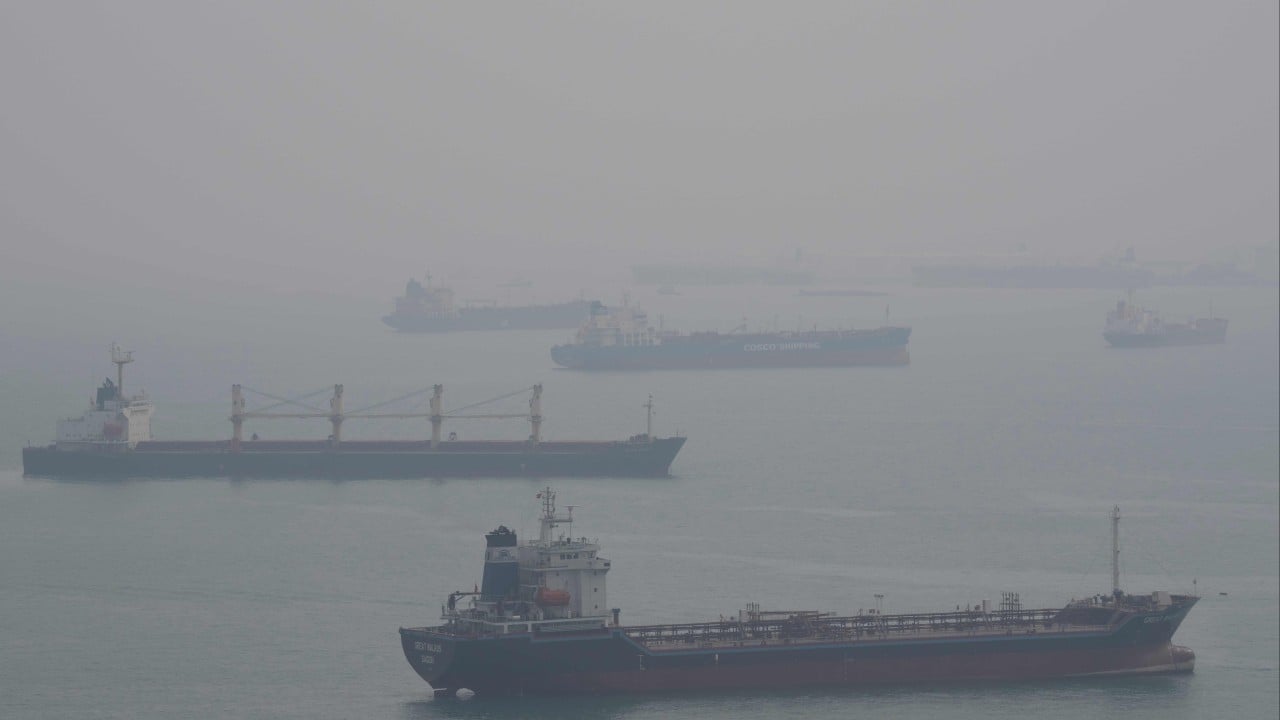
The sun did not rise over Marina Bay that morning; it simply leaked through a bruise-colored ceiling that smelled faintly of damp ash and charred earth.
If you have ever stood on a balcony in Singapore when the Pollutant Standards Index climbs past two hundred, you know the strange, unsettling quiet that settles over the island. Glass towers blur into ghost shapes. The roar of the expressway feels muffled, as if wrapped in wet wool. Your eyes sting before you even step onto the street. A dry tickle starts behind your breastbone and stays there for days.
That sensation is the true subject whenever policymakers debate whether Singapore’s tougher stance on transboundary haze marks a genuine turning point. On paper, it is an argument about laws, extraterritorial reach, diplomatic friction, and supply chains. In lived reality, it is about whether a child with asthma can walk to school without clutching an inhaler, whether a grandmother in a HDB flat can open her windows to catch a breeze, and whether a region bound by monsoon winds can stop treating its shared sky like an open sewer.
I have stood in that gray light myself during past episodes, watching air purifiers hum inside apartments while neighbors traded anxious messages about mask stocks and school closures. Truthfully, even people who follow environmental policy closely can find the mechanics of regional haze baffling and frustrating. Why does a fire lit hundreds of miles away—across water and across borders—dictate how a sovereign city-state breathes? Why do fines, laws, and diplomatic summits sometimes feel like a paper umbrella held up in a monsoon?
Let us be clear about what is real and what is imaginative here. The smoke is real. The wind is real. The economic toll and respiratory distress are real. Any characters we meet in these pages are hypothetical composites created to give flesh and voice to real pressures and documented realities across Southeast Asia, and when we use metaphors—such as treating the atmosphere like a shared lung or comparing drained peatlands to dry sponges soaked in kerosene—they are there to clarify a complex system, not replace hard facts.
Smoke Without a Passport
To understand why a tougher legal and diplomatic posture matters, you first have to understand how haze behaves. Wind does not check a passport.
During dry spells—especially in years amplified by El Niño—fires burn across carbon-rich peatlands and cleared land in parts of Sumatra and Kalimantan. Peat is not ordinary soil. It is thousands of years of half-decomposed plant matter, waterlogged when healthy, acting like a giant carbon vault. Once drained for agriculture or infrastructure, that sponge dries out. When fire catches it, the blaze does not just dance across the surface; it smolders underground for weeks or months, sending dense plumes of fine particulate matter, known as PM2.5, high into the air.
Southwesterly winds carry that smoke straight across the Malacca Strait. Within hours, a problem born in a remote concession or a charred field becomes a public health emergency in Singapore and Malaysia.
Consider what happens next: a city with zero tolerance for domestic littering or street-level disorder suddenly finds itself choking on smoke it cannot extinguish with its own fire trucks. A nation famous for order and planning is forced into defense, refreshing hourly air-quality readings while hospitals brace for spikes in acute respiratory cases, conjunctivitis, and cardiovascular strain.
The history of this struggle is long and scarred. Major haze crises in 1997, 2013, 2015, and 2019 left indelible marks on public memory. In 2015 alone, the World Bank estimated the broader economic cost of the fires and haze in Indonesia at roughly $16.1 billion—more than double the cost of the 2004 Indian Ocean tsunami recovery—while Singapore suffered severe tourism dips, disrupted outdoor events, and hundreds of millions of dollars in estimated economic and health costs.
For years, the prevailing frustration was a sense of geopolitical deadlock. Singapore passed legislation—the Transboundary Haze Pollution Act—aimed at holding companies accountable for conduct that causes or contributes to severe haze in Singapore, even if the fires occur outside its borders. Yet proving corporate links across opaque concession layers, navigating sovereignty sensitivities, and relying on regional cooperation mechanisms often felt slow compared to the speed of shifting winds.
When a government signals a tougher stance—whether through stricter enforcement, sharper legal scrutiny, supply-chain accountability, or firmer diplomatic insistence on concrete action—the central question is not merely whether the rhetoric sounds stronger. The real question is whether the incentives that make burning profitable or convenient are finally changing.
Two Sides of a Smokestack
To see how abstract policy hits real lives, meet Nadia, a hypothetical pediatric nurse in Singapore, and Rizal, a hypothetical smallholder farmer living near a degraded peat canal in Sumatra. Neither man nor woman is a single real person, yet both stand inside real structural forces.
Nadia’s Tuesday shift during a bad haze week begins before sunrise. By 7:30 a.m., the waiting area already smells of antiseptic and stale sweat. A four-year-old boy sits on his mother’s lap, shoulders rising and falling fast, his chest pulling inward with each shallow breath. His mother looks exhausted, apologizing quietly because she forgot to pack a spare spacer in her bag.
"You don't need to apologize," Nadia says, kneeling so she is at eye level with the child. "The air outside is heavy today."
Later, during a ten-minute break by a window that cannot be opened, Nadia scrolls through news alerts on her phone. She reads about ministerial statements, legal notices, sustainability pledges, and regional task forces. None of that lowers the boy’s heart rate right now. Still, she feels a flash of fierce hope when she reads that authorities are pressing harder on accountability and supply-chain transparency. To Nadia, tougher action is not an abstract legal doctrine. It is fewer children gasping in triage. It is fewer elderly patients coming in with flare-ups of chronic lung disease. It is the difference between treating symptoms after the damage is done and stopping the poison at the source.
Now travel across the water to Rizal, our hypothetical farmer.
Rizal’s family has worked small plots of land for two generations. Years ago, drainage canals were dug in his wider district, lowering the water table in the peat. When the dry season stretches long and rain refuses to fall, clearing scrub or old brush by hand is backbreaking work, and heavy machinery costs money Rizal does not have. A match feels fast. A match feels cheap. Everyone around him knows fire is risky, yet when debts press in and the next harvest feels uncertain, short-term survival crowds out long-term ruin.
Then the wind shifts. The smoke that drifts over Singapore’s skyline is the same smoke stinging Rizal’s eyes as he walks past blackened stumps. When enforcement cracks down harshly on smallholders without offering alternatives—like canal blocking to re-wet peat, affordable land-clearing support, or fair market access—anger builds alongside the ash. Conversely, when pressure targets large corporate actors and supply chains that profit at scale while leaving smallholders exposed, the moral arithmetic shifts.
Look at how tangled that web is. A consumer sitting in an air-conditioned café in Orchard Road might buy goods tied to regional commodities without ever seeing the canal where the fire started. A company might layer subsidiaries and contractors so cleanly that tracing responsibility feels like chasing smoke through a maze.
Tougher rules only bite if they cut through those layers cleanly—targeting genuine culprits, protecting vulnerable smallholders who need practical alternatives, and backing enforcement with verifiable data rather than theater.
Why Tougher Stances Fail—and When They Stick
Lawmakers love a tough headline. Nature does not care about headlines.
History teaches a sobering lesson about environmental crackdowns: tough stances often stall at three familiar choke points.
First comes the attribution gap. Smoke travels on wind currents that swirl, mix, and shift. Satellite hotspots show where fires burn, and concession maps show who holds land rights on paper, yet proving legal causation to a court standard across borders can be slow and contested. Without clear evidentiary trails and financial leverage, a tough law can look like a sword still sitting in its scabbard.
Second comes the enforcement gap. Even strong domestic laws in fire-prone areas struggle when vast territories are remote, under-patrolled, or tied to local patronage. A fine announced in a capital city means little on a peat bog if nobody is monitoring water levels or enforcing fire bans on the ground.
Third comes the economic temptation gap. As long as draining peat and using fire remains cheaper or easier than sustainable land management—and as long as global buyers can quietly source from non-compliant operators—someone will keep striking matches when the weather turns dry.
So what makes a tougher stance an actual turning point rather than another season of stern warnings?
Three shifts have to move together.
- Follow the money and the chain. Financial institutions, banks, buyers, and trading houses hold immense leverage. When lenders and purchasers tie credit and contracts to verified deforestation-free and peat-protected standards—and face real penalties or reputational consequences when they look the other way—boardrooms pay attention far faster than they do to distant speeches.
- Pair firm enforcement with landscape restoration. You cannot permanently stop peat fires with handcuffs alone if the peat remains bone-dry. Re-wetting drained peatlands by blocking canals, restoring native vegetation, and supporting community fire-prevention patrols changes the physical conditions on the ground. Wet peat does not burn easily.
- Treat air quality as a permanent regional security issue, not a seasonal annoyance. Between haze episodes, public attention naturally drifts back to daily life. Blue skies return. Offices reopen. Jogging paths fill up again. That lull is the exact moment when complacency creeps back in—and the exact moment when institutional rigor, data transparency, and diplomatic persistence matter most.
Pause and ask yourself: if a neighbor’s house catches fire every few years and sparks keep landing on your roof, when do you stop merely sweeping sparks off your porch and start demanding shared fire alarms, firebreaks, and accountability?
The Quiet Test Behind Every Blue Sky
A turning point rarely announces itself with fireworks. Usually, it shows up in what does not happen.
It shows up during a dry August or September when the winds blow from the southwest, satellites pick up early hotspots, and the air in Singapore stays breathable instead of turning the color of dirty dishwater. It shows up in fewer emergency inhaler refills at neighborhood clinics. It shows up in clearer satellite imagery showing re-wetted peat canals holding water through a dry spell.
Skepticism is healthy here. Anyone who has watched years of promises collide with stubborn realities has every right to ask whether this time is different. Tougher legal posture, sharper diplomatic resolve, and tighter corporate scrutiny are necessary tools—especially when paired with on-the-ground restoration and regional cooperation. Alone, however, no single policy or press release can command the wind.
True progress requires endurance. It demands that governments keep pushing even when talks get uncomfortable, that businesses prove what is actually inside their supply chains rather than hiding behind fine print, and that citizens refuse to treat choking air as the price of doing business in Southeast Asia.
Think back to that morning on the balcony, staring into a sky that had lost its horizon.
One word.
Breathe.
Imagine stepping out before dawn one autumn morning, filling your lungs with cool, clean air that carries the scent of nothing more sinister than rain on warm pavement—knowing the sky above you belongs to everyone beneath it, and finally someone is guarding it like it matters.