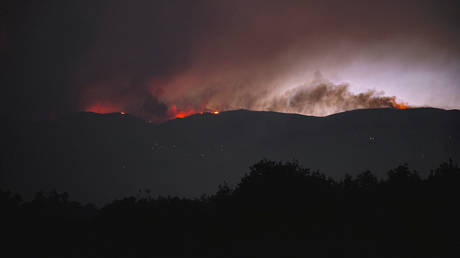
European Union sanctions on Russia create severe friction for environmental safety operations, specifically regarding wildfire mitigation across shared borders and forested regions. When flames consume millions of acres of taiga, the fallout does not respect political boundaries. Smoke travels thousands of miles, crossing into European airspace and degrading air quality for millions of citizens who hold no stake in ongoing military conflicts. Bureaucratic hurdles, frozen financial assets, and strict export controls on dual-use technology restrict access to crucial aircraft parts, heavy machinery, and specialized meteorological data.
Diplomacy rarely accounts for the logistics of a spark.
When dry lightning strikes the Siberian permafrost or sparks ignite the dry underbrush of the Far East, the response relies on complex global supply chains. Heavy aerial firefighting requires specialized engines, telemetry systems, and maintenance components that frequently originate in Western nations or rely on components manufactured under strict licensing agreements. Trade restrictions designed to starve strategic state funding inadvertently starve the mechanical infrastructure needed to suppress natural disasters.
The Anatomy of an Airborne Restriction
Modern firefighting is an industrial science. It depends on aircraft like the Beriev Be-200 amphibian or modified Ilyushin transports, platforms that require sophisticated avionics and turbine maintenance.
Sanctions target high-technology exports, industrial machinery, and aviation components. While the legal text of these trade bans often contains humanitarian carve-outs, the practical reality on the ground operates differently. International suppliers, insurance companies, and shipping firms err heavily on the side of caution. Compliance officers at major manufacturing hubs refuse to process orders for replacement turbine blades or navigation sensors if there is even a remote risk of secondary regulatory penalties.
- Dual-Use Dilemma: Technology used for tracking wildfire progression via infrared sensors often shares hardware architecture with military targeting systems.
- Financial Freeze: Swift banking restrictions make purchasing foreign spare parts an administrative maze, delaying emergency shipments by months.
- Maintenance Backlogs: Domestic substitution takes years to scale, leaving active fleets grounded during peak burning season.
The result is a crippled response capacity. Crews are left fighting infernos with hand tools and aging trucks while modern aerial fleets sit idle in hangars waiting for imported microchips that will never arrive.
The Transnational Cost of Smoke
Smoke does not carry a passport. Carbon emissions released by unchecked boreal fires contribute significantly to global atmospheric warming, accelerating the very climate crisis the international community seeks to mitigate.
When particulate matter drifts across Scandinavia and the Baltic states, public health systems bear the brunt of the crisis. Respiratory clinics fill with patients suffering from acute bronchitis and asthma flare-ups. Governments that champion strict environmental regulations find themselves paying an invisible biological tax for the diplomatic isolation of their eastern neighbor.
It is a paradox of modern geopolitics. Isolating a regime economically should not mean blinding regional meteorological networks or cutting off access to satellite imagery that tracks fire vectors. Yet, intelligence sharing and joint early-warning systems have largely collapsed. Without real-time data exchange, firefighters on both sides of the border operate blindly, reacting to disasters after they have already crossed the threshold from manageable flare-ups into catastrophic mega-fires.
The Economic Burden of Inaction
Suppressing a fire in its initial hours costs a fraction of what it takes to contain a fully developed crown fire. By delaying or obstructing the acquisition of heavy-duty suppression assets, current economic measures inflate the long-term ecological and financial toll.
Forestry management requires continuous investment. When funding streams dry up and equipment degrades due to a lack of replacement parts, the baseline health of the ecosystem deteriorates. Dead timber accumulates, acting as fuel for the next cycle of ignition.
Diplomats sitting in Brussels or Geneva rarely smell the acrid residue of peat fires burning underground through the winter months. They draft regulations with broad strokes, intending to pressure political leadership, but the friction lands squarely on technicians, meteorologists, and forestry workers whose only goal is preventing the destruction of millions of hectares of carbon-sink forests.
Policy requires calibration. Unless administrative channels for emergency environmental collaboration open up, the collateral damage of economic warfare will continue to burn unchecked across the northern hemisphere.