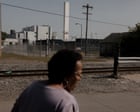
The air above the incinerator stack looks clean. On most days, it is nothing more than a shimmering heat mirage against the blue sky, a faint rippling distortion that suggests everything is working exactly as the engineers promised. The facility sits on the industrial fringe of a mid-sized American city, surrounded by chain-link fences and neat rows of manicured gravel. It smells faintly of warm metal and ozone. It looks like progress.
But if you stand downwind long enough, a quiet unease sets in.
For decades, we treated fire as the ultimate eraser. If you burn something at a high enough temperature, it ceases to exist. It becomes ash, carbon dioxide, and water vapor. That was the comforting gospel of modern waste management. We created a society of disposable convenience, and when the plastic mountains grew too high for the landfills, we built massive, high-tech furnaces to turn our garbage into energy. We told ourselves we had solved the problem of permanence.
We were wrong.
The Illusion of the Clean Burn
Consider a hypothetical family living three miles downwind. Let us call them the Millers. They do not think about the incinerator. They buy groceries wrapped in crinkling plastic film, use non-stick frying pans to cook Sunday breakfast, and spray their winter coats with water-repellent coatings to keep the rain at bay. They are participating in the modern world.
When these items wear out, they throw them in the bin. The truck rolls by, collects the waste, and delivers it to the facility. Inside, the furnace roars at temperatures exceeding 1,800 degrees Fahrenheit. The steel glows cherry red.
The core of the issue lies in a specific class of synthetic chemicals known as PFAS—per- and polyfluoroalkyl substances. You likely know them as forever chemicals. The moniker is not hyperbole. The carbon-fluorine bond is one of the strongest bonds in organic chemistry. It does not want to break. It resists water, rejects oil, and ignores heat. It is the molecular equivalent of an immovable object.
When the Millers’ discarded items enter that inferno, the heat does not magically annihilate the PFAS. Instead, the extreme energy of the incinerator often merely breaks the larger molecules down into smaller, lighter, and more volatile fluorinated gases. The smoke clears the scrubbing systems, passes through the filters, and drifts silently into the atmosphere.
Then, it rains.
The chemicals descend back into the soil, the local creeks, and the backyard gardens. The circle closes. The illusion of disposal is shattered, replaced by a cycle of redistribution.
What the Data Tells Us
The scale of this issue is not a matter of speculation; it is documented in the quiet, dense reports issued by environmental agencies and university laboratories. Across the United States, dozens of municipal waste incinerators handle millions of tons of garbage annually. A significant portion of this waste contains fluorinated compounds.
Recent scientific assessments suggest that standard commercial incinerators are failing to achieve the complete destruction of these compounds. To truly crack the carbon-fluorine bond, a furnace must maintain extraordinarily high temperatures with an exact, unwavering residence time—the duration the gas remains exposed to the heat. If the temperature drops even slightly during a heavy load of wet garbage, or if the airflow moves too quickly through the chamber, the chemicals escape unscathed.
Even more concerning is the lack of specialized monitoring. Most facilities are equipped to measure traditional pollutants like sulfur dioxide, nitrogen oxides, and heavy metals. They are not designed to track the ghost-like migration of volatile PFAS variants in real-time. We are flying blind, measuring the safety of the air using metrics from a previous century.
This is where the collective anxiety grows. The scientific community openly acknowledges the gaps in our understanding. We know these chemicals accumulate in human tissue. We know they are linked to metabolic disruptions, compromised immune responses, and elevated cholesterol. Yet, we continue to feed the fires, hoping the smoke will carry the trouble far enough away.
The Weight of the Unseen
It is difficult to convey the reality of a threat that has no color, no odor, and no immediate consequence. If the incinerator leaked black soot that stained the laundry on the line, the neighborhood would rise up in protest within forty-eight hours. Outrage requires an anchor. It requires something you can point to and scrub off your skin.
Instead, the reality of forever chemical pollution is a slow, generational accretion. It is a statistical bump in a health registry a decade from now. It is a strange phone call from the municipal water district explaining that the local well requires a multi-million-dollar filtration upgrade.
The true cost of our throwaway culture is never paid at the cash register. It is deferred. We push the price tag down the line, hiding it in the air currents and the groundwater tables, pretending that because an item is out of sight, it is out of our ecosystem.
But the ecosystem is a closed loop. There is no "away" to throw things to.
Reimagining the Furnace
The solution cannot merely be better filters on the same old smokestacks. Adding another layer of mesh to a system designed around an outdated premise is like trying to catch mist with a net.
True progress requires an admission of vulnerability. We must acknowledge that our current industrial toolkit is mismatched against the chemistry we have unleashed. Some independent researchers are advocating for a radical shift toward specialized, ultra-high-temperature gasification systems or electrochemical destruction methods specifically tailored for hazardous chemical waste. These technologies do not treat PFAS as an afterthought in a pile of household trash; they isolate it and dismantle it methodically.
Simultaneously, the pressure must shift backward to the point of origin. If an industrial material cannot be safely broken down by fire, earth, or water, we must question whether it belongs in our daily consumer stream at all.
Until that shift occurs, the heat mirage above the edge of town remains a monument to a false comfort. The furnace keeps burning, the trucks keep arriving, and the invisible particles continue their quiet, circular journey back to our doorsteps.