The modern garage is supposed to be a sanctuary. It is the place where we tuck away our second largest investment, shielding it from hail, sap, and stray baseballs. We pull the car in, press a button, and the heavy motorized door glides down, sealing our modern engineering marvels safely inside. It is an instinctual act of closure. The day is done. The family is safe.
Now, imagine looking out your kitchen window at that same garage and feeling a cold prickle of dread.
For hundreds of thousands of hybrid SUV owners, the sanctuary has officially breached its contract. The safe haven is now a liability. A recent, urgent directive from automotive safety regulators and manufacturers did not just ask drivers to bring their vehicles in for a routine software update. It gave a much more primitive, unsettling order: park outside. Far outside. Do not let this machine near your structure. Do not trust it under your roof.
When a multi-billion-dollar automaker admits that its flagship product might spontaneously combust while sitting completely turned off in a driveway, the relationship between human and machine undergoes a sudden, violent shift. The vehicle transitions from a symbol of freedom and forward-thinking technology into a literal ticking clock.
The Midnight Vigil
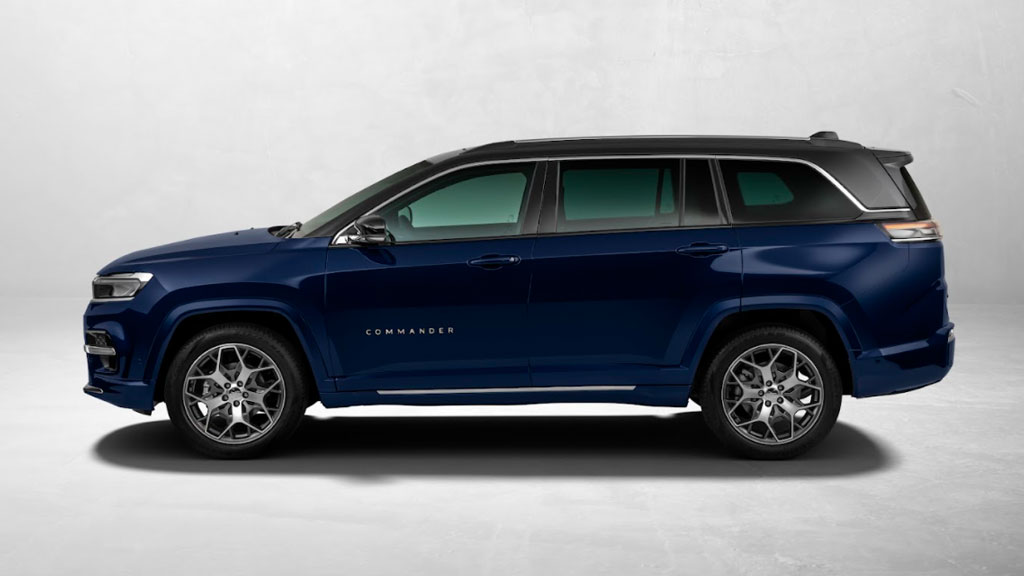
Consider a hypothetical owner named Sarah. She is not a statistic, but she represents the precise demographic caught in the crosshairs of the recent Jeep Wrangler and Grand Cherokee 4xe plug-in hybrid recalls. She bought her hybrid because she wanted the best of both worlds. She wanted the rugged, go-anywhere capability of a traditional four-wheel drive blended with the eco-conscious, whisper-quiet efficiency of a modern electric battery. She wanted to feel responsible.
Instead, she is standing on her porch in the rain, staring at her $60,000 SUV parked at the very edge of her property line, right next to the curb.
The underlying technical defect is a sobering reminder of the volatility locked inside our push-button world. According to the National Highway Traffic Safety Administration, a flaw in the high-voltage battery pack can lead to an internal short circuit. When a lithium-ion battery shorts internally, it does not simply stop working. It experiences a phenomenon known as thermal runaway.
The science behind it is terrifyingly simple. Inside the battery cell, an abnormal chemical reaction begins to generate heat. This heat triggers further reactions, which generate even more heat. The cycle accelerates. Within moments, the temperature inside the battery housing skyrockets past the melting point of the surrounding components. Oxygen is released internally, fueling a fierce, self-sustaining fire that feeds on its own chemistry.
The most insidious part of this defect? It does not require an ignition key. It does not require a driver pressing the accelerator. It can happen in the dead of night, while the household is asleep, triggered by a microscopic imperfection deep within a battery cell that has been sitting dormant for hours.
The Mirage of the Seamless Transition
We were promised a revolution that would feel entirely effortless. The automotive industry spent the last decade convincing us that switching from internal combustion to electric power would be as simple as upgrading our smartphones. We watched slick commercials featuring gorgeous families gliding through pristine mountain passes, accompanied only by the ambient hum of a clean electric motor.
They omitted the growing pains. They bypassed the raw reality of energy density.
To pack enough electrical energy into a vehicle to move two and a half tons of steel down a highway, engineers have to push chemistry to its absolute limits. Lithium-ion batteries are miraculous, but they are also incredibly sensitive to manufacturing tolerances, moisture, and vibrational stress. When you take that delicate chemistry and bolt it to the underside of a rugged off-road vehicle designed to bounce over boulders and plow through deep puddles, you are inviting a complex clash of environments.
The current recall affects over 150,000 plug-in hybrid models globally. For the people who own them, the immediate reaction is rarely anger. It is confusion.
"Can I still drive it to work?"
"Is it safe if I don't plug it in?"
"What happens to my insurance if it catches fire on the street?"
The official guidance offers cold comfort. Owners are told they can continue to drive the vehicles, but they must not charge them. This instruction effectively strips the "hybrid" identity right out of the car. It transforms an advanced, low-emission vehicle into a heavy, gas-guzzling conventional SUV hauling hundreds of pounds of dead battery weight around. The very reason for the vehicle's premium price tag is rendered useless by a software safety lock.
But the psychological weight is far heavier than the physical battery.
The Anatomy of Automotive Trust
A car is different from any other consumer product. We do not form emotional attachments to our refrigerators or our water heaters, even though we rely on them daily. But our cars carry our lives. They take our children to school. They carry us through blinding snowstorms. They are the mobile bubbles of safety we trust to hurtle us down asphalt ribbons at seventy miles per hour.
That trust is incredibly hard to build and astonishingly easy to shatter.
When a manufacturer tells you to park away from structures, they are acknowledging a failure of containment. They are admitting that the boundary between the machine's internal energy and your personal domain has dissolved. Every time an affected owner walks past their vehicle parked awkwardly on the grass or at the curb, that vehicle serves as a monument to anxiety.
The automotive supply chain has become so vastly complicated that tracing the root cause of these battery flaws feels like chasing ghosts through a global labyrinth. Cells are manufactured in one country, assembled into packs in another, integrated into vehicles in a third, and managed by software written across multiple continents. When something goes wrong, the fix is rarely a simple mechanical adjustment. It involves complex diagnostic software updates designed to detect early warning signs of thermal stress before the fire begins.
But software cannot undo a physical defect. It can only act as a smoke detector. It tells you the house is on fire a few minutes before the flames break through the roof.
The Hidden Cost of Progress
We are living through the awkward, turbulent adolescence of the green energy transition. The rush to bring electrified vehicles to market has forced legacy automakers into an arena where they are no longer just bending sheet metal and tuning internal combustion engines. They are now chemical managers and software developers.
The learning curve is steep. The penalty for failing a class is catastrophic.
The broader implication of these recurring battery recalls extends far beyond the immediate financial losses suffered by automakers facing warranty claims and plummeting resale values. The real casualty is public confidence. Every headline detailing another spontaneous garage fire or another park-outside warning chips away at the collective willingness to embrace the future of transport. It validates the skeptics. It terrifies the early adopters who took a chance on a new way of driving.
For the individual owner, the resolution process is a lesson in patience and vulnerability. They must wait for the notification letter. They must schedule an appointment with a backed-up dealership service department. They must hope the diagnostic check catches any latent defect before their driveway becomes a crime scene.
In the meantime, the daily routine is altered. The simple act of coming home involves a calculation.
You pull up to your house. You look at the garage door. You look at the open curb fifty feet away. You turn the key off, step out into the evening air, and realize that the most expensive piece of technology you own is currently banned from your own home. You lock the doors, walk inside, and spend the night glancing out the window, looking for a glow that should never be there.