The sound of a tea set rattling against a tray used to mean hospitality in Khartoum. Now, that same metallic chatter means a T-72 tank is vibrating the foundations of your home from two streets over. You don’t wait to see if the shell is meant for your roof or the neighbor’s. You don’t pack the photo albums. You grab the gold hidden in the flour jar, you grab the water bottles, and you run.
Sudan is not just a place on a map right now. It is a furnace. Since April 2023, the country has been gripped by a power struggle between the Sudanese Armed Forces and the Rapid Support Forces, a conflict that has turned the "Triple Capital" of Khartoum, Bahri, and Omdurman into a graveyard of ambitions. But statistics—the tens of thousands dead, the millions displaced—are numbing. They are dry ink on a page. To understand Sudan today, you have to look at the dust on a child’s sandals as they walk toward a border that feels a thousand miles away.
Consider a woman we will call Amna. She represents the silent exodus. She didn't leave because of a political ideology. She left because the market where she bought onions became a theater for snipers. She left because the electricity died, and with it, the nebulizer that kept her youngest son breathing during the haboob dust storms. When the heavy artillery began to rhythmically erase her neighborhood, she realized that staying was no longer an act of resilience. It was a suicide pact.
The world watches other horizons. Sudan bleeds in the dark.
The Architecture of Collapse
When a state fails, it doesn't happen all at once like a glass vase hitting a floor. It frays. It happens in the quiet moments when a doctor realizes they are out of saline and have to use sugar water. It happens when the price of a bus ticket out of the city triples in four hours, fueled by the desperation of those who can hear the gunfire getting closer.
The infrastructure of life in Sudan has been systematically dismantled. We are talking about the complete evaporation of a middle class. Engineers, teachers, and shopkeepers who once spent their evenings arguing over football scores are now huddled in the back of open-top trucks, praying the soldiers at the next checkpoint are more interested in their phones than their identities.
Communication blackouts are the cruelest weapon. Imagine not knowing if your sister in Darfur is alive because the towers are down. You sit in a refugee camp in Chad or South Sudan, staring at a dead screen, wondering if the silence is technical or permanent. The "invisible stakes" here aren't just about territory; they are about the severance of the human nervous system. A nation is being lobotomized.
The Hunger That Follows
War has a scent. It isn't just cordite and burning rubber. It is the sour smell of a grain silo that has been looted or torched. Sudan was once touted as the potential breadbasket of Africa. Now, the fertile lands of Al-Jazirah are battlefields.
The mechanics of famine are simple and brutal. If the farmer cannot plant because of the Janjaweed or the shells, there is no harvest. If there is no harvest, the prices in the remaining markets skyrocket beyond the reach of anyone who isn't a warlord. We are seeing a manufactured catastrophe where food is used as a leash.
The numbers are staggering, but let's look at the plate. A meal that cost ten pounds two years ago now costs hundreds. Parents are skipping days of eating so their children can have a handful of sorghum. This isn't a natural disaster. There was no drought. The rain fell, but the blood fell faster, and now the earth is too choked to give back.
The Mirage of the Border
Running is a physical toll that the human body isn't designed to sustain under these conditions. Imagine walking through the desert heat, 45 degrees Celsius, with everything you own in a plastic sack. Your shoes fail first. Then your spirit starts to crack.
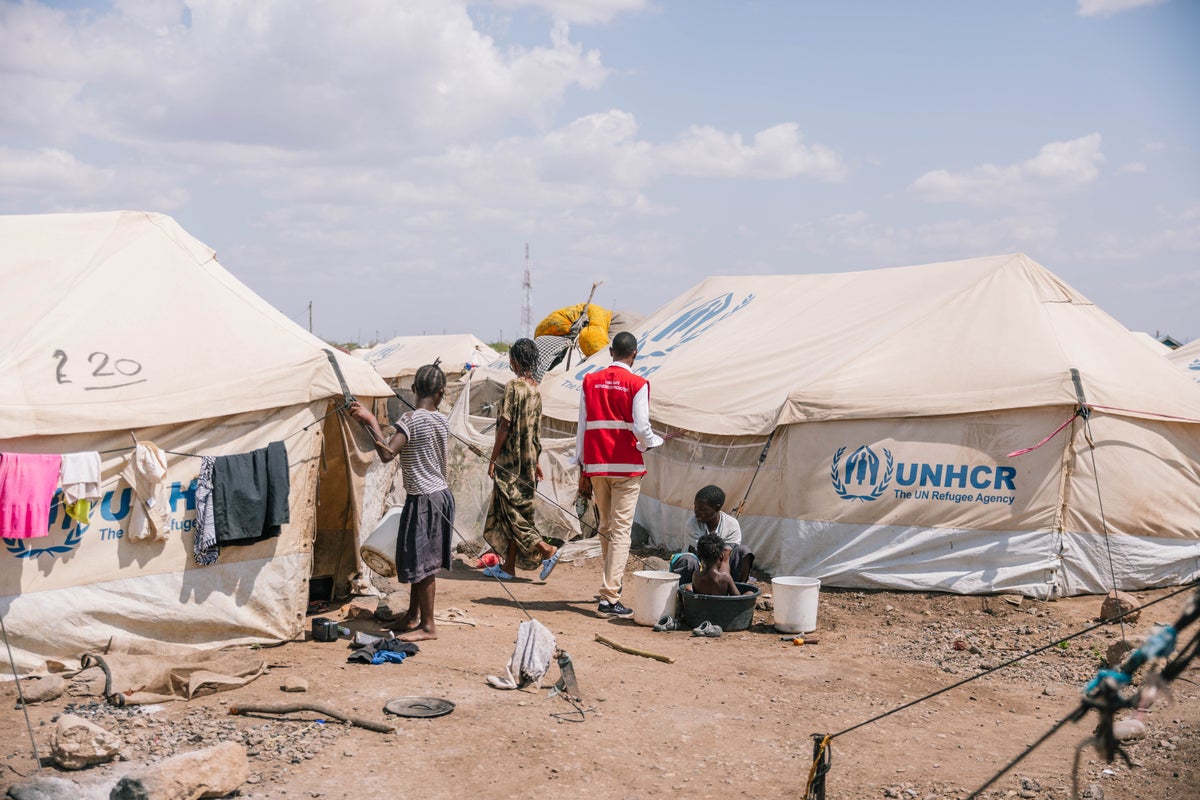
The borders of Egypt, Chad, and South Sudan are not welcoming gates. They are bottlenecks of human misery. People wait for weeks in the searing sun for "processing." There is a specific kind of dignity that dies when a grandmother who owned a villa in Khartoum has to beg a teenager with a Kalashnikov for permission to cross a line in the sand.
We often talk about "refugees" as a monolith. We forget they are a collection of interrupted lives. The boy who wanted to be a pilot is now selling loose cigarettes by the side of a road in Port Sudan. The girl who was top of her class in medicine is washing dishes in a crowded kitchen in Cairo. This is the "brain drain" at gunpoint.
The Geometry of Fear
The fighting in Darfur has taken on a sickeningly familiar hue. Ethnic targeting has returned with a vengeance. It is a repeat of a nightmare the world promised would "never again" happen. But it is happening. Entire villages are being erased not because they hold strategic value, but because of the names of the people who live there.
The violence is intimate. It isn't just long-range missiles; it is door-to-door. It is the weaponization of sexual violence to break the will of a community. To speak of these things is difficult, but to ignore them is to be complicit in the erasure of the victims. The trauma being etched into the DNA of this generation will take a century to heal.
How do you explain to a five-year-old why they can't go home? You don't. You just keep moving your feet.
The Silence of the International Room
The most agonizing part for those fleeing is the sense of being forgotten. The global news cycle is a fickle beast. It craves novelty. Sudan’s agony is "protracted," and in the language of modern media, that often means "ignorable."
But the geopolitical ripples are massive. A collapsed Sudan is a vacuum that will draw in every extremist element and mercenary group in the Sahel. It is a destabilizing force that will push millions more toward the shores of Europe, not because they want to leave, but because the alternative is a shallow grave in the red soil of Kordofan.
The tragedy is that this was not inevitable. It is the result of a few men choosing their own survival over the survival of forty-five million people. It is a war of egos fought with the bodies of the poor.
The Weight of the Sun
As the sun sets over the camps on the border, the heat doesn't really leave. It just turns into a heavy, humid weight. You sit in the dark because fuel is too precious for lamps. You listen to the sound of a thousand other people breathing, coughing, and whispering in the night.
In these moments, the "dry facts" of the conflict disappear. There is only the immediate reality of thirst and the memory of a home that probably doesn't have a front door anymore. You realize that you aren't just running from death; you are running toward a version of yourself that you don't recognize.
The world sees a headline. Amna sees the empty seat where her husband used to sit. The boy sees the charred remains of his bicycle. The nation sees its future being burned for warmth by men who have forgotten how to build.
The rattle of the tea set is gone. In its place is a silence so loud it should be heard in every capital on earth. But for now, there is only the dust, the heat, and the endless, shuffling sound of feet moving away from the only life they ever knew.
The road continues. The border is still a mirage. And the soil of Sudan continues to wait for the children it was supposed to feed, but instead, prepares to hold.