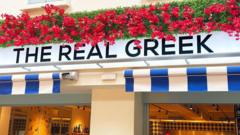
The scent of charred oregano and lemon zest doesn’t usually linger in the boardroom. In the sterile air of a private equity meeting, you find spreadsheets, cooling coffee, and the sharp scent of dry-erase markers. But for the staff at The Real Greek, the stakes of the latest acquisition weren’t measured in EBITDA or market penetration. They were measured in the survival of a kitchen culture that feels more like a village square than a casual dining chain.
When news broke that Fulham Shore—the parent company behind the ubiquitous Real Greek and Franco Manca brands—was being absorbed by the Japanese conglomerate Toridoll, the industry felt a collective shiver. Toridoll, the powerhouse behind Marugame Udon, isn’t just a buyer; they are a machine of efficiency. Then came the twist. The day-to-day stewardship of these Mediterranean icons was handed to Marcel Khan and the team at Cote Brasserie.
It was a marriage of necessity, ambition, and a desperate hope that the soul of a restaurant can survive a change in the deed.
The Fragility of the Fire
Consider a hypothetical chef named Nikos. Nikos has worked the grill at a London-based Real Greek for seven years. To the suits at the top, Nikos is a line item under "Labor Costs." To the neighborhood, he is the man who knows exactly how much char belongs on a piece of halloumi. When a company is sold, men like Nikos don't worry about the share price. They worry about the olive oil. They worry that the new owners will swap the authentic, peppery Kalamata oil for a cheaper, neutral-tasting blend to shave three pence off the plate cost.
This is the invisible war of the hospitality industry. It is a constant struggle between the artisanal impulse and the gravity of scale.
The Real Greek occupied a strange, beloved middle ground. It wasn't a tiny, family-run taverna where the grandmother yells from the back, but it also wasn't a soulless burger factory. It had managed to scale the feeling of a sun-drenched afternoon in Athens across dozens of UK locations. That magic is incredibly easy to kill. You kill it with "optimized" supply chains. You kill it by replacing fresh-made tzatziki with a stabilized version that has a longer shelf life.
The French Connection
The choice of Cote Brasserie’s leadership to steer this ship was a calculated gamble. On paper, it seems like a clash of civilizations. Cote is the bastion of the French bistro—all crisp white aprons, steak frites, and a certain disciplined elegance. The Real Greek is chaotic, loud, and built on the principle of sharing small plates until the table disappears under a mountain of pita.
However, Cote has already walked the path of the "Rescued Brand." They lived through the turbulence of the pandemic, debt restructuring, and the grueling process of proving that a chain can still provide a high-quality experience. By handing the reins to Cote's management, Toridoll signaled that they weren't just looking for a spreadsheet wizard. They were looking for people who understood how to manage the "vibe" of a mid-market restaurant.
The reality of the UK high street in 2026 is unforgiving. Energy costs are a predator. Rent is a weight. Business rates are a tax on breathing. Without the deep pockets of a global player like Toridoll, The Real Greek was facing a slow starvation. The "rescue" isn't just about paying off debts; it’s about providing the capital to breathe.
The Shadow of the Udon Giant
Toridoll’s involvement brings a different kind of pressure. This is a company that understands volume. They understand how to move people through a queue with the precision of a Swiss watch. The fear among regulars was that Franco Manca’s sourdough would become standardized and The Real Greek’s menu would be trimmed of its quirks.
But there is a counter-argument to the fear of the "Big Corporate Overlord."
Sometimes, a big owner is the only thing that keeps the lights on. In a world where independent restaurants are closing at record rates, the corporate umbrella provides a shield. It allows for better negotiation with suppliers, meaning the restaurant can actually afford to keep buying that high-grade feta without passing a £20 price tag onto the customer.
The transition wasn't just a swap of logos. It was a restructuring of the very air the staff breathed. Marcel Khan, known for his stint at Five Guys and Nando’s, brought a specific kind of "people-first" philosophy to the Cote stable. The goal was to inject a sense of urgency and pride back into a brand that had started to feel a little weary.
What Happens to the Plate?
If you sit down at a Real Greek today, you are participating in a massive socio-economic experiment. You are testing whether a Japanese multi-billion-dollar entity can successfully fund a French-managed English company to sell Greek food to a skeptical public.
The stakes are higher than they look. If this model works, it provides a blueprint for saving the high street. It suggests that "chains" don't have to be synonymous with "bland."
But the tension remains. Every time a menu is "streamlined," a piece of the story is lost. The Real Greek’s charm was always in its variety—the ability to order a dozen different things and feel like you were at a wedding feast. If the new management leans too hard into the Cote model of efficiency, the messy, joyous heart of the Greek experience might be tidied away until it's unrecognizable.
We often talk about "business acquisitions" as if they are bloodless transactions. They are not. They are heart transplants. The body of the company—the buildings, the ovens, the tables—stays the same. But the blood, the culture, and the intent are all new.
The Real Greek didn't just get a new owner. It got a new lease on life, but that life comes with strings. It comes with the expectation of growth, the demand for consistency, and the relentless march of the quarterly report.
The Human Toll of Efficiency
Think back to Nikos at the grill. For him, the new ownership meant a new uniform and perhaps a new digital ordering system. But it also meant that his paycheck was guaranteed. It meant that the restaurant wouldn't be boarded up by next Tuesday.
There is a quiet dignity in stability.
However, the risk is the "beige-ing" of the experience. We have seen it happen a thousand times. A brand starts with a spark. It grows because people love that spark. Then, to protect the growth, the brand builds a glass box around the spark. Eventually, the glass is so thick that you can’t see the light anymore.
The Real Greek’s rescue by Cote and Toridoll is a high-wire act. They have to keep the lemon-and-oregano fire burning while building a global infrastructure around it. They have to satisfy the hunger of the London commuter and the hunger of the Tokyo shareholder simultaneously.
It is a feat of balance that requires more than just good accounting. It requires an understanding that food is never just about calories. It’s about the memory of a holiday, the comfort of a shared plate, and the frantic, beautiful energy of a kitchen that actually cares about the crust on a piece of lamb.
The tables are set. The pita is warm. The wine is cold. The suits have left the room, and now it’s up to the cooks and the servers to prove that the soul of the brand didn't get lost in the paperwork.
The grill is hot, the blue and white tiles are scrubbed clean, and for now, the smell of the Mediterranean still manages to drift out into the grey London rain.


