Ceramics do not beg for mercy. They do not scream when the fault line gives way. They simply snap.
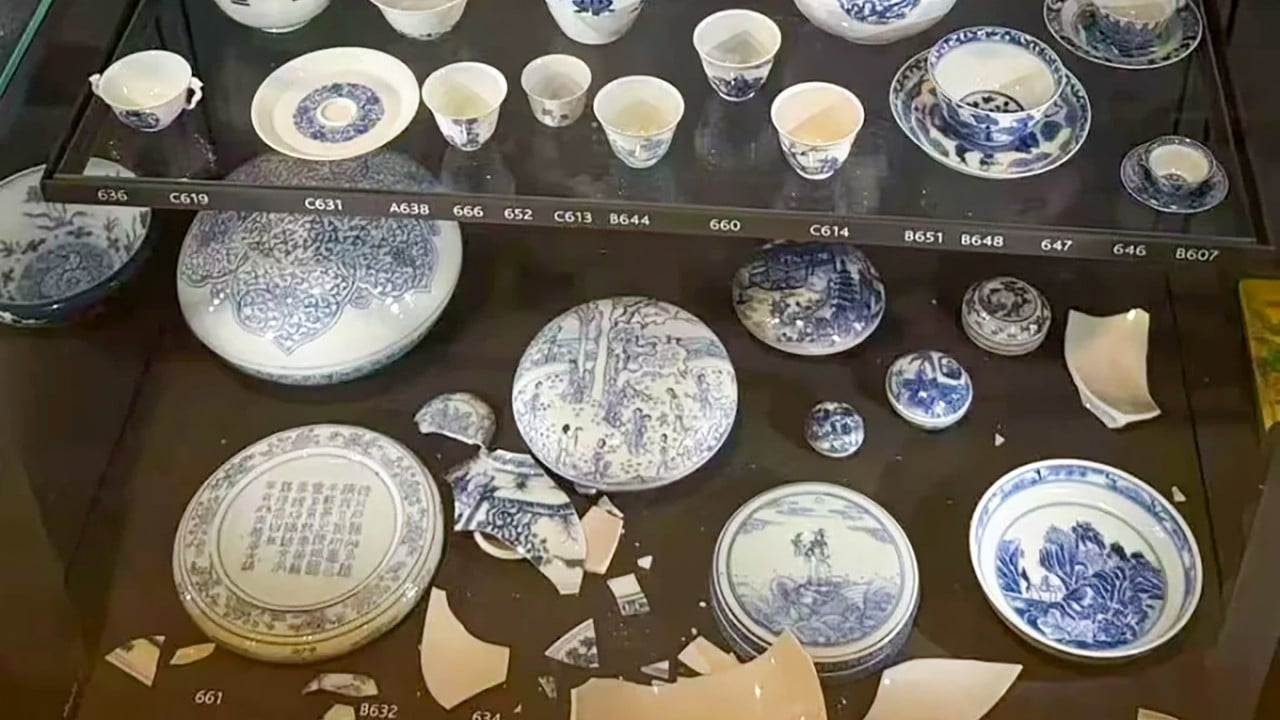
Picture a gallery floor in Bloomsbury, long after the tourists have gone home, the museum guards have shifted their weight against the chill, and the city outside has settled into a low, rumbling hum. Inside the glass, beneath lights engineered to make centuries-old glaze catch the eye just so, something unforgivable happens. A crack spreads. A vessel crafted during the Qing dynasty—an era of emperors, court intrigue, and obsessive perfectionism—yields to invisible stress.
It is easy to view a museum artifact as a permanent monument, a rock untouched by the tides of human error. We walk past rows of porcelain bowls, jade pendants, and lacquered screens as if they were born in glass cases, untouched by the hands of time or the clumsy gravity of our own species. But porcelain has a memory. It remembers the kiln fires of Jingdezhen, the tension of cooling air, the hundreds of years spent traveling across oceans and empires, only to face the ultimate vulnerability: our own carelessness.
When news broke that Qing dynasty ceramics had suffered damage during a display at the British Museum, the official reports read like a coroner's log. Cold. Detached. Procedural. Words like "incident," "review," and "protocol" were deployed to cushion the blow, as if administrative jargon could glue the shards back together.
Bureaucracy loves a clean sentence. History demands a mess.
To understand why a cracked bowl in a London gallery matters, you have to strip away the museum tags and look at what those objects actually are. They are time capsules. Consider the artisan sitting in a courtyard three hundred years ago, hands coated in fine white clay, breathing in woodsmoke, coaxing shape and color out of the earth for a ruler who believed his mandate came directly from heaven. That artisan did not labor so that a modern visitor could glance at a case while checking their phone. They labored for eternity. Or at least, an approximation of it.
And yet, eternity is fragile.
Museums are battlegrounds disguised as quiet sanctuaries. Every day, curators and conservators wage a silent war against humidity, temperature fluctuations, structural fatigue, and, most dangerous of all, human foot traffic. Imagine standing in the shoes of a collections manager who receives the call. The stomach drop. The sudden, suffocating realization that centuries of human heritage just ticked downward in value because a mount failed, a case shifted, or an eye blinked at the wrong second.
We invest these objects with our identity. When an ancient bowl breaks, a piece of our collective continuity snaps with it. It is not just about money, though the market value of imperial Chinese porcelain commands fortunes that defy logic. It is about stewardship. We are the current tenants of a house we did not build, holding artifacts we did not earn, tasked with handing them over to people who do not yet exist.
When we fail at that, the silence in the room gets very loud.
Consider the physics of display. Glass cases are not just windows; they are micro-climates. They trap heat. They vibrate with the heavy footsteps of thousands of daily visitors walking across nineteenth-century wooden floors. A mount designed to hold a fragile piece of porcelain steady must balance opposing forces: it must secure the object without putting pressure on its weakest points. It is an engineering tightrope walk. One micro-millimeter of shift over a decade can turn a masterpiece into a puzzle.
When a crack appears, it exposes the illusion. We like to pretend that history is safe, locked behind shatterproof glass and monitored by quiet guards. But history is remarkably easy to break.
The British Museum holds millions of objects, a sprawling, breathless archive of human ambition and conquest. Much of that collection carries complicated histories, shadowed by the politics of empire and acquisition. But regardless of how an object crossed oceans to find its way to London, once it sits in a gallery, it belongs to everyone and no one. It becomes a bridge. When the bridge cracks, crossing over becomes a little harder.
Think about the visitor who bought a ticket that morning, weaving through the crowded halls, hoping to catch a glimpse of imperial brilliance. They stood before the case. They saw the fracture line, faint and sharp against the glaze. Did they understand the weight of it? Did they realize they were looking at a physical scar on the timeline?
Probably not. Most people just walked past. Another cracked relic in another crowded room.
That is the real tragedy. Not just the physical damage, but the casual numbness we develop toward loss. We live in an era where everything is reproducible, shareable, and disposable. If a phone screen cracks, you buy a new one. If a digital file corrupts, you pull from the cloud. We have engineered a world where permanence feels like an inconvenience rather than a sacred trust.
Ancient porcelain rejects this disposability. It demands patience. It demands that we acknowledge our own clumsiness.
Restoration teams are now faced with the delicate autopsy of these pieces. Can the damage be reversed? Can adhesives and microscopic precision heal a wound inflicted by modern oversight? Sometimes. Conservators are the unsung miracle workers of the cultural world, spending decades staring through magnifying glasses, mixing solvents, and praying their hands do not shake. They are the ones who clean up after our collective negligence.
As you go about your week, consider the things in your own life that seem permanent. The relationships, the institutions, the quiet routines that anchor your days. They feel solid. They feel like they will always be there, resting safely in their display cases.
They won't. Everything requires care. Everything requires someone paying attention in the dark when the rest of the world has gone home.
The Qing dynasty fell a century ago, swept away by revolutions and the relentless march of modernity. But its art remained, whispering tales of dragon kilns and imperial courts into the London air. Now, those whispers carry a new warning. We can build museums as high as we want, fill them with steel and glass and security cameras, but we cannot protect history from ourselves.
The cracks are already there. The only question is how carefully we choose to walk around them.