The air in Kigali does not feel like a graveyard. It feels like eucalyptus and charcoal smoke. It feels like the hum of motorcycle taxis weaving through traffic and the sight of terraced hills that look like a green velvet blanket tossed over the Earth. If you stood on a balcony in the Kimihurura district today, you would see a city that works. It is clean. It is quiet. It is organized.
But there is a specific kind of silence in Rwanda that you won’t find anywhere else. It is the silence of a million missing voices.
To understand the genocide against the Tutsi, you have to stop looking at the maps and the casualty figures for a moment. You have to look at a radio. In 1994, the radio was not a source of entertainment. It was a weapon of mass destruction. It sat on kitchen tables and shop counters, spitting out a steady, rhythmic drip of poison that told neighbors they were no longer neighbors. It told them they were predators and prey.
The Invention of a Shadow
Identity is a fragile thing. Before the colonial era, Hutu and Tutsi were fluid categories, often defined by wealth or the number of cattle a family owned. You could move between them. Then came the clipboards and the calipers.
Belgian colonial administrators in the early 20th century decided that these social distinctions needed to be rigid. They measured noses. They compared heights. They issued identity cards that fixed a person’s ethnicity in ink. Imagine a bureaucrat standing in front of you, looking at your face, and deciding whether your children will be allowed to go to school or whether your family will be eligible for a government job.
This was the spark. By the time the Belgians left in 1962, they had successfully transformed a social hierarchy into a ticking time bomb. The Hutu majority, long marginalized under colonial-backed Tutsi monarchs, took power. The roles flipped. Tens of thousands of Tutsis fled into neighboring countries, creating a diaspora of people who were told they no longer had a home.
One Hundred Days of Rain
On the night of April 6, 1994, a plane carrying President Juvénal Habyarimana was shot down over Kigali. No one knows for certain who did it, but for the extremists waiting in the wings, the truth didn't matter. They had their excuse.
The killing didn't start in a boardroom or a military base. It started in the streets. It started with roadblocks.
Think about your commute to work. Think about the people you pass every day—the man who sells you coffee, the woman who lives three doors down. Now imagine that on your way home, they are standing in the middle of the road with machetes. They are asking for your ID card. They know your name. They know where you sleep.
The speed of the slaughter was technically impossible. Yet it happened. Between April and July, approximately 800,000 people were murdered. That is 8,000 people a day. Five people every minute. For three months straight.
This wasn't a war fought with long-range missiles or high-tech drones. It was intimate. It was manual labor. It was carried out by the Interahamwe militias and ordinary citizens who had been convinced that killing their friends was a matter of national survival. While the world watched televised debates about whether the situation met the legal definition of "genocide," the churches and schools of Rwanda—places of sanctuary—became slaughterhouses.
The Weight of the Ghost
Consider a woman named Rose. She is a hypothetical composite of the thousands of survivors who still walk these hills. Rose spent those hundred days hiding in a ceiling crawlspace, listening to the screams of her family in the yard below. She stayed there so long her muscles began to atrophy. She didn't cry because a single sob would have been a death sentence.
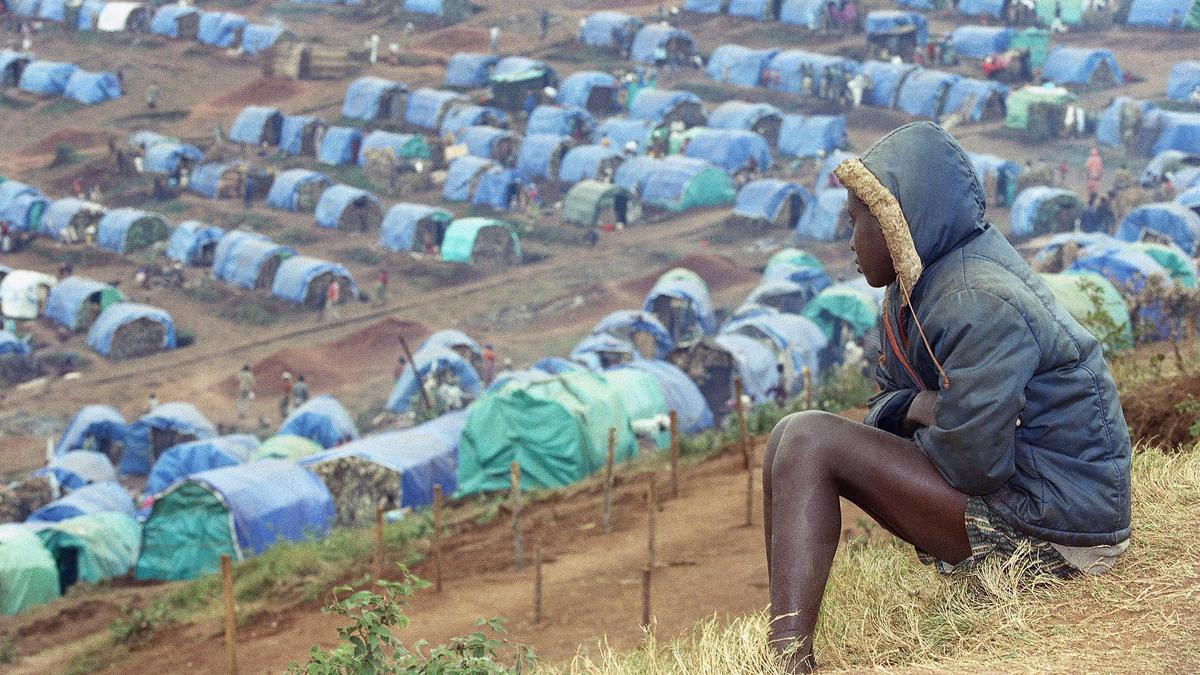
When the Rwandan Patriotic Front (RPF) finally took control of the country in July and the genocidaires fled across the border into Congo, Rose came down from the ceiling. She stepped out into a country that was literally empty. The infrastructure was gone. The banks were looted. The judicial system was a pile of ash.
How do you restart a heartbeat in a body that has lost most of its blood?
The scale of the justice problem was staggering. If Rwanda had used traditional courts to try every person involved in the killing, the process would have taken over 200 years. The prisons were overflowing. Suspects were dying of old age before they could even be charged.
The Table in the Grass
In the face of this impossibility, the country turned backward to move forward. They looked to a traditional community justice system called Gacaca.
Imagine a village green. There are no black-robed judges, no expensive lawyers, no mahogany benches. There is just a table in the grass and a community of people sitting in a circle. The survivors sit across from the killers.
This was not about cold legalism; it was about truth-telling. The killers had to confess their crimes in front of the families they had destroyed. They had to point to the places where the bodies were buried so that the dead could finally have a name and a grave. In exchange for the truth and a plea for forgiveness, their sentences were often commuted to community service.
It was messy. It was agonizing. It forced people to look into the eyes of the person who had burned their house down and then walk past them at the market the next morning. But it did something that a distant court in The Hague could never do: it made the tragedy local. It forced the poison out into the sun.
The Price of Order
Today, if you go to the Kigali Genocide Memorial, you will see a series of mass graves where 250,000 people are buried. There are gardens there. They are beautiful, quiet, and hauntingly still.
The government has banned the use of "Hutu" and "Tutsi" in public discourse. Everyone is simply "Rwandan." This is a radical experiment in social engineering. It is a forced forgetting that is necessary for a collective remembering. The state is meticulously controlled. Critics argue that the price of this peace is a lack of political pluralism, a tightening of the belt that leaves little room for dissent.
But when you talk to the people in the streets of Kigali, the priority is clear. They have seen the alternative. They have heard the sound of the radio in the dark.
The miracle of Rwanda isn't that it became a tech hub or that its streets are clean enough to eat off. The miracle is that a person like Rose can live in the same village as the man who was at the roadblock, and they can both contribute to a community fund to buy a shared cow.
Forgiveness is not a feeling. In Rwanda, it is a policy. It is a grueling, daily choice to keep the machete in the ground and the radio tuned to the music of the present.
The hills are still there. The terraces are still green. But the silence has changed. It is no longer the silence of the hiding; it is the silence of a country holding its breath, determined never to let the air turn sour again.