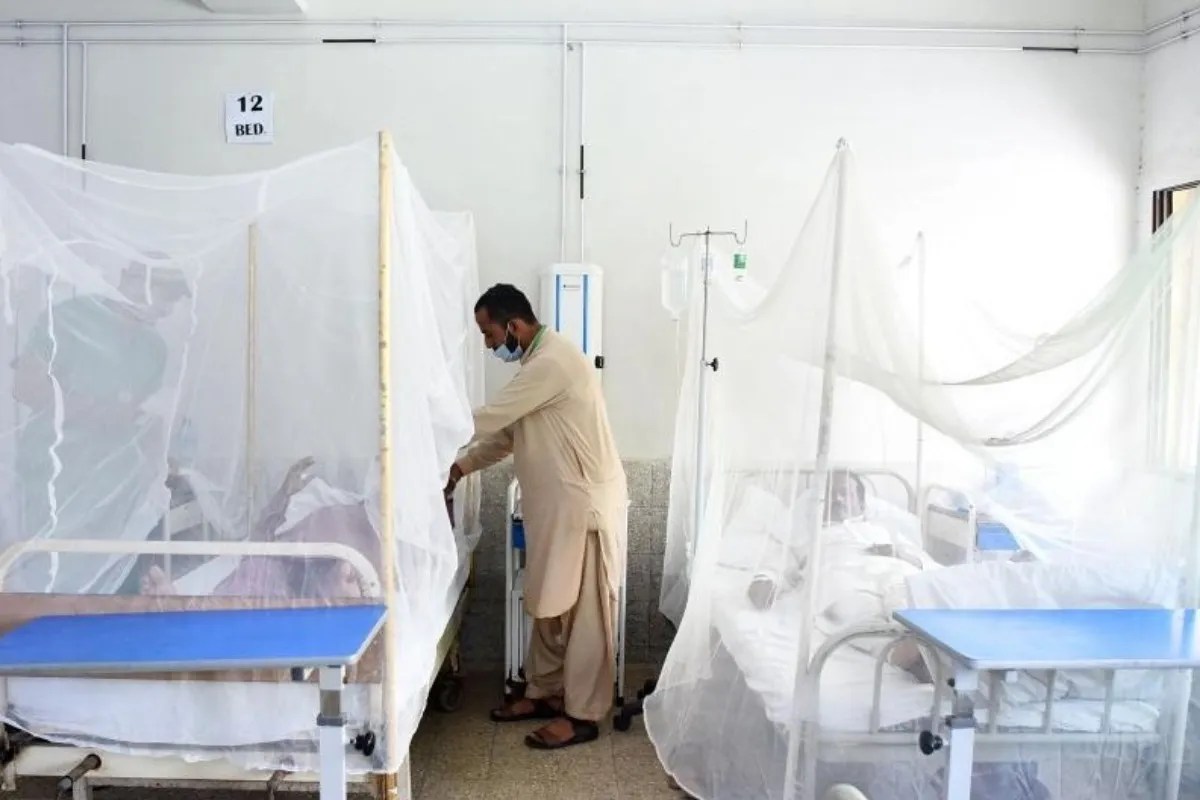
The air in the Cox’s Bazar district is heavy with salt and the smell of woodsmoke. Usually, the evening is filled with the chaotic, beautiful noise of children kicking a deflated soccer ball through the dust. But lately, a thick, suffocating silence has settled over the makeshift settlements and rural villages of Bangladesh.
If you walk past the bamboo-walled clinics, you do not hear laughter. You hear a sound that stays with you long after you leave. A wet, barking cough. A raspy, desperate struggle for breath.
We often think of global health crises as abstract numbers flashing across a news screen. We see a headline stating that 512 children have died of measles in Bangladesh, and we nod symmetrically, feeling a brief pang of distant sympathy before scrolling onward. But numbers are an anesthesia. They numb us to the reality that each unit in that statistic represents a frantic mother holding a burning, rash-covered toddler in a dim room, watching the light go out of their eyes.
To understand how a entirely preventable disease reclaimed its throne in 2026, we have to look past the cold reports. We have to look at the dust, the needles, and the devastating cost of a missed appointment.
The Heat Under the Skin
Let us imagine a mother named Rahima. She is not a statistic; she is the lens through which this tragedy becomes visible. Her eighteen-month-old son, Tariq, began with a simple fever. Rahima wiped his forehead with a damp cloth, assuming it was the standard tropical malaise that comes with the changing season.
Then came the eyes. Red, watery, and fiercely sensitive to the harsh sunlight filtering through the thatch roof.
Within days, the spots appeared. They started behind Tariq’s ears, tiny pink blooms that spread downward like spilled ink on blotting paper, overtaking his neck, his chest, his fragile limbs. By the time Rahima carried him three miles under a blazing sun to the nearest community clinic, Tariq’s skin was a map of inflammation, and his lungs were failing.
Measles is not just a rash. It is an apex predator of the immune system.
Chemically, the rubeola virus does something terrifyingly brilliant. It does not merely attack the body; it wipes the body's memory. Imagine a computer virus that completely erases your antivirus software’s database. Every cold, every infection a child has ever fought off and built immunity against is forgotten. The body is left biologically defenseless, open to secondary killers like pneumonia and severe diarrhea.
In Tariq’s case, it was pneumonia that came for him in the quiet hours before dawn. He became one of the 512.
The Anatomy of an Outbreak
How did Bangladesh arrive at this point? The country was once celebrated as a global poster child for successful immunization campaigns. Between 2000 and 2020, massive coordinated efforts drove infant mortality down and vaccination rates up. It was a triumph of public health infrastructure.
But infrastructure is fragile. It requires constant maintenance, uninterrupted trust, and absolute stability.
The collapse happened in shifts. First came the global pandemic of the early 2020s, which diverted cold chains, reassigned healthcare workers, and locked families inside their homes. Routine immunizations slipped down the priority list. Then came the economic aftershocks—soaring fuel prices that made the journey to distant clinics a choice between a vaccine and a week’s worth of rice.
Add to this volatile mix the dense, shifting populations in refugee camps and rapidly expanding urban slums. When thousands of unvaccinated children are packed into tightly condensed living spaces, the virus experiences an explosive liberation.
Measles is one of the most contagious diseases known to science. Its basic reproduction number, often referred to by epidemiologists as the $R_0$, sits between 12 and 18. This means that in a fully susceptible population, a single infected person will pass the virus to up to eighteen others. For comparison, seasonal influenza usually hovers around 1.3.
To stop an enemy that aggressive, you need an armor without cracks. Public health experts know that herd immunity for measles requires a 95% vaccination rate with two distinct doses. When that rate dips to 85% or 80% due to supply chain disruptions or localized neglect, the armor shatters. The virus finds the gaps with mathematical precision.
The Invisible Stakes
There is a profound irony in watching children die of measles in the modern era. The vaccine costs less than a cup of tea. It is safe, highly effective, and has been available for decades. Yet, the supply chain required to keep that vaccine viable is a miracle of modern logistics that we completely take for granted until it fails.
The dose must be kept in a flawless "cold chain"—refrigerated from the moment it leaves a manufacturing plant in western India until the moment it enters a child's arm in rural Sylhet or Chittagong. If a generator fails during a monsoon power outage, or if a solar-powered fridge in a remote outpost degrades, the vaccine dies. It looks exactly the same in the syringe, but it is nothing more than water.
Healthcare workers on the ground describe the agony of realizing they are fighting a ghost. They administer the shots, they fill out the paper logs with stubby pencils, but the protection isn't there because the cold chain broke somewhere along a bumpy, flooded dirt road two weeks prior.
But the physical logistics are only half the battle. The psychological landscape is shifting too.
In the absence of clear, empathetic communication from trusted community leaders, rumors fill the vacuum. In some villages, whispers spread that the government-issued vaccines cause infertility or are forbidden by religious law. In others, mothers are simply too exhausted from working twelve-hour shifts in garment factories to take a day off to sit in a crowded clinic waiting room, only to be told the clinic ran out of doses for the day.
When we look at the 512 deaths, we are looking at a failure of trust and access, not a failure of medicine.
Rewriting the Ending
The solution to a measles outbreak is not a medical mystery. It does not require a breakthrough in biotechnology or an expensive new pharmaceutical contract. It requires old-fashioned, grueling, boots-on-the-ground public health work.
It means mobile vaccination vans navigating flooded terrain to meet mothers where they live. It means training local imams and village elders to dismantle misinformation over Friday prayers. It means ensuring that when a mother sacrifices a day's wages to bring her child to a clinic, the fridge is running, the vials are cold, and the needles are ready.
Emergency response teams are currently fanning out across the hardest-hit sub-districts of Bangladesh. They are setting up temporary centers, checking immunization cards, and launching catch-up campaigns to reach children who dropped through the cracks over the last three years. The goal is to create a human firebreak, vaccinating every child between six months and fifteen years old in the affected zones, regardless of their past vaccination history.
It is a race against time and the impending monsoon season, which threatens to isolate whole communities and make refrigeration even more precarious.
The true tragedy of the 512 children lost this year is that their deaths were entirely unnecessary. They did not die from an incurable mutation or a mysterious new pathogen. They died from a lack of collective will, from the quiet erosion of systems that were built to protect them.
As night falls over Cox's Bazar, Rahima sits on the dirt floor of her shelter. Her hands are empty. The small, embroidered blanket she used to wrap Tariq in sits folded in the corner. Outside, the twilight is beautiful, painted in deep purples and oranges across the Bay of Bengal, completely indifferent to the tiny graves newly dug in the hillside behind the village.
The numbers will likely rise tomorrow. Another digit will be added to the official tally, another report filed away in an office in Dhaka. But in the quiet shelters where the coughs have finally stopped, the cost of our collective distraction has already been paid in full.