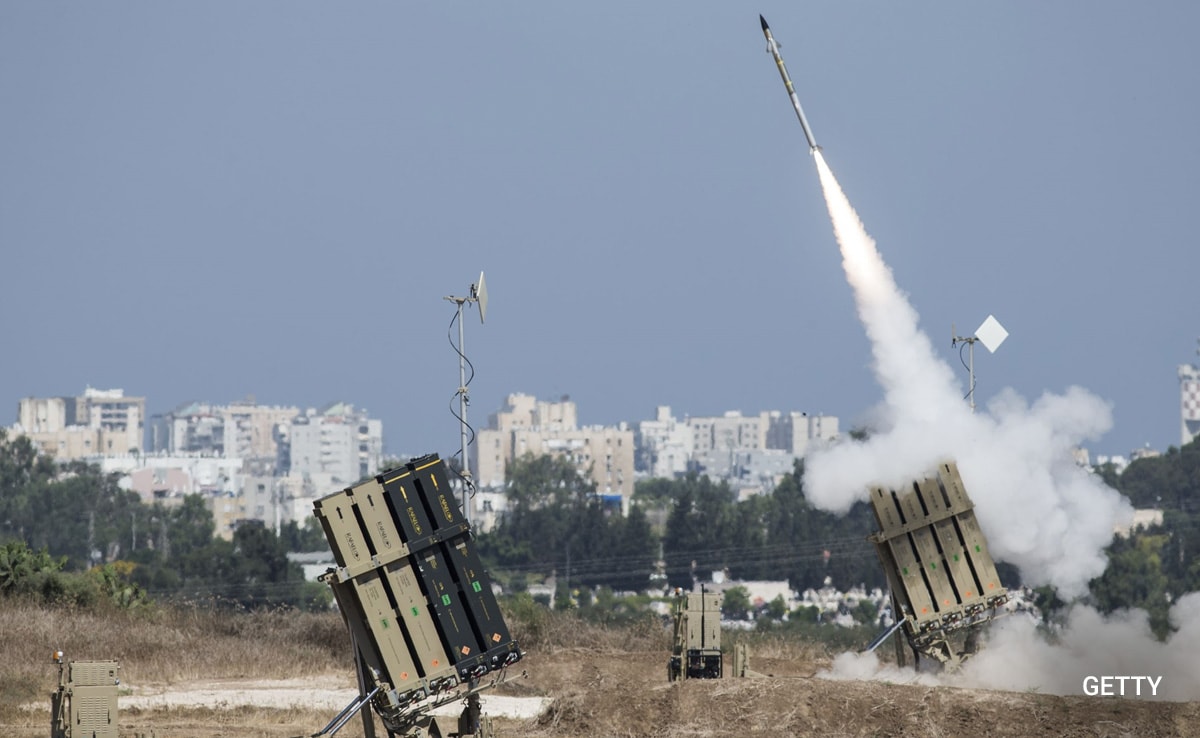
The footage of an Iranian ballistic missile shattering into a bloom of fire against the black void of the thermosphere was more than a viral clip. It was the first documented instance of combat occurring outside Earth's atmosphere. While headlines focused on the "jaw-dropping" visuals, the actual significance lies in the physics of exo-atmospheric interception and the grim evolution of the Middle Eastern arms race. Israel’s Arrow 3 system did not just shoot down a rocket; it validated a multi-billion dollar bet that war can be fought and won in the vacuum of space before a single civilian on the ground hears a siren.
This engagement confirms that the technical barrier for space-based defense has vanished. The Arrow 3, developed in tandem with American aerospace giants, uses a "hit-to-kill" kinetic kill vehicle. It does not carry a traditional explosive warhead. Instead, it slams into its target at hypersonic speeds, using nothing but raw momentum to vaporize the incoming threat. By doing this above the Karman line—the recognized boundary of space—Israel ensures that any chemical, biological, or nuclear payload is destroyed far enough away that the debris burns up upon re-entry or remains in orbit, rather than raining toxins on its population centers.
The Physics of the Kill
To understand why this matters, one must look at the sheer difficulty of the task. A ballistic missile in its mid-course phase is traveling at several kilometers per second. It is a small, cold object moving through a vast, dark environment. The Arrow 3 interceptor must launch, exit the atmosphere, and then orient its own sensors to find a needle in a cosmic haystack.
The interceptor uses a gimbaled seeker that tracks the infrared signature of the target. Because there is no air in space, there is no drag. This means the interceptor can maneuver with extreme precision using small thrusters, but it also means the target is moving with terrifying predictability and speed. The "moment of impact" is less of a collision and more of a molecular disassembly. When two objects meet at a combined velocity exceeding Mach 10, the kinetic energy is so immense that solid metal behaves like liquid.
This capability is the result of decades of intelligence gathering and iterative testing. Israel's defense architecture is layered, with Iron Dome handling short-range mortars and David’s Sling managing medium-range cruise missiles. Arrow stands at the top of this pyramid. It is the final gatekeeper against the long-range missiles fired from 1,000 miles away in Iranian territory.
Regional Stakes and the British Connection
The geopolitical ripples of this space-based intercept extend toward Europe and the Mediterranean. During the escalation that led to this engagement, reports surfaced regarding threats to British sovereign base areas in Cyprus. RAF Akrotiri serves as a vital intelligence and logistics hub for the UK in the region. The reality is that modern ballistic missiles do not respect borders, and their trajectories often overfly neutral or third-party territories.
If a missile intended for Tel Aviv is intercepted over a neighboring country or near a foreign military installation, the debris field becomes a diplomatic nightmare. The "space-shot" seen in recent footage is preferred precisely because it minimizes this risk. By neutralizing the threat while it is still "out of bounds," the defender prevents the physical fallout from becoming a casus belli for other nations.
However, this technology creates a dangerous incentive structure. As defense systems become more capable, the aggressor is forced to innovate. Iran has already claimed the development of "hypersonic" glide vehicles designed to maneuver within the atmosphere to avoid the Arrow 3’s exo-atmospheric reach. Whether these claims are bluster or reality, the cycle of escalation is moving faster than the treaties meant to contain it.
The Cost of the Shield
Maintaining a space-capable defense is an economic burden that few nations can sustain. A single Arrow 3 interceptor is estimated to cost between $2 million and $3 million. In a saturated attack, where dozens or hundreds of missiles are launched simultaneously, the math becomes brutal. An attacker can build ten relatively cheap missiles for the price of one high-end interceptor.
Israel offsets this through massive US military aid and a domestic tech sector that treats defense R&D as an incubator for civilian innovation. But for other nations watching this play out, the lesson is clear: if you cannot afford to defend the high ground of space, you are essentially defenseless against a modern adversary.
The successful interception also reveals a hidden layer of international cooperation. These systems do not operate in a vacuum—metaphorically speaking. They rely on a global network of X-band radars and early warning satellites. When a launch occurs in central Iran, US infrared satellites detect the heat signature of the engine ignition within seconds. That data is processed and fed into the Arrow’s fire control system before the missile has even cleared Iranian airspace.
Technical Vulnerabilities and the Decoy Problem
No system is perfect, and the "space war" has its own set of flaws. The primary challenge for an exo-atmospheric interceptor is discrimination. Once a missile enters space, the booster often separates, and the warhead may be surrounded by decoys—simple balloons or metallic scraps that look exactly like the warhead on radar and infrared sensors.
In the vacuum of space, a heavy warhead and a light piece of foil travel at the same speed. The interceptor has only seconds to determine which object is the real threat. If it hits a decoy, the mission fails, and the city below remains at risk. The recent successful shootdown suggests that Israeli and American algorithms for "target discrimination" have reached a high level of maturity, likely using multi-spectral sensors to "see" the minute differences in how various objects tumble or reflect sunlight.
The Era of the Kinetic Frontier
We have entered a period where the boundary between air defense and space warfare has dissolved. The footage of that explosion against the stars is the opening chapter of a new doctrine. It is no longer enough to have a strong air force or a deep bunker. National survival now depends on the ability to hit a target moving at five miles per second, 100 miles above the Earth.
Military planners are now forced to treat the thermosphere as a standard theater of operations. This requires a complete overhaul of how we think about sovereignty. If a missile is destroyed over your country but at an altitude of 150 kilometers, has your airspace been violated? International law is silent on these specifics, yet the physical reality of falling debris doesn't care about legal ambiguity.
The Arrow 3 is a feat of engineering, but it is also a reminder of the fragility of modern peace. It is a shield made of glass and fire, designed to solve a problem that should not exist. As more nations seek to replicate this "space-shot" capability, the quiet of the upper atmosphere will increasingly be broken by the silent, blinding flashes of kinetic impact.
The next step for global defense analysts is not just tracking the missiles, but figuring out how to stop the proliferation of the technologies that make these space-based duels necessary in the first place.