Low Earth orbit is no longer just a highway for weather monitors and telecommunication nodes. It has quietly transformed into an operational theater for clandestine military capabilities, where strategic advantage depends on altitude, speed, and discretion. The foundational question regarding what clandestine hardware major powers might have placed into orbit—and who else possesses the means to deploy similar armaments—revolves around a fundamental shift in military planning. Militaries no longer just look at space to guide missiles on the ground. They look at space as a domain of active confrontation.
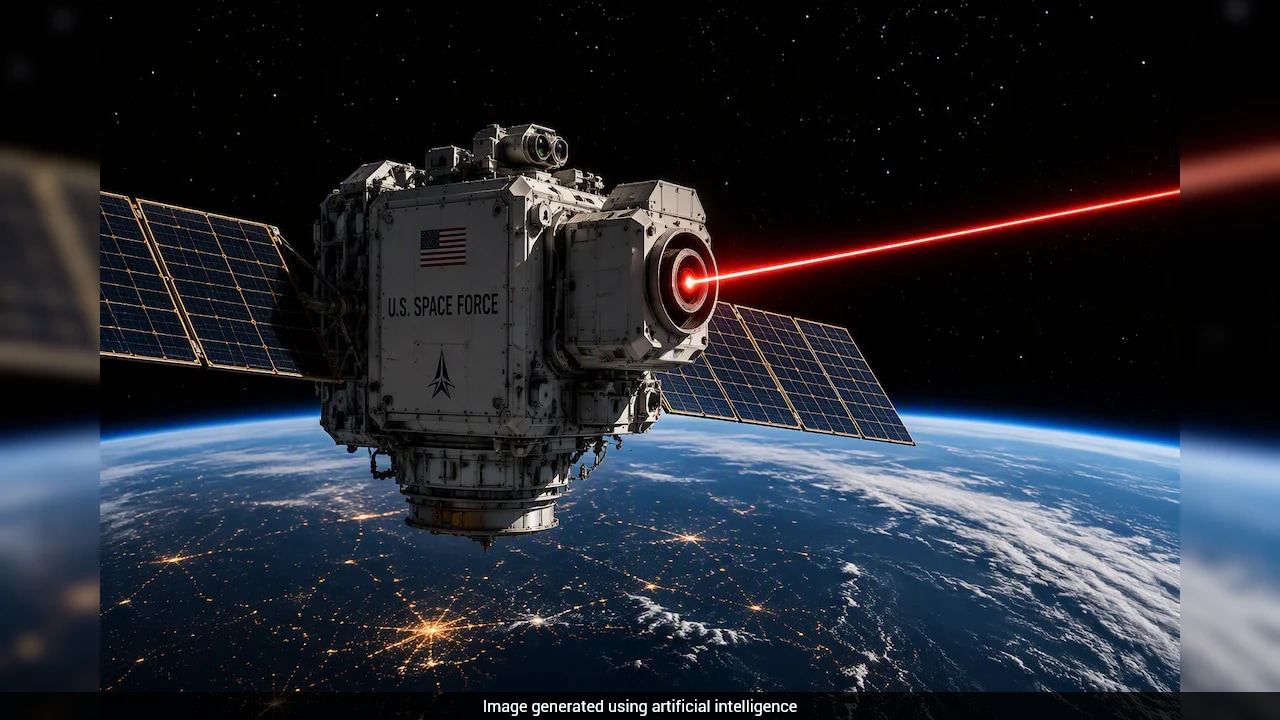
Public disclosures and intelligence assessments point to persistent anxieties surrounding orbital systems capable of kinetic strikes, electronic jamming, or direct satellite interdiction. While international treaties like the Outer Space Treaty of 1967 ostensibly ban the placement of nuclear weapons or weapons of mass destruction in orbit, conventional hardware occupies a persistent legal and technical gray area. A satellite equipped with robotic grapplers, high-powered lasers, or kinetic projectiles does not technically violate the nuclear prohibition. Yet, its operational utility remains explicitly adversarial.
The Technical Reality of Orbital Militancy
Physics dictates the constraints of orbital combat. Objects in low Earth orbit travel at roughly seventeen thousand five hundred miles per hour. At that velocity, kinetic energy becomes a devastating weapon. A metal bolt dropped from an orbital platform carries the destructive potential of an explosive shell simply due to its mass and terminal speed. However, placing a heavy kinetic bombardment system into orbit requires immense launch capacity and persistent financial investment, making traditional ground-based intercontinental ballistic missiles more economically viable for immediate surface strikes.
Consequently, the hardware most likely circulating above involves counter-space systems rather than orbital platforms designed to bombard cities below. These systems fall into distinct categories. Co-orbital interceptors can maneuver close to high-value reconnaissance or communication assets, disabling them via mechanical interference, directed energy, or localized kinetic impacts. Inspectors disguised as routine maintenance craft can shadow foreign assets, reading telemetry, intercepting data links, or positioning themselves to neutralize the satellite at a moment of notice.
Global Capabilities and Proliferation
The United States, Russia, and China possess mature space programs capable of sustaining sophisticated counter-space operations. Each nation approaches orbital militarization through distinct strategic doctrines.
Russia has historically favored inspection and co-orbital manipulation tactics. Programs involving objects frequently designated by intelligence analysts as inspector satellites have demonstrated unusual orbital maneuvers, trailing American reconnaissance platforms with unsettling precision. These systems highlight a doctrine focused on situational neutralization rather than indiscriminate destruction, aiming to blind an adversary without necessarily triggering an immediate kinetic response.
China pursues a comprehensive, multi-layered approach to space dominance. Beyond ground-based direct-ascent anti-satellite missiles, which demonstrated destructive capability through intentional tests, Chinese researchers have advanced robotic arm technology originally intended for orbital debris cleanup. In a military context, the same mechanical arm capable of clearing dead rocket bodies can easily latch onto a functioning foreign military satellite, disabling its solar panels or altering its trajectory.
The United States has spent decades building resilience into its architecture while quietly developing offensive and defensive counter-space measures. The emergence of secretive spaceplane programs, such as the X-37B, provides a reusable platform capable of long-duration orbital missions, rapid payload deployment, and unspecified testing routines. While official statements emphasize scientific and technological experimentation, military analysts recognize the platform as a versatile vehicle for rapidly deploying or testing orbital intervention technologies.
The Deterrence Dilemma in Zero Gravity
Deterrence on Earth relies on predictable retaliation thresholds. If a nation launches a missile, radar systems detect the launch, calculate the trajectory, and permit a defensive or retaliatory response before impact. Space introduces an intolerable degree of ambiguity. When a military satellite suddenly fails or loses telemetry, attributing the cause is rarely straightforward. Was it a solar flare, a micro-meteorite impact, space debris, or a covert laser strike from an unannounced orbital platform?
This ambiguity erodes crisis stability. When leaders cannot immediately verify whether an asset has suffered a mechanical failure or an act of war, the pressure to retaliate pre-emptively increases. The absence of transparent norms or real-time verification mechanisms turns Earth's orbit into a hair-trigger environment where a single misunderstood anomaly could precipitate a terrestrial conflict.
Major powers continue launching hardware under the guise of commercial expansion and scientific inquiry, knowing full well that dual-use technology dominates the sector. A commercial servicing vehicle and a military counter-space interceptor share nearly identical baseline engineering. Until the international community establishes verifiable frameworks to distinguish between peaceful orbital logistics and weaponized intervention, the silent arms race above will continue to accelerate out of sight.