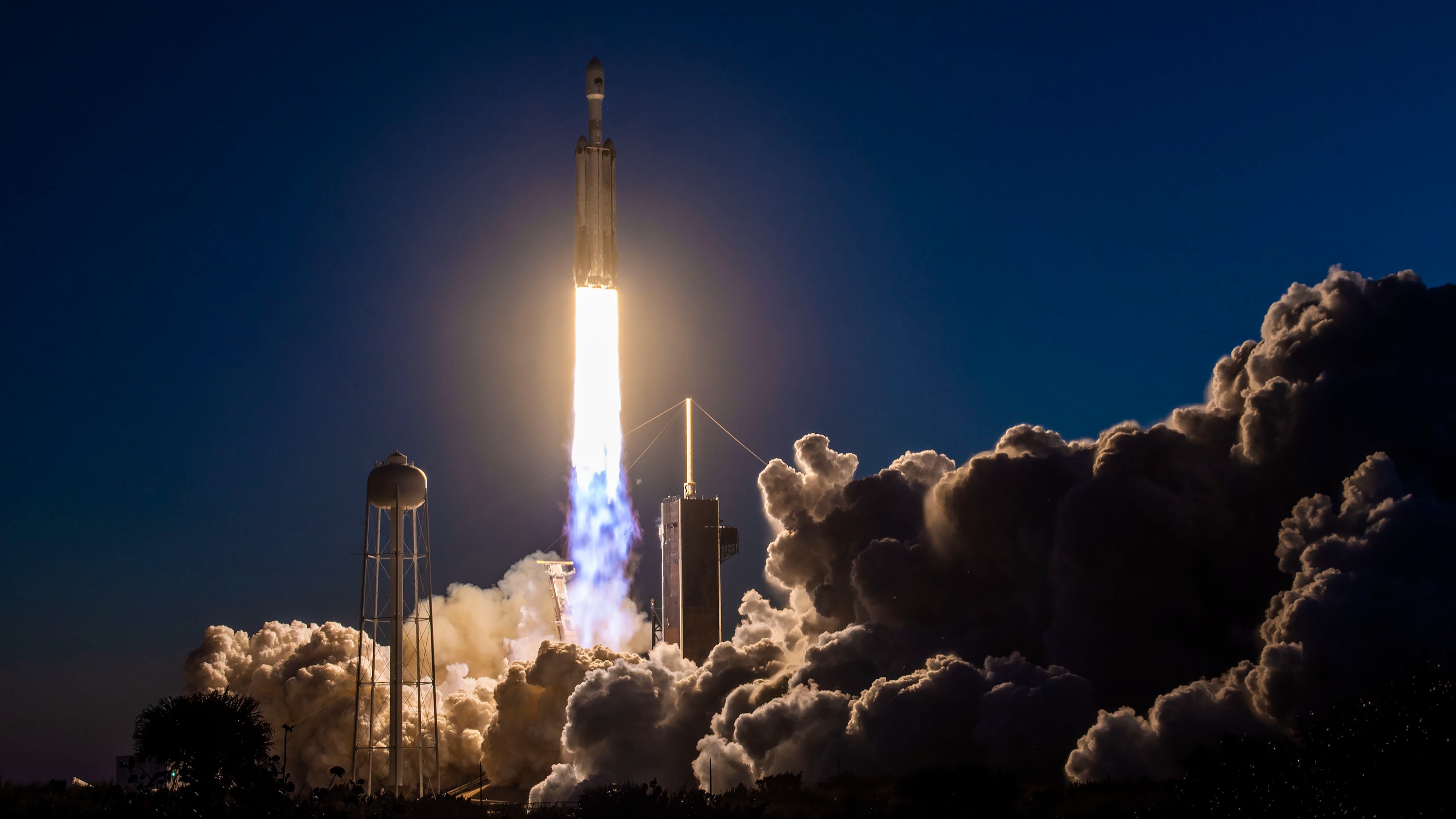
Wall Street is hyperventilating over the wrong metric again.
The financial press is currently obsessed with a simplistic narrative: SpaceX is deploying thousands of Starlink satellites, capturing the global launch market, and is therefore on an inevitable trajectory to leapfrog Amazon to become the world’s fifth-largest company. It is a neat, linear projection. Expanding on this topic, you can also read: Stop Building Blogs for 2026 (Do This Instead).
It is also completely wrong.
This thesis relies on the lazy assumption that valuing a space infrastructure monopoly is identical to valuing a digital marketplace or a cloud computing giant. It conflates launch dominance with scalable consumer revenue. Treating SpaceX like software-as-a-service (SaaS) ignores the brutal physics of capital expenditure and the economic reality of orbital telecom. Experts at Bloomberg have also weighed in on this situation.
SpaceX is a phenomenal engineering triumph. But as a financial engine built to sustain a trillion-dollar valuation, it faces structural bottlenecks that Amazon solved decades ago. The race to the top of the global market cap leaderboard will not be won just by throwing hardware into low Earth orbit (LEO).
The Scale Illusion: Why More Satellites Do Not Equal More Margin
The core argument for SpaceX’s exponential valuation growth hinges on Starlink. Proponents look at the escalating constellation numbers and map out a straight line to infinite revenue. They assume that because SpaceX controls the rockets, their profit margins on satellite internet will approach the 70% to 80% margins enjoyed by big tech.
They are missing a fundamental law of orbital mechanics.
Software scales linearly in terms of distribution costs. Once Amazon Web Services (AWS) builds a data center, serving the next million customers requires incremental, predictable additions of servers. The data center stays where it is, serving a dense, high-paying market.
Starlink does not work that way. LEO satellites are constantly moving. A satellite passing over the Sahara Desert or the middle of the Pacific Ocean is generating exactly zero dollars in revenue, yet its depreciation clock is ticking just as fast as the one hovering over a rural town in Ohio.
The Latency and Density Trap
To provide consistent global coverage, SpaceX must maintain a massive baseline constellation. This creates a paradox of capacity:
- Over-supply in empty zones: Massive bandwidth is wasted over oceans and unpopulated landmasses.
- Under-supply in dense zones: In major metropolitan areas where people can actually afford high-priced subscriptions, the spectrum becomes choked. A single satellite can only handle so many simultaneous beams before performance degrades.
This means Starlink cannot effectively compete for high-density urban or suburban consumers. It is structurally restricted to rural, maritime, and military niches. While those are lucrative, they do not support a valuation that surpasses a company embedded in the daily consumption habits of three billion people.
Amazon built an empire by capturing the infrastructure of transactions. SpaceX is building an infrastructure that fights its own geographic constraints every ninety minutes.
The Capital Expenditure Treadmill
Let's look at the balance sheets. The popular consensus treats Starlink satellites as permanent assets, akin to Amazon’s fulfillment centers.
They aren't. They are consumable commodities.
An Amazon warehouse lasts for decades. A LEO satellite has a lifespan of roughly five to seven years before atmospheric drag or hardware degradation turns it into space debris. This means SpaceX is not building a permanent digital highway; they are running on a relentless capital expenditure treadmill.
+---------------------------+-----------------------------------+
| Asset Type                | Useful Operational Lifespan       |
+---------------------------+-----------------------------------+
| Amazon Fulfillment Center | 20 - 30 Years                     |
| AWS Data Center Shell     | 15 - 20 Years                     |
| Terrestrial Fiber Optic   | 20 - 25 Years                     |
| Starlink LEO Satellite    | 5 - 7 Years                       |
+---------------------------+-----------------------------------+
By the time SpaceX finishes deploying a full generation of its constellation, the first wave is already burning up in the atmosphere. They must constantly launch just to maintain the status quo, let alone grow.
Even with the unprecedented cost reductions achieved by the reusable Falcon 9 and the development of Starship, the recurring cost of replacing thousands of satellites every half-decade introduces a permanent drag on free cash flow. Amazon handles physical goods, but its core valuation engine—AWS—is a cash-generating machine precisely because its infrastructure depreciates at a fraction of the speed of an orbital constellation.
Dismantling the Consensus: The Actual Value of Launch Dominance
"But SpaceX owns the launch market!"
Yes, they do. They have a functional monopoly on commercial launch services. The issue is that the total addressable market (TAM) for launching rockets is remarkably small compared to global commerce.
The entire global space launch market is measured in tens of billions of dollars, not trillions. Even if SpaceX captures 100% of the world’s commercial launch revenue, it remains a capital-heavy, low-frequency business compared to the velocity of global retail and cloud infrastructure.
The Monopsony Risk
When your biggest internal customer is your own satellite division, you are shifting money from one pocket to another. To justify a multi-trillion-dollar valuation, SpaceX needs external customers with deep pockets to buy launch services at high volumes.
But the commercial satellite market is consolidating, and national governments are fiercely protective of their domestic launch capabilities. Europe will subsidize underperforming rockets just to avoid relying entirely on an American monopoly. The geopolitical ceiling for launch revenue is much lower than the financial analysts projecting a SpaceX takeover care to admit.
The Project Kuiper Counter-Attack
The narrative that SpaceX will "leapfrog" Amazon completely ignores Amazon’s own playbook. Amazon is not sitting idly by while Starlink locks up the skies. Project Kuiper is Amazon’s counter-offensive, and it holds a structural advantage that the market is blind to: the customer acquisition loop.
SpaceX has to acquire every single Starlink customer from scratch, spending heavily on marketing, hardware subsidies (selling user terminals at a loss), and customer support.
Amazon already possesses the enterprise relationships, the consumer data, and the logistics network.
- The AWS Integration: Amazon can bundle Kuiper connectivity directly into its AWS enterprise packages. For a logistics company or a global energy conglomerate, satellite connectivity becomes a line-item add-on to their existing cloud contract.
- The Prime Ecosystem: Amazon can subsidize the cost of consumer terminals through Prime memberships, converting internet access into a funnel for retail sales.
SpaceX must make a profit on the connectivity itself. Amazon can treat connectivity as a loss-leader to drive high-margin cloud consumption and retail volume. In an infrastructure war, the player who can afford to lose money on the hardware to capture the broader ecosystem always wins.
The Valuation Math Just Doesn't Check Out
To eclipse Amazon and secure the spot as the fifth-largest company in the world, SpaceX needs to reach a valuation north of $1.5 to $2 trillion.
Let's do some brutal, unvarnished math. To support a $1.5 trillion valuation at a standard tech multiple of 25 times free cash flow, SpaceX needs to generate roughly $60 billion in pure, unencumbered profit annually.
If Starlink charges $100 a month per user ($1,200 a year), they would need 50 million active, paying subscribers globally just to cover that profit target—assuming zero operational costs, zero launch costs, and zero replacement costs.
Currently, Starlink’s subscriber base is in the low single-digit millions. The addressable market of rural users who can afford a $100/month subscription while maintaining a clear view of the sky is finite. The growth curve will hit a wall long before it reaches 50 million users because the people who need satellite internet the most live in developing nations where a $100 monthly fee represents an entire month's wages.
To scale further, SpaceX must pivot to enterprise and military contracts. But that is a slow, bureaucratic sales cycle where they face entrenched defense contractors and Amazon's massive corporate sales force. It is not the hyper-scaling hyper-growth of a consumer tech company.
Stop Comparing Rockets to Retail
The comparison between SpaceX and Amazon is born out of a desire for dramatic corporate rivalries, not sober financial analysis.
Amazon is an apex predator of capital efficiency. It took the massive cash flows from its retail operations and poured them into a software infrastructure (AWS) that prints money with minimal physical friction.
SpaceX is an incredible engineering marvel that solves the hardest physical problems of our generation. But it remains bound by the laws of physics, hardware degradation, and geography. Every dollar of revenue SpaceX earns is fought for with tons of rocket propellant and highly complex hardware manufactured in physical factories.
SpaceX will continue to dominate space. It will achieve a staggering valuation. But the idea that it will casually stroll past Amazon to dominate the global economic hierarchy ignores the fundamental difference between scaling bits on a screen and scaling heavy metal into orbit.
Stop looking at the launch cadence. Look at the capital expenditures. The path to the top five requires frictionless scale, and space is the most high-friction environment in existence.