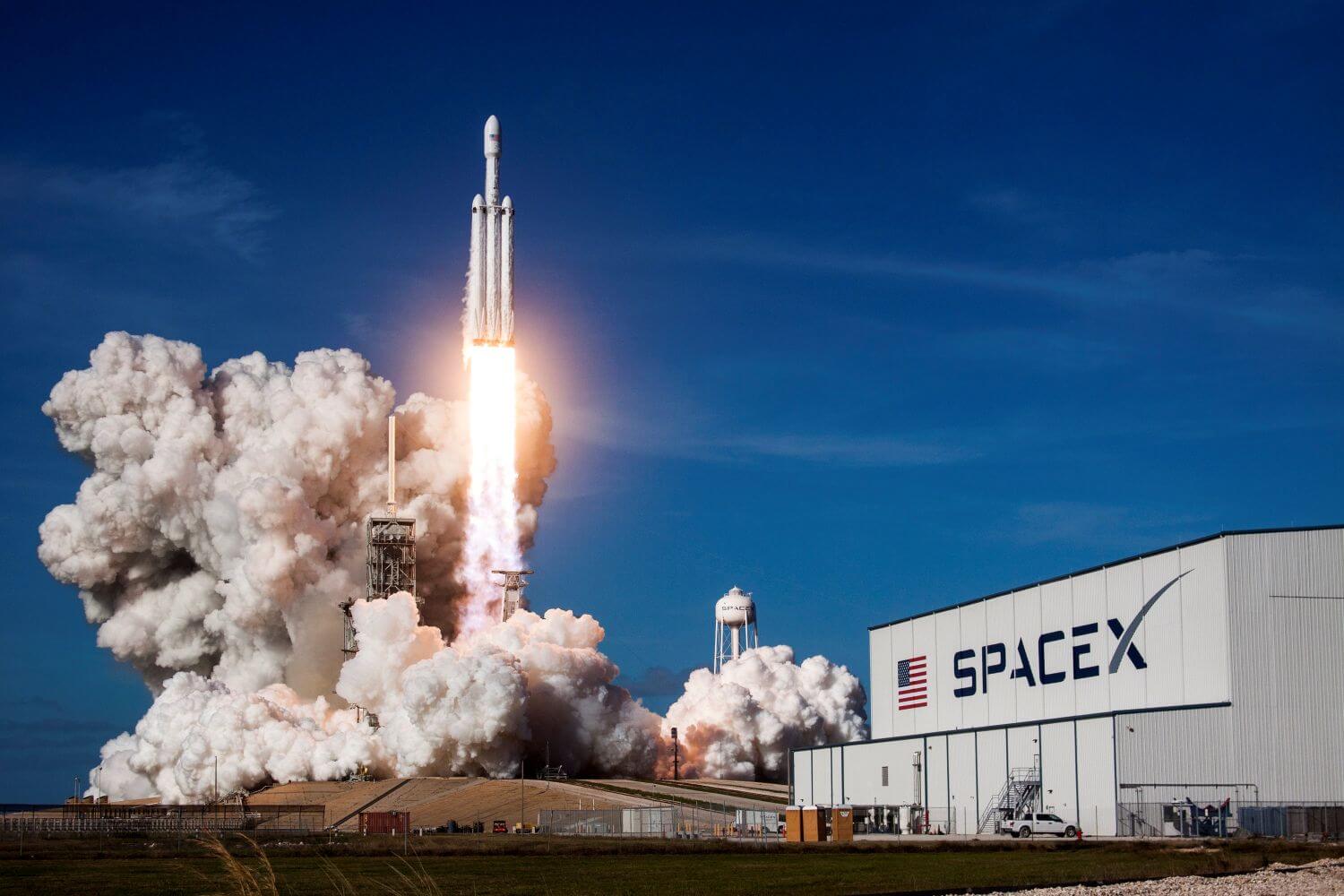
Everybody in aerospace media is currently hyperventilating over a pair of giant mechanical chopsticks grabbing a 232-foot stainless steel tube out of the sky. It makes for incredible cinema. Fire, smoke, hypersonic booms, and a precision pin-drop onto a launch tower in South Texas.
The lazy consensus is already written: spaceflight is solved, mass-to-orbit costs are dead, and Mars is practically a weekend getaway.
Take a breath. Look past the pyrotechnics.
While the public celebrates the spectacle of Flight 5, the actual aerospace industry is staring at a brutal mathematical and thermodynamic reality that SpaceX’s PR machine conveniently glosses over. Catching the Super Heavy booster with the "Mechazilla" tower arms is an undeniable triumph of guidance, navigation, and control. It is also the easiest half of an architecture that still faces an existential thermal protection crisis, an orbital refueling bottleneck that defies current flight cadences, and a ground-infrastructure single point of failure that would make any traditional risk engineer break out in cold sweats.
If you think the catch means Starship is ready to dominate commercial launch, you are asking the wrong question. The question isn't whether SpaceX can catch a booster. The question is whether catching a booster actually solves the unit economics of orbital mechanics when the upper stage still melts on reentry.
The Myth of "Successful Orbit"
Let’s fix a glaring factual error right out of the gate. Almost every mainstream headline—including the one you probably just read before clicking here—claims Starship achieved a "successful orbit" before the catch.
It didn't.
Starship flew a suborbital trajectory. Its perigee remained inside the Earth's atmosphere so that, even if its Raptor engines failed to relight in space, gravity would guarantee a controlled splashdown in the Indian Ocean rather than leaving a 100-ton dead school bus stranded in low Earth orbit (LEO). Calling a suborbital hop an orbital flight isn't just semantic sloppiness; it obscures the single most critical milestone SpaceX hasn't cleared yet.
In orbital mechanics, reaching orbital velocity—roughly 7.8 kilometers per second—is only half the battle. Surviving the kinetic energy dissipation required to come back down is the actual test. On Flight 5, the Ship upper stage survived reentry better than it did on Flight 4, where a forward flap nearly burned clean off on live television. Better, however, is not operational.
Inspect the high-resolution footage of the Ship's splashdown. Look at the thermal protection system (TPS)—those 18,000 hexagonal silica tiles glued and pinned to the windward side of the hull. You can still see localized burn-through, glowing hotspots around the flap hinges, and missing tiles.
I have sat in post-flight review rooms where multimillion-dollar hardware programs died because a single seal degraded by three millimeters. In aerospace, "mostly intact" is an engineering euphemism for "weeks of refurbishment." And weeks of refurbishment completely destroys the core thesis of Starship.
The Space Shuttle Trap in Stainless Steel
To understand why the booster catch is a distraction from the real problem, you have to talk about the Space Shuttle.
NASA built the Shuttle in the 1970s with the exact same promise: rapid, airline-like reusability that would slash launch costs to pennies on the dollar. The Shuttle even had reusable solid rocket boosters that parachuted into the ocean and were recovered. The failure mode wasn't getting the boosters back. The failure mode was the orbiter's heat shield.
Every single time a Space Shuttle returned from orbit, technicians had to inspect, waterproof, repair, and replace thousands of individual ceramic thermal tiles by hand. That maintenance bottleneck turned a supposed two-week turnaround into a four-month slog, driving the true cost per launch north of $1.5 billion when amortized across the program.
SpaceX ditched carbon composites for 301 and 304L stainless steel specifically because steel has a much higher melting point than aluminum (around 1,400 degrees Celsius versus 660 degrees), theoretically allowing for a thinner, lighter heat shield. Yet, here we are, watching Starship rely on tens of thousands of brittle, custom-fitted ceramic tiles that crack under acoustic vibration during ascent and pop off during dynamic pressure peaks.
Until SpaceX proves it can fly the upper stage to true orbital velocity, reenter, land, and fly it again within 48 hours without touching the heat shield, the booster catch is merely half a bridge. A reusable first stage paired with a high-maintenance second stage isn't a revolution. It’s just a bigger, heavier Falcon 9—and Falcon 9 already owns the commercial market.
Why SpaceX Chose the Chopsticks (And Why It’s Terrifying)
Why go through the madness of flying a 250-ton rocket directly back into the launch mount instead of putting four landing legs on it like Falcon 9?
Mass fraction. Pure and simple.
On a rocket, every kilogram of landing legs, hydraulic actuators, and structural reinforcement you bolt onto the first stage is a kilogram of payload you cannot send to orbit. Because the rocket equation (Tsiolkovsky’s famous tyranny) is exponential, adding four tons of landing gear to the Super Heavy booster doesn't just subtract four tons from orbit; it triggers a compounding penalty across the entire stack. By offloading the landing hardware onto the launch tower—where mass is practically free—SpaceX preserves the booster's payload capacity.
It is brilliant physics. It is also an operational nightmare.
Think about what happens when you turn your launch pad into a catcher's mitt. In traditional rocketry, a landing failure destroys a vehicle. With the Mechazilla architecture, a guidance glitch, a sudden wind shear, or a sticky gimbal actuator during the final three seconds of descent doesn't just destroy a $100 million booster—it obliterates the Stage 0 launch tower, the orbital tank farm, and the propellant distribution plumbing.
Imagine a scenario where a commercial airline had to fly its Boeing 777s directly into the terminal gate at 50 miles per hour and rely on giant hydraulic arms to grab the wings before the nose smashed through the departure lounge. If the arms miss by six inches, you don't just lose the plane; you shut down the entire airport for nine months.
SpaceX’s defenders will point out that they are building a second tower at Starbase in Boca Chica and another at Kennedy Space Center's LC-39A. That mitigates the existential risk of a total program halt, sure. It does not change the fact that inspecting, recertifying, and repairing a launch tower blasted by 33 Raptor engines twice in seven minutes—once at liftoff, once at catch—introduces an entirely new category of ground-support fatigue.
What Everyone Gets Wrong About Starship's Business Model
Let’s address the questions people keep asking—and dismantle the flawed assumptions baked into them.
Will Starship make Falcon 9 obsolete?
Not anytime soon, and anyone telling you otherwise doesn't understand how satellite operators buy launches. Commercial customers—from OneWeb to Amazon’s Project Kuiper to national defense agencies—do not care about theoretical cost-per-kilogram to LEO. They care about schedule certainty, orbit insertion accuracy, and insurance rates. A 100-ton payload capacity is useless if you have a 3-ton communications satellite that needs to go to a specific inclined orbit right now, and you don't want to wait nine months for a rideshare bus to fill up. Falcon 9 is a sniper rifle; Starship is a cargo ship. Even inside SpaceX, Falcon 9 remains the cash cow paying for the Starship bonfire.
Does catching the booster mean Mars missions are on schedule?
No. In fact, the timelines are drifting further into fantasy. Under NASA’s Artemis III contract, SpaceX is supposed to land humans on the Moon using a modified Starship Human Landing System (HLS). To pull off a single lunar landing, Starship cannot just launch once. Because the ship burns almost all its propellant just reaching low Earth orbit, it has to be refueled in space before it can depart for the Moon.
How many tanker flights does it take to fill one Lunar Starship in orbit? SpaceX originally floated numbers around four to eight. Internal NASA assessments and independent aerospace analysts—including figures like Dr. Robert Zubrin, founder of the Mars Society and an early champion of in-situ resource utilization—have pointed out that boil-off rates of cryogenic liquid methane and liquid oxygen in orbit could push that number closer to 12, 16, or even 20 consecutive launches for one lunar mission.
SpaceX hasn't transferred a single drop of cryogenic propellant from one orbiting spacecraft to another yet. Not one. They performed an internal transfer demo between two tanks inside the same ship on Flight 3, which is akin to pouring water from a pitcher into a glass while sitting at your kitchen table and claiming you're ready to refuel a fighter jet mid-hurricane.
Is SpaceX really out-innovating everyone else?
Yes, on hardware iteration and manufacturing speed. No, on risk management and systems engineering transparency. SpaceX operates on a hardware-rich, fail-forward methodology that works wonders when you are burning private venture capital and Starlink revenue. When you are integrating with multi-billion-dollar government payloads that take seven years to build, "move fast and break things" becomes an uninsurable liability.
The Uncomfortable Truth About Cryogenic Boil-Off
If you want to sound like you actually work in propulsion rather than just watching YouTube livestreams, stop talking about the chopsticks and start talking about cryogenic boil-off.
Starship runs on subcooled liquid methane ($CH_4$) and liquid oxygen ($LOX$). Unlike hypergolic propellants—which stay liquid at room temperature and ignite on contact—cryogens want to boil. Constantly. Even in the vacuum of space, solar radiation and Earth’s infrared albedo heat up the stainless steel hull of an orbiting tanker. As the propellant warms, it turns into gas, building pressure inside the tanks. To prevent the ship from rupturing like an over-shaken soda can, valves have to vent that precious fuel overboard.
If SpaceX needs 15 tanker launches to fill a depot ship in LEO, and it takes them two weeks between launches, the fuel from Tanker #1 is boiling away into space while Tankers #8 through #15 are still sitting on the pad in Texas.
To beat boil-off, SpaceX doesn't just need to catch boosters. They need to launch, catch, restack, fuel, and relaunch from the same pad every 24 to 48 hours, with zero weather delays, zero FAA mishap investigations, and zero tile replacements.
Right now, the FAA takes weeks to sign off on license modifications between flights, and SpaceX spends months upgrading hardware between launches. Bridging the gap from "one launch every two months" to "one launch every two days" isn't an incremental step. It is a ten-thousand-percent scaling problem.
The Counter-Intuitive Playbook for Aerospace and Tech Leaders
Watching SpaceX pull off the booster catch offers a masterclass in engineering execution—just not the one most executives take away. If you are building complex hardware, deep tech, or infrastructure, copying SpaceX’s PR narrative will bankrupt you. Copying their actual architectural trade-offs might save you.
- Shift complexity from the moving part to the stationary infrastructure. The genius of the tower catch isn't the robotics; it's the realization that ground systems don't have weight limits. Whenever you are designing a system constrained by mass, battery life, or form factor—whether it's a drone, a wearable, or a spacecraft—strip every possible sensor, actuator, and structural support off the vehicle and put it in the dock. Let the static environment bear the penalty of complexity.
- Design your factory before you design your product. Elon Musk’s most accurate axiom is that the machine that builds the machine is harder than the machine itself. SpaceX didn't beat United Launch Alliance (ULA) and Arianespace because Raptor is magically better than the RS-25 or Vulcain engines. They beat them because SpaceX builds Raptor engines on a moving assembly line at a rate of roughly one per day, while legacy primes hand-craft engines like Fabergé eggs. Stop optimizing your prototype and start optimizing your production cadence.
- Never confuse a subsystem milestone with system viability. Catching the booster proved that the first stage works. It proved nothing about orbital payload deployment, orbital propellant transfer, or rapid thermal tile turnaround. In your own organization, ruthlessly separate "cool demos" from the actual bottleneck on your critical path. If you celebrate solving Step 1 while ignoring the physics of Step 4, you are building a very expensive distraction.
The Honest Caveat
To be fair to Hawthorne and Boca Chica, betting against SpaceX’s ability to brute-force their way through impossible engineering constraints has been a career-ending move for two decades. Ten years ago, the exact same chorus of industry insiders—myself included—looked at a Falcon 9 booster trying to land on an autonomous barge in the Atlantic and called it a physics impossibility. Today, SpaceX lands boosters with the boring predictability of a commuter bus.
They have the vertical integration, the balance sheet, and the talent pool to eventually solve the heat shield problem and master orbital refueling.
Just don't pretend they've already done it because a pair of giant mechanical arms caught a rocket in Texas. Watching a booster return to its launch mount is a historic triumph of control theory. Turning that spectacle into a reliable, rapidly reusable interplanetary transit system still requires solving the hardest parts of aerospace engineering—and those parts happen at Mach 25, miles above the cameras, where no mechanical arms can reach.