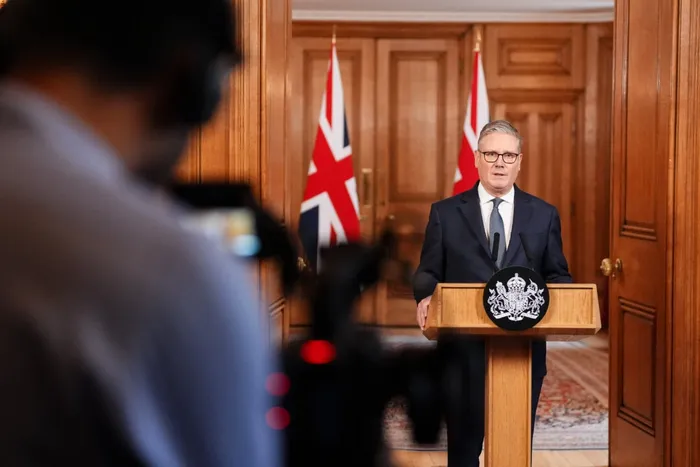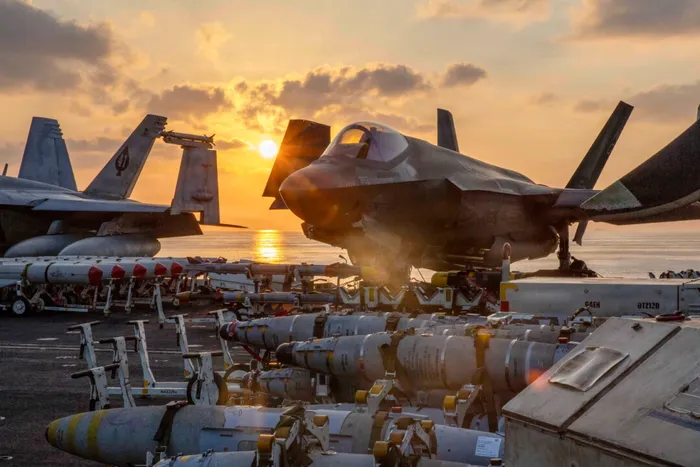
Donald Trump’s Tuesday morning ultimatum to sever all trade with Spain is not just another tariff tantrum. By instructing Treasury Secretary Scott Bessent to "cut off all dealings" with Madrid, the President has effectively declared war on the existing European security architecture. The trigger was Spain's refusal to permit U.S. aircraft at the Rota and Morón de la Frontera bases to participate in ongoing strikes against Iran—a refusal grounded in the Spanish government's insistence that such actions lack a United Nations mandate.
But the base dispute is merely the final spark in a long-smoldering resentment over defense spending. While most NATO allies have bowed to the White House's demand for a 5% GDP military expenditure target, Spanish Prime Minister Pedro Sánchez has held firm at 2.1%. Trump's response is a blunt instrument designed to shatter Spanish resistance: a total trade embargo.
The immediate reality is that 15 U.S. aircraft, including critical refueling tankers, have already been pulled from southern Spain. The move is a logistical nightmare for U.S. operations in the Middle East, yet the White House seems more interested in the symbolic purge of an uncooperative ally than in the tactical utility of the bases themselves.
The Legal Mirage of the Total Embargo
Trump is betting on a creative interpretation of last month’s Supreme Court ruling. While the Court struck down his ability to use the International Emergency Economic Powers Act (IEEPA) for broad, global tariffs, the administration now argues the ruling "reaffirmed" the President's authority to impose targeted, country-specific embargoes. Treasury Secretary Bessent has already publicly backed this play.
This is a high-stakes legal gamble. An embargo is a blunt geopolitical weapon, usually reserved for pariah states or direct adversaries. Applying it to a NATO ally and a member of the European Union (EU) is unprecedented in the post-war era. The White House is testing whether it can bypass the Court's restrictions on "economic management" by framing the trade halt as a "national security necessity" tied to specific military non-cooperation.
The European Shield
The fundamental flaw in the administration's plan is the nature of the EU itself. Spain does not negotiate its own trade deals; Brussels does. German Chancellor Friedrich Merz, during the very meeting where Trump issued his threat, reminded the President that Spain cannot be legally or economically isolated from the 27-nation bloc. "We negotiate about tariffs with the United States only together or not at all," Merz stated.
If the U.S. attempts to block Spanish olive oil, auto parts, or steel, it is effectively blocking EU goods. The 2025 trade deal struck in Scotland was supposed to provide a period of stability. Trump's latest move tears that agreement to shreds. The European Commission has already signaled that it will protect Spanish interests with the full weight of the bloc’s retaliatory power. We are not looking at a bilateral spat between Washington and Madrid, but a potential total collapse of trade between the U.S. and its largest collective trading partner.
The Olive Oil Paradox
For all the talk of Spain having "nothing we need," the trade data tells a different story. In 2025, the U.S. maintained a $4.8 billion trade surplus with Spain. We sell them $26.1 billion worth of goods, ranging from liquefied natural gas to advanced machinery. If an embargo is implemented, American exporters lose a lucrative, growing market.
Spain, meanwhile, is the world's leading exporter of olive oil and a major supplier of chemicals and infrastructure technology to the U.S. These are not luxury items that can be replaced overnight. For the American consumer, this means higher prices on a vast array of goods during a period where inflation is already a sensitive political nerve. Spain has already stated it has the "necessary resources" to pivot its supply chains. The U.S. consumer has no such buffer.
The 5% Fracture
The demand for 5% GDP spending on defense is the hill the Atlantic Alliance might finally die on. Most European nations, fearing U.S. abandonment, have scrambled to meet or approach this target. Spain's refusal to go beyond 2.1% is viewed by the White House as a betrayal of "burden sharing."
Sanchez’s argument is one of regional nuance. He contends that Spain’s security contributions—border control in the Mediterranean, counter-terrorism, and cybersecurity—should be weighted alongside traditional "hard" military hardware. To the current administration, this is "leadership failure." The U.S. perspective is binary: you pay the 5% and provide the bases for any mission the White House deems necessary, or you are an adversary.
Strategic Abandonment
The relocation of tankers from Rota isn't just a relocation; it is a signal of strategic abandonment. For decades, the southern flank of NATO was anchored by the cooperation between Washington and Madrid. By threatening an embargo, Trump is signaling that the U.S. no longer views its allies as partners in a shared project, but as vassals in a transactional security racket.
If the administration follows through, the fallout will be felt far beyond the ports of Andalusia. It will force Europe to accelerate its own "strategic autonomy," moving further away from American military hardware and political influence. The irony is that in trying to force Spain to spend more on "common defense," the U.S. may be ensuring that there is no longer a common defense to spend on.
The Treasury’s "investigations" into penalizing Spain are already underway. The next move belongs to the European Union, which must decide if it will allow one of its members to be picked off in a bilateral trade war or if it will trigger a "nuclear" economic response that would dwarf the tariff skirmishes of the past decade.
The era of the "reliable" Atlantic ally is over, replaced by a world where base access is traded for market access, and the price of dissent is total economic isolation.