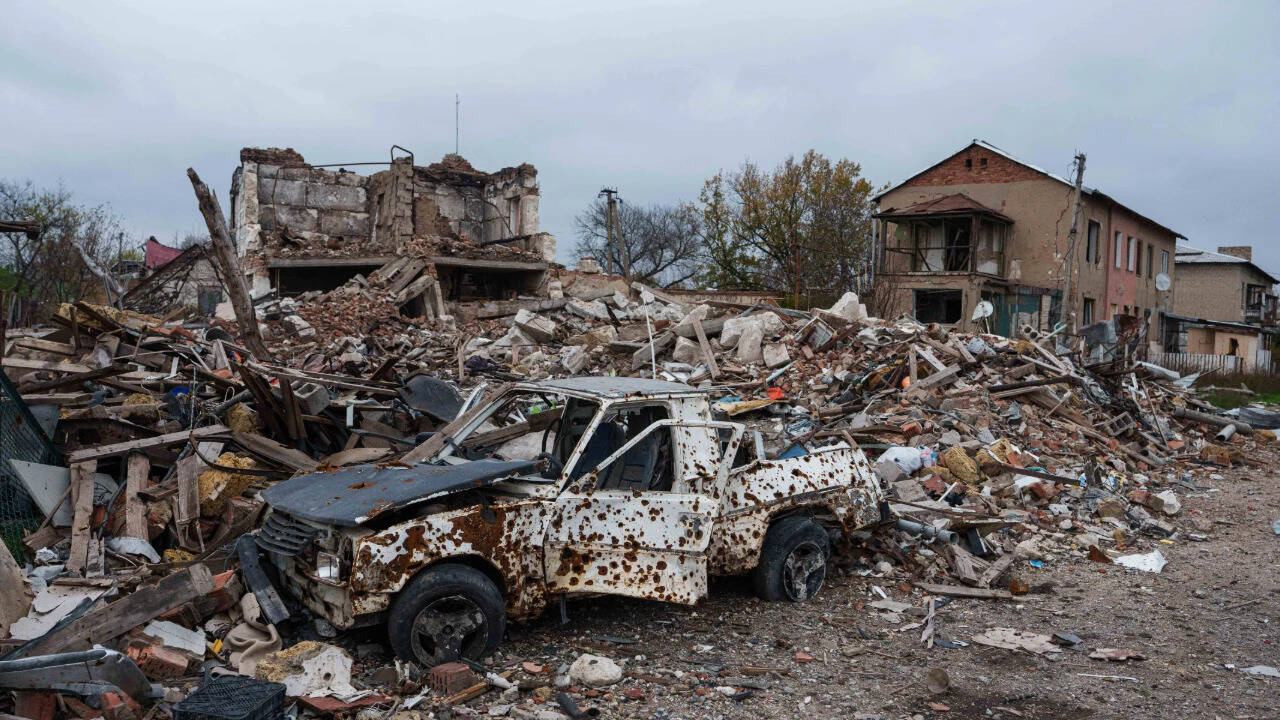
The smell hits you before the sound does.
It is a sharp, metallic tang—part burnt rubber, part tear gas, and part wet wool—hanging low over the cobblestones of Place de la République in Paris. If you have ever stood in a crowd of fifty thousand people when the riot police form a wall at the end of an avenue, you know the strange silence that precedes the roar. Your ears ring. Your chest tightens. You look at the person standing next to you, a stranger in a high-visibility vest or a nurse’s lanyard, and you realize you are both breathing the same sour air for the exact same reason. Read more on a similar issue: this related article.
You cannot afford to live the life you were promised.
For decades, pundits in London, Berlin, and Brussels treated French street protests like a quaint local weather pattern. Rain in Manchester, strikes in Paris. They watched the footage on evening news broadcasts with a mixture of mild amusement and detached superiority, confident that the English Channel, the Rhine, and the Alps would act as natural firebreaks. Further reporting by NBC News explores similar views on this issue.
They were wrong.
Between 2018 and the sweeping pension and cost-of-living upheavals of 2023 and 2024, something fundamental shifted in the atmospheric pressure of European politics. The smoke rising from French roundabouts did not dissipate at the border. It drifted north into the flatlands of Belgium and the Netherlands, crossed the water into British rail stations, and settled into the industrial valleys of Germany and Spain. What started as a uniquely French revolt against fuel taxes and retirement ages mutated into a continent-wide contagion of dissent.
To understand how a protest wave in one country swallows an entire continent, you have to stop looking at maps of police deployments and start looking at kitchen tables.
The Anatomy of a Contagion
Consider a hypothetical scenario, grounded in the real economic data of the early 2020s.
Meet Claire, a fifty-four-year-old hospital technician living thirty kilometers outside Lyon. In late 2018, her household budget was already stretched thin, held together by overtime shifts and careful grocery math. When the French government announced a green fuel tax designed to curb carbon emissions, Paris saw a climate policy. Claire saw an extra forty euros a month disappearing from her diesel tank just to get to work at dawn. She put on the fluorescent yellow vest required by law to be kept in every French car trunk, walked down to the local traffic circle, and stood beside a retired baker and a freelance delivery driver.
They had no union backing them. They had no manifestos. They just had the roundabout.
Social scientists who have spent their careers tracking civil unrest often compare mass protests to forest fires. Most sparks die out quickly because the underbrush is too wet—people are comfortable enough, or isolated enough, that the cost of marching outweighs the pain of staying home. When a spark lands on bone-dry timber, however, the fire creates its own wind.
The Gilets Jaunes—the Yellow Vests—discovered a tactical vulnerability in modern European infrastructure. By occupying suburban roundabouts rather than marching down predetermined boulevards in city centers, they bypassed the traditional choreography of French dissent. Police knew how to kettle a crowd on the Champs-Élysées. They did not know how to clear four hundred rural intersections simultaneously without paralyzing the supply chains that fed the cities.
Watch what happened next.
Within three weeks, the fluorescent vest ceased to be a piece of French automotive safety gear and became an open-source symbol of working-class fury. In Brussels, protesters in yellow vests clashed with police outside European Union headquarters, blocking highways leading to the French border. In the Netherlands, demonstrators gathered outside the Binnenhof in The Hague, borrowing the exact visual grammar of the French blockade to protest rising healthcare deductibles and pension freezes. Even in the United Kingdom, a nation that prides itself on queuing politely through crises, yellow vests began appearing on Westminster Bridge and outside television studios.
Why did the copycat effect happen so fast? Because the underlying fuel—wage stagnation colliding with inflation—was already stacked neatly in every European living room.
The Invisible Stakes of the European Social Contract
To grasp why the French spark found so much dry tinder across Europe, you have to understand the unwritten bargain that built the postwar continent.
For seventy years, Western Europe operated on a simple, stabilizing trade-off. Citizens accepted higher taxes, slower economic growth, and smaller living spaces than their American counterparts in exchange for an ironclad safety net. You might never become a billionaire in Lille, Rotterdam, or Birmingham, the deal went, but you would never go bankrupt from a hospital stay, your children would attend university without drowning in debt, and after forty years of labor, you would step off the treadmill with a dignified pension while your knees still worked.
That bargain is the invisible stake behind every burning trash can in Paris and every picket line in Frankfurt.
When the global supply shocks of the early 2020s collided with an energy crisis triggered by war on the continent's eastern flank, inflation roared back to levels not seen since the 1970s. Eurostat data from late 2022 showed eurozone inflation peaking above ten percent, with food and energy costs climbing even faster. Real wages—what your paycheck actually buys at the supermarket—plummeted across almost every member state.
Suddenly, governments facing massive pandemic debts and soaring borrowing costs decided the old postwar bargain was too expensive to maintain.
In early 2023, French President Emmanuel Macron pushed through a law raising the legal retirement age from sixty-two to sixty-four, invoking Article 49.3 of the constitution to bypass a final vote in the National Assembly. For millions of French workers, particularly those in physical trades whose bodies were already wearing out, those two extra years felt like theft by decree. More than a million people flooded the streets on multiple days of action. Trash piled ten feet high in Paris as sanitation workers walked off the job. Refineries shut down. High-speed trains sat cold on their tracks.
If you were watching from abroad, it was easy to assume this was just France being France—a nation addicted to street theater refusing to accept demographic reality.
That assumption ignored the quiet panic spreading through neighboring capitals.
Crossing the Borders Without a Passport
Protest waves do not travel along railway lines; they travel through shared grievances and tactical imitation. When workers in one country watch their neighbors bring a G7 government to its knees, a psychological barrier shatters. You stop asking whether resistance is polite, and you start asking why you are the only one absorbing the loss.
Take a look at how the map lit up between 2022 and 2024:
- The United Kingdom: After a decade of austerity followed by brutal inflation, Britain experienced its largest wave of industrial action since the 1980s. Rail workers, nurses, ambulance drivers, postal workers, and teachers walked out in coordinated waves. When Mick Lynch, the head of the RMT rail union, went on television and dismantled media talking points with blunt, working-class clarity, clips of him went viral not just in Britain, but across continental Europe. British unions explicitly studied French mobilization tactics, shifting from isolated single-union disputes to synchronized days of disruption.
- Germany: Known for decades as the land of consensual labor relations, where powerful unions and corporate boards hammered out compromises behind closed doors, Germany cracked. In early 2023, the Verdi service union and the EVG railway union joined forces for a "mega-strike" that grounded flights at Frankfurt and Munich airports and halted long-distance trains nationwide. By early 2024, German farmers drove thousands of tractors into Berlin, blockading highway slip roads in a direct echo of French agricultural protests that had encircled Paris just weeks earlier.
- Belgium and Spain: In Brussels, tens of thousands of workers marched repeatedly against the erosion of purchasing power, shutting down ports and public transit. In Spain, transport strikes and massive healthcare demonstrations in Madrid drew hundreds of thousands into the streets, using the exact same vocabulary of "dignity" and "survival" that echoed through Parisian boulevards.
I remember standing near the Gare du Nord in Paris during one of the peak pension strike days in the spring of 2023, watching a group of Belgian and German union delegates marching alongside French rail workers. They were trading stickers, comparing strike fund strategies, and sharing notes on how to counter police crowd-control formations. It was no longer a French protest. It was a European seminar in disruption.
The Farmer’s Tractor and the Digital Roundabout
If the Gilets Jaunes taught Europe how to choke a city with high-visibility vests, the European farmers' revolt of 2024 showed how quickly a French tactic could become a continental playbook.
Consider another hypothetical character to ground the mechanics of this shift: Hendrik, a third-generation dairy farmer in northern Belgium, ten miles from the French border. Hendrik does not consider himself a radical. He votes center-right, wakes up at four in the morning, and spends his evenings filling out compliance paperwork for European Union agricultural subsidies. Yet by January 2024, squeezed by falling milk prices, cheap grain imports, rising diesel costs, and strict environmental nitrogen rules, Hendrik realized he was working eighty hours a week to lose money.
Then he opened his phone and saw video footage from southwestern France.
French farmers had begun turning road signs upside down at the entrances to villages—a quiet, eerie visual signal that the world had been turned on its head. Within days, they escalated to dumping manure outside prefecture buildings and parking hundreds of massive tractors across the A64 motorway, cutting off Toulouse.
Hendrik did not need a Brussels lobbyist to tell him what to do. Within forty-eight hours, he and forty neighbors drove their tractors onto the E19 highway, blocking freight traffic between Antwerp and Paris. Within two weeks, tractors were idling outside the European Parliament in Brussels, pelting riot police with eggs and setting hay bales ablaze while smoke drifted past glass office towers. From Poland to Spain, from Italy to Romania, farmers adopted the exact same choreography: slow-roll convoys, border blockades, and upside-down town signs.
What made this spread so terrifying to European leaders was its decentralization. Traditional protests had a head—a union boss or a political party leader whom a prime minister could invite to a palace, offer a minor concession, and send home to call off the crowds.
Modern European protest waves have no off switch because they have no single commander.
Encrypted messaging apps like Telegram and WhatsApp act as the nervous system of these movements. A tactic tested at noon in Bordeaux—like blocking a specific type of logistics hub or using hay bales to shield protesters from water cannons—is filmed on a smartphone, uploaded to a regional channel, translated by peers, and deployed in Antwerp or Warsaw by breakfast the next morning.
Where the Analogy Breaks Down
It is tempting to look at a map of Europe covered in red protest markers and declare that the entire continent is on the verge of a single unified revolution. That would be a mistake.
As someone who has watched these movements up close, I have to admit that the reality on the ground is messier, more contradictory, and frankly more unsettling than a neat ideological narrative suggests.
Think of Europe’s shared economic crisis as a heavy winter storm hitting a row of old houses. The storm is the same everywhere—high interest rates, expensive energy, shrinking public budgets. Yet the damage looks completely different depending on where the roof was already weak.
In France, the roof leaked around retirement and presidential authority; the street is the traditional parliament of the French working class, a muscle exercised continuously since 1789. In Britain, the fracture ran through shattered public services and a decade of stagnant pay after Brexit. In Germany and the Netherlands, the anger targeted green transition policies that rural communities felt were being forced down their throats by urban elites who never had to drive a tractor or heat a farmhouse.
Because the root triggers varied, these protest waves carried a dangerous political ambiguity. On a Parisian boulevard or a Dutch highway, a lifelong socialist nurse fighting for hospital funding might find herself standing twenty feet away from a far-right nationalist furious about immigration and European Union regulations. Both were angry at the same establishment. Neither agreed on what should replace it.
This is the part of the story that keeps European policymakers awake at night. When centrist governments respond to street protests with riot police and constitutional bypasses rather than genuine economic relief, they do not restore order. They simply clear the field for populist parties waiting on the sidelines to harvest the resentment.
The Sound After the Sirens Fade
Politicians often measure the end of a protest wave by the day the tear gas clears and the trains start running on time again. In France, the government eventually forced the pension reform through. The trash was collected. The tourists returned to the cafés along the Seine. In Britain, pay deals were eventually struck to pause the rail and hospital strikes. In Brussels, EU leaders watered down several environmental rules to get the tractors off the ring road.
On paper, order was restored.
Yet if you walk into a breakroom at a hospital outside Lyon, a depot in Birmingham, or a dairy farm in Flanders today, you can feel that nothing was actually resolved. The underlying math of daily life—the gap between what an hour of honest work produces and what a dignified life costs—remains broken.
The true map of Europe’s protest wave is not drawn in the locations where windows were smashed or highways were blocked. It is drawn in the quiet realization shared by millions of ordinary people from Lisbon to Berlin that the old rules of obedience no longer guarantee safety. Once a population learns that the only time the capital listens is when the roundabouts stop turning, the silence that follows is never peace. It is just a pause between breaths.