Downtown Los Angeles is a city built on top of its own ghosts. You feel it when you walk down Spring Street—the weight of old marble, the scent of exhaust, the frantic, buzzing energy of a thousand people moving toward a thousand different destinations. Most of us walk with our heads down, eyes locked on a screen, dodging the cracks in the concrete. We ignore the gray utility boxes, those bland, metal rectangles that supposedly house the guts of the electrical grid. They are the background noise of urban existence.
But near the corner of 4th and Main, one of those boxes is a lie.
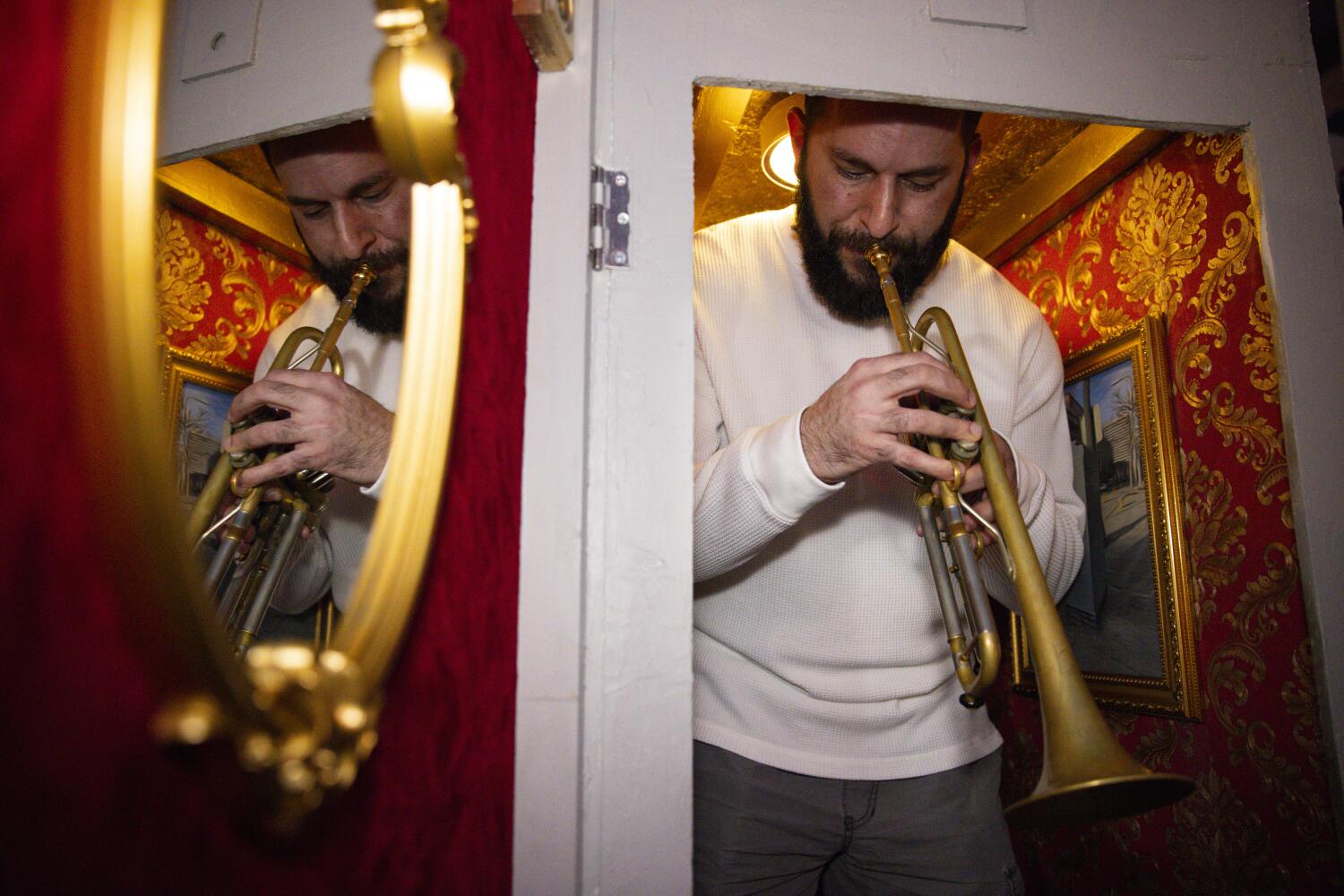
It doesn’t contain high-voltage wires or fiber-optic cables. It doesn't hum with the boring necessity of municipal infrastructure. If you know which panel to pull, the metal gives way to reveal a miniature velvet curtain. Behind that curtain is a theater. It is roughly the size of a microwave. It is called the Petit Théâtre de la Terreur, and it is the most honest thing in Los Angeles.
The Architecture of Disbelief
In a city where every "pop-up" experience requires a $45 ticket and a QR code, the theater in the box offers something that shouldn't exist: a secret that stays secret. The creator, an artist known as Le Grand Magnifico (or simply Jesse), didn't build this to be a viral sensation. He built it because the world above the sidewalk has become too polished, too predictable, and far too loud.
The theater is a masterclass in forced perspective. There are tiny, hand-carved chairs. There is a stage lit by microscopic LEDs. When the show begins—usually triggered by a motion sensor or a curious passerby—a miniature drama unfolds. Sometimes it’s a puppet being guillotined. Sometimes it’s a ghostly figure dancing to a tinny, haunting melody. It is grand guignol at a scale that requires you to get on your hands and knees in the dirt just to see the protagonist.
Think about that for a second. To witness art in its purest form, you have to humble yourself. You have to kneel on a Los Angeles sidewalk, inches away from the tires of a passing Uber, and press your face against a fake electrical box.
The Invisible Stakes of Play
We are currently living through a crisis of "place." Every coffee shop looks like every other coffee shop. Every bar has the same Edison bulbs and reclaimed wood. This homogenization is a safety net for developers, but it’s a slow poison for the human soul. When our environment becomes entirely predictable, we stop looking at it. We become ghosts in our own neighborhoods.
The Petit Théâtre acts as a glitch in the Matrix.
Imagine a hypothetical commuter named Sarah. Sarah has walked this block three hundred times. She knows every crack. She knows the exact moment the light will change. She is, for all intents and purposes, on autopilot. Then, she sees a man crouched by a utility box, laughing. She stops. She looks. She sees the velvet.
In that moment, the "landscape"—that flat, boring map of her daily life—shatters. The city is no longer a series of obstacles between her apartment and her office. It is a place where anything could be hiding. This is the "sense of wonder" that urban planners try to manufacture with multi-million dollar parks, yet it’s being achieved here with some scrap wood and a bit of theatrical flair.
The stakes aren't financial. The theater doesn't make money. It actually costs money to maintain, especially when people mistake it for actual city property or, worse, try to "fix" it. The stakes are emotional. If we lose the ability to be surprised by our surroundings, we lose our connection to the community.
A History of Hidden Spaces
Los Angeles has a long, tangled relationship with the hidden. From the tunnels beneath the King Eddy Saloon used during Prohibition to the secret speakeasies of the 1920s, the city has always had a subterranean heart. The Petit Théâtre is the modern descendant of that tradition. It belongs to the lineage of the "Little Theater Movement" of the early 20th century, which rejected the commercialism of Broadway in favor of intimate, experimental spaces.
But while the Little Theaters of the past were tucked into basements, this one is hiding in plain sight. It uses the visual language of the city—the gray, drab utility box—to camouflage its magic.
Critics might call it a prank. They are wrong. A prank is designed to make someone look foolish. The theater is designed to make someone feel alive. It is a gift given to the city by someone who expects nothing in return except for a brief moment of shared humanity.
The Engineering of the Miniature
Building a theater inside a weather-beaten box requires more than just an appreciation for the macabre. It requires a specific kind of madness. The electronics must survive the scorching California sun and the occasional rainstorm. The mechanisms must be "robust" enough—to use a term the city engineers would appreciate—to withstand the vibrations of heavy trucks rumbling past.
The creator uses recycled materials, bits of jewelry, and found objects to populate this tiny world. There is a profound irony in using the discarded remnants of the "real" world to create a fantasy world that feels more authentic than the street it sits on.
When you peer inside, the scale does something strange to your brain. For a few seconds, you aren't a person in a city of four million. You are a giant looking into a portal. The perspective shift is a physical sensation, a slight dizziness that comes when the brain tries to reconcile the massive skyscrapers behind you with the tiny, flickering candles on the miniature stage.
Why We Need the Fake Box
Most of our modern interactions are curated by algorithms. We see what we’re supposed to see, we buy what we’re told to buy, and we visit the "Instagrammable" spots that everyone else has already visited. The Petit Théâtre isn't an algorithm. It isn't curated for "engagement." It exists whether you look at it or not.
That is the true definition of a "game-changer"—not some new app that streamlines your grocery shopping, but something that changes the way you look at the sidewalk.
Think about the children who discover the box. To them, the city is already a giant, confusing mystery. When they see the tiny theater, they aren't surprised. They’re relieved. They finally found something that matches their own sense of the world. It’s the adults who have a harder time. We have been trained to ignore the boxes. We have been trained to see utility and nothing else.
The Fragility of the Curtain
The Petit Théâtre is a fragile thing. It exists at the mercy of the city, of vandals, and of the elements. It could be gone tomorrow. The Department of Public Works could decide that it’s an unauthorized structure. A careless driver could clip the corner and crush the velvet curtains.
This fragility is part of its power. We spend so much time building things to last forever—concrete towers, steel bridges—that we forget the beauty of the temporary. The theater is a reminder that the most meaningful things in life are often the most fleeting.
Next time you’re in Downtown Los Angeles, maybe don’t look up at the soaring towers. Look down. Look at the gray, rusted utility boxes that no one else notices. Look for the one that doesn't belong.
Because inside that box, a tiny puppet is waiting for its cue, and the curtain is about to rise.