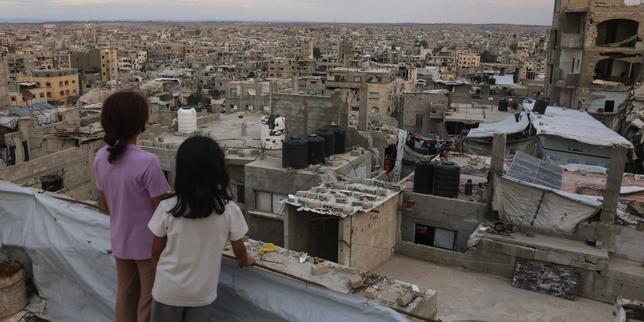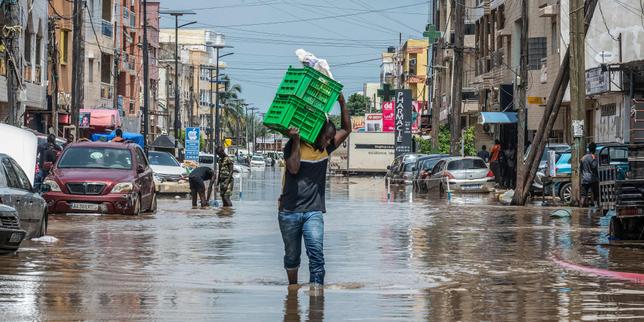
Every rainy season, the international press rolls into Dakar, loads up standard stock footage of waterlogged streets in Pikine and Yeumbeul, and hits publish on the exact same lazy narrative. The headline writes itself. Climate crisis strikes the Senegalese capital. Rising sea levels drown West Africa. Extreme weather overwhelms drainage systems. It is neat, it is tragic, and it is fundamentally dishonest.
I have walked those flooded neighborhoods. I have watched millions of dollars in international adaptation funds disappear into administrative black holes while families wade through stagnant, contaminated water outside concrete villas built directly on top of ancient wetlands.
The lazy consensus tells you that nature is attacking Dakar. The reality is that human corruption, speculative land grabbing, and municipal cowardice are drowning the city. Nature is simply sending the bill.
The Geography Nobody Wants to Talk About
To understand why Dakar floods, you have to look at a map that urban planners ignored for three decades. Dakar sits on a peninsula, flanked by low-lying depressions known as niayes. These are natural retention basins, hyper-fertile zones historically used for market gardening and seasonal water absorption. They are sponges. They are designed by earth science itself to catch overflow during heavy precipitation events.
What did the state and private developers do with these sponges? They paved over them.
During the rapid urbanization boom of the 1990s and 2000s, land titles were handed out like party favors. Politicians, well-connected businessmen, and municipal authorities parcelled out plots in known flood zones, selling them to an expanding middle class desperate for affordable housing. People bought land cheap in areas like Jaxaay and Pikine Irh. They built multi-story concrete homes without a second thought to hydrology.
When you concrete over a natural retention basin, water does not magically evaporate. It accumulates. When the monsoon rains hit, that water demands its territory back.
Blaming global carbon emissions for floods in neighborhoods built on drained swamps is a convenient sleight of hand. It absolves local officials of accountability. It transforms a man-made municipal catastrophe into an act of God.
The Multi-Million Dollar Drain Pipe Illusion
Let us talk about the infrastructure response. Whenever public outrage peaks, the government announces another mega-project. Billions of CFA francs are poured into pumping stations, retention basins, and master drainage plans financed by foreign lenders like the World Bank or the African Development Bank.
On paper, it looks proactive. On the ground, it is a theater of incompetence.
I have spoken with local engineers who watch these projects get greenlit with horror. They design massive canals that empty into the sea without accounting for tidal surges or sand sedimentation. Within two rainy seasons, those expensive concrete channels choke with silt and household waste because municipal authorities refuse to fund basic, unglamorous maintenance.
Pumping water out of a neighborhood only works if you have somewhere to put it. When you pump water from one low-lying sinkhole into another partially inhabited basin, you are simply shifting the disaster five hundred meters down the road and calling it progress.
The Plan décennal de lutte contre les inondations swallowed over 750 billion CFA francs over a ten-year period. Did it solve the problem? Ask the residents of Thiaroye who still keep canoes in their courtyards every August. The funds served as an economic stimulus package for politically connected contractors while the actual ground conditions worsened.
The Myth of Climate Fatalism
Attributing every urban disaster to global climate shifts creates a dangerous moral hazard. If Dakar floods because the planet is warming, then local mayors, real estate speculators, and zoning boards bear zero responsibility. We are all passengers on a doomed ship.
This is a cop-out.
Climate change is real, and changing precipitation patterns mean storms are more intense when they hit. But intensity does not dictate disaster; vulnerability does. Tokyo receives typhoons that drop months of rain in hours, yet the city does not paralyze for weeks because its infrastructure is built on rigorous hydrological engineering, underground storm discharge vaults, and strict zoning enforcement.
Dakar paralyzes because zoning laws are treated as polite suggestions if you know the right minister. Houses continue to rise in flood-prone zones because municipal authorities collect taxes on illegal constructions and look the other way.
To fix Dakar, you have to stop treating this as an environmental emergency and start treating it as a rule-of-law crisis.
What Real Urban Correction Looks Like
If we want to stop the annual cycle of misery, we have to abandon wishful thinking and adopt brutal, actionable pragmatism.
First, the state must implement a policy of controlled retreat. You cannot pump your way out of a swamp. Neighborhoods built in the deepest sections of the niayes need to be depopulated through fair, market-rate buyouts, and those zones must be forcefully converted back into permanent ecological parks and natural water retention reservoirs. It will be politically explosive, but every year delayed makes the eventual reckoning costlier in lives and capital.
Second, building permits must be decoupled from political patronage. Independent hydrologists, not municipal bureaucrats looking for a campaign contribution, should have veto power over urban expansion. If a plot is a flood risk, it stays empty. Period.
Third, decentralized waste management needs funding. A staggering percentage of Dakar's current flooding is exacerbated simply because drainage canals are choked with plastic bags, discarded electronics, and construction debris. You can build a billion-dollar canal, but if it functions as an open-air landfill, the first downpour turns your high-tech drainage system into an artificial dam.
The Uncomfortable Truth
The images of flooded streets in Dakar will return next rainy season. The international wire services will run the same photos. Analysts will nod sagely about extreme weather patterns in the Sahel.
They will be lying to you.
Dakar is not drowning because the sky is falling. Dakar is drowning because corruption and short-term profit turned a natural sponge into a concrete trap. Until the city summons the political courage to tear down what should never have been built, the water will keep rising.