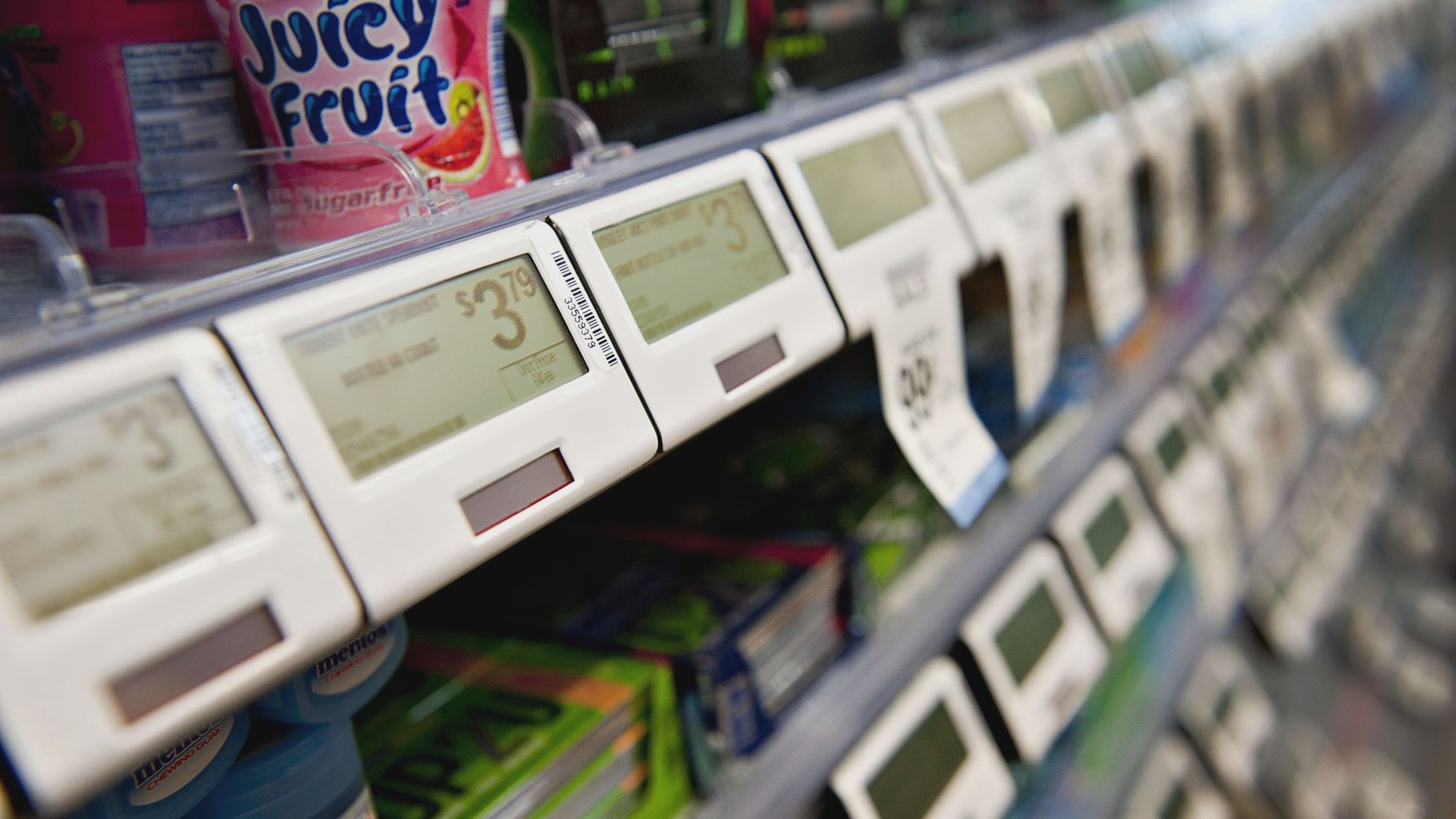
Privacy advocates are currently hyperventilating over Electronic Shelf Labels (ESLs). They look at a digital price tag and see a "surveillance state" in the cereal aisle. They claim dynamic pricing is a predatory tool designed to squeeze every last cent out of a hungry family.
They are wrong. Meanwhile, you can read other developments here: Regional Defense Integration Through Interoperable Air Interception The Strategic Logic of Israeli Technology Exports.
Actually, they aren't just wrong—they are missing the biggest transfer of power from retailer to consumer since the invention of the coupon. If you think digital price tags are about "spying" on you, you've already lost the game. These tags aren't a cage; they are a dashboard. And if you know how to read the data, the house no longer has the edge.
The Myth of the Uniform Price
Most people operate under the delusion that "the price is the price." They believe in a static reality where a gallon of milk costs $3.99 because that is its objective value. To see the complete picture, we recommend the recent report by TechCrunch.
That world never existed.
Before ESLs, retailers practiced "clunky dynamic pricing." They sent a teenager with a sticker gun to change prices every Tuesday. The only difference now is velocity. The "fairness" people crave is actually just inefficiency. When critics moan about "surge pricing for groceries," they ignore the fact that the grocery business operates on razor-thin margins—often between 1% and 3%.
High-speed price adjustments aren't a conspiracy to make you poor; they are a desperate attempt to manage waste. Every year, the US retail sector loses billions to "shrink" and "spoilage." Digital tags allow a store to drop the price of ribeye steaks by 40% at 7:00 PM because they expire at midnight. The "surveillance" fear-mongers want you to pay full price for that steak until it’s thrown in a dumpster, all in the name of "price consistency."
Why Your Privacy Concerns are Upside Down
The standard argument is that stores use facial recognition and heat maps to track your "vulnerability" and hike prices when you look desperate.
Let's look at the math.
Implementing a store-wide AI system that tracks individual biometrics to adjust a price tag in real-time for one specific person is a computational and logistical nightmare. It’s also a legal suicide mission. Retailers aren't tracking you to change the price of peanut butter; they are tracking their competitors.
The real "surveillance" happening is store-versus-store. ESLs allow a Kroger to scrape Walmart’s local API and underbid them by three cents within seconds. This is a race to the bottom, and the consumer is the one at the bottom catching the savings.
If you are worried about the camera in the digital tag, you’re looking at the wrong lens. The real surveillance happened ten years ago when you signed up for that plastic loyalty card. Your data was sold, processed, and packaged before you ever stepped foot near a digital shelf. The tag is just the end-point.
The Hidden Advantage of Price Volatility
Stability is for the lazy. Volatility is for the smart.
When prices are fixed, the retailer builds a "risk premium" into the cost. They assume costs might rise, so they keep the shelf price slightly higher to protect their margin. When pricing becomes dynamic, that risk premium evaporates.
How to Arbitrage Your Local Supermarket
If you want to win, you have to stop shopping like it's 1995.
- Inverse Peak Shopping: Most people shop between 5:00 PM and 7:00 PM on weekdays. This is when demand-side algorithms are most likely to hold prices steady or tick them up. If you shop at 9:00 AM on a Tuesday, you are hitting the store when they are desperate for volume.
- The Perishability Pivot: Digital tags are most active in the produce, meat, and bakery departments. These are the zones where "time-to-zero-value" dictates the price. A digital tag on a box of dry pasta rarely moves. A digital tag on a rotisserie chicken is a ticking clock.
- App Synchronicity: The tag on the shelf is the "public" price. The price in the store's app is often the "private" price. When these two don't match, the retailer's system is in friction. I have seen instances where the digital shelf tag reflects a surge, but the app’s "scan and go" feature honors a lower cached price.
The Logistics of the "Greed" Argument
Critics love to use the term "Price Gouging."
In economic terms, price gouging requires a monopoly or a total lack of alternatives. The grocery industry is the most hyper-competitive environment on earth. If Store A uses ESLs to hike the price of water during a heatwave, Store B—which is literally 400 yards away—will use their ESLs to drop the price of water and steal every single customer.
Digital tags don't enable greed; they enable perfect competition.
In a world of paper tags, price wars took weeks to play out. Now, they play out in minutes. This creates a "flash crash" environment for consumer goods. We are moving toward a "stock market of stuff," where the price of a jar of pickles fluctuates based on local supply, logistics costs, and regional demand.
The Real Danger (It's Not What You Think)
If there is a legitimate concern with ESLs, it isn't "surveillance." It’s Algorithm Collusion.
The risk isn't that a store will watch your eyes dilate and charge you more. The risk is that two major competitors will use the same pricing software (like Revionics or Zilliant). If both stores outsource their "intelligence" to the same third-party algorithm, the software might "learn" that neither store benefits from a price war.
It’s not a smoke-filled room of CEOs; it’s two server stacks in Virginia deciding that $5.49 is the optimal price for both parties to maintain profit. This is "tacit collusion," and it’s significantly harder to prosecute than a secret meeting.
This is where the "transparency" activists should be pointing their flashlights. Don't worry about the tag on the shelf; worry about the code in the cloud.
Stop Asking for "Fairness"
The "People Also Ask" sections of the internet are filled with queries like "How can I tell if a digital price tag is tracking me?" or "Is dynamic pricing legal?"
These are the wrong questions. They come from a place of victimhood.
The right question is: "How do I make this algorithm work for me?"
We are entering an era of Fluid Commerce. The era of the "MSRP" is dead. If you demand a fixed, transparent price, you are essentially asking to pay a "simplicity tax." You are paying for the privilege of not having to think.
I’ve spent twenty years watching how retail tech evolves. Every time a new tool emerges, the "privacy" lobby tries to kill it, and the "frugal" lobby figures out how to exploit it.
The Playbook for the New Aisle
- Treat the shelf like a bid: If the price looks high, it probably is. Check the app. Check the competitor across the street. The digital tag is a live quote, not a commandment.
- Ignore the "Sale" signs: Digital tags allow for fake "discounts" where the "original price" was never actually charged. Look at the unit price ($/oz). That is the only math that matters.
- Exploit the lag: Algorithms are fast, but physical restocking is slow. If a digital tag shows a price drop but the shelf is empty, demand a rain check. Most store policies haven't caught up to their software's speed.
The grocery store is no longer a pantry; it’s a trading floor. Stop acting like a customer and start acting like a trader.
If you’re still worried about the "surveillance" of a plastic tag, stay home. But don't complain when the rest of us are buying ribeyes for the price of ground beef because we knew exactly when the algorithm was going to blink.
The tag isn't watching you. It's waiting for you to notice the opportunity.
Get over the "creep factor" and get into the data. The only person being "exploited" by dynamic pricing is the one who refuses to learn how it works.
Pick up the steak. Check the app. Beat the machine.